History blamed the Rapanui for their own downfall. But new evidence is in. ͏ ͏ ͏ ͏ ͏ ͏ ͏ ͏ ͏ ͏ ͏ ͏ ͏ ͏ ͏ ͏ ͏ ͏ ͏ ͏ ͏ ͏ ͏ ͏ ͏ ͏ ͏ ͏ ͏ ͏ ͏ ͏ ͏ ͏ ͏ ͏ ͏ ͏ ͏ ͏ ͏ ͏ ͏ ͏ ͏ ͏ ͏ ͏ ͏ ͏ ͏ ͏ ͏ ͏ ͏ ͏ ͏ ͏ ͏ ͏ ͏ ͏ ͏ ͏ ͏ ͏ ͏ ͏ ͏ ͏ ͏ ͏ ͏ ͏ ͏ ͏ ͏ ͏ ͏ ͏ ͏ ͏ ͏ ͏ ͏ ͏ ͏ ͏ ͏ ͏ ͏ ͏ ͏ ͏ ͏ ͏ ͏ ͏ ͏ ͏ ͏ ͏ ͏ ͏ ͏ ͏ ͏ ͏ ͏ ͏ ͏ ͏ ͏ ͏ ͏ ͏ ͏ ͏ ͏ ͏ ͏ ͏ ͏ ͏ ͏ ͏ ͏ ͏ ͏ ͏ ͏ ͏ ͏ ͏ ͏ ͏ ͏ ͏ ͏ ͏ ͏ ͏ ͏ ͏ ͏ ͏ ͏ ͏ ͏ ͏
August 19, 2026—New evidence overturns the old tale of what happened on Easter Island. Plus, a new crater on the moon and a potential key to living past 110-years-old (it has to do with your immune system).
—Andrea Gawrylewski
Chief Newsletter Editor
|
|
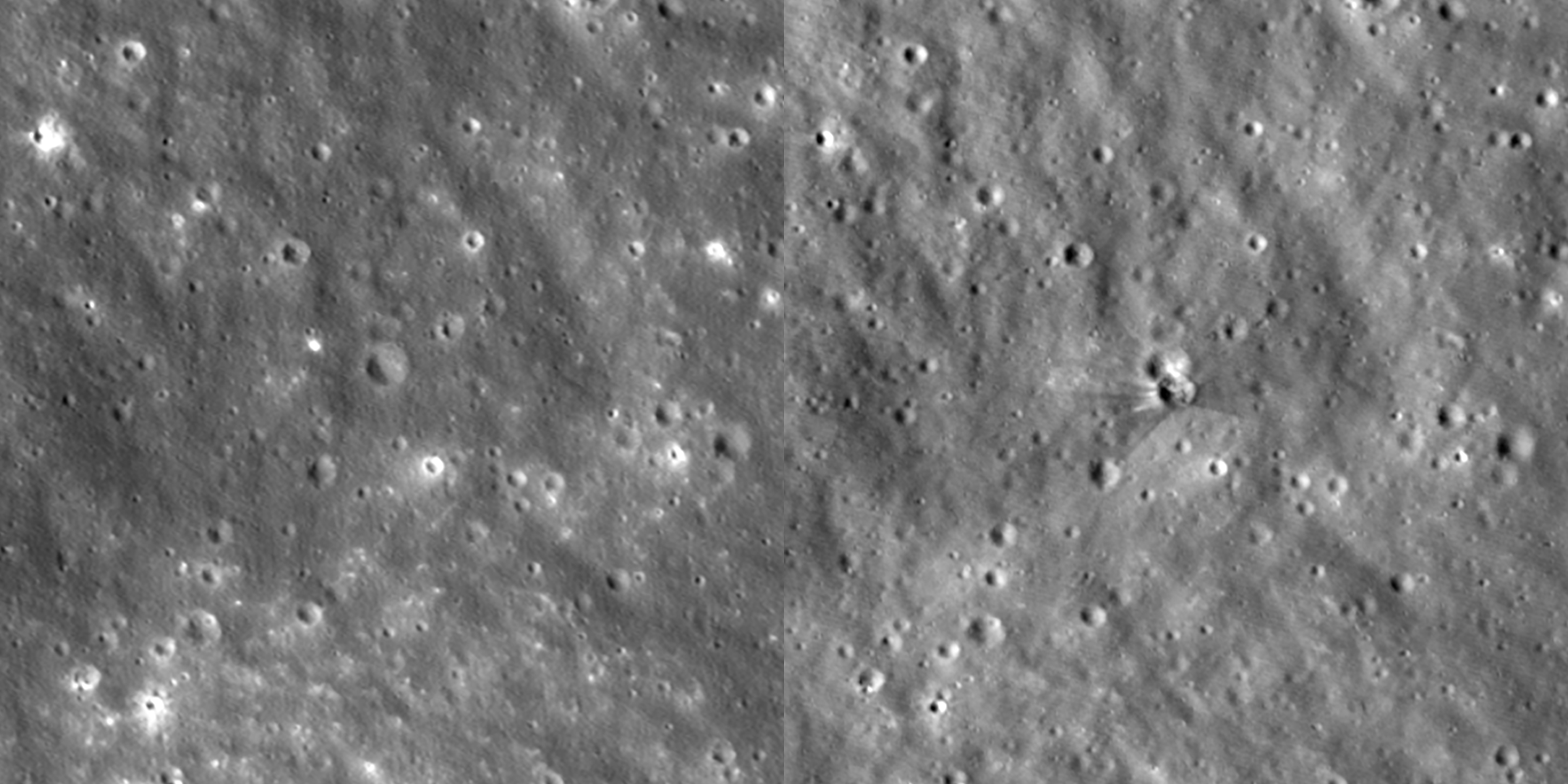
An animated before-and-after view of the crater formed after a Falcon 9 upper stage struck the moon’s surface on Aug. 5, 2026. NASA/Intuitive Machines
|
|
Astronomers have spotted the crater created when, on August 5, the upper stage of a SpaceX Falcon 9 rocket smacked into the face of the moon at an estimated 5,400 miles an hour. | 2 min read
Psilocybin—an active ingredient in magic mushrooms—causes brain networks that typically process the self and the outside world separately to become integrated, leading to a profound sense of oneness. | 3 min read
Supercentenarians, or people who live beyond age 110, have an unusually high amount of killer immune cells, called CD4 cytotoxic T lymphocytes. Now researchers have found that these cells increase and clone themselves after people turn 100—a sign that the cells are actively fighting bodily harm. | 2 min read
President Donald Trump is expected to nominate White House aide Heidi Overton to lead the U.S. Food and Drug Administration. Overton is a medical doctor with ties to the “Make America Healthy Again” movement. | 2 min read
Cryptographers use parabolas (points along a curve) to build especially tough codes. Here's how it works. | 3 min read
Yesterday the Trump administration proposed a rule change that would end protections for more than 44 million acres of forest land throughout the U.S. | 2 min read
Scientists have been able to keep "mini-brains," or organoids meant to be models for the human brain, alive in the lab for years, which should prove helpful in studying neurodegenerative brain diseases. | 3 min read
Astrophysicists have spied a unique star called S301 whipping around Sagittarius A*, the supermassive black hole at the center of our galaxy. This discovery should help researchers discern a black hole’s spin from the motion of a single star. | 4 min read
|
|
All science, all the time. Read about what you care about with a subscription to Scientific American. Try it out for 90 days for just $1!
|
|
Easter Island, Revisited
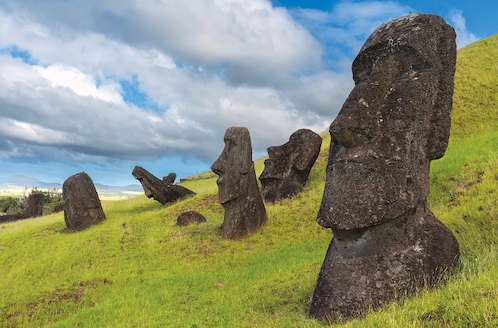
When colonizers arrived on Easter Island’s shores in the 18th century, they said they found the island’s scarce population, the Rapanui, with dwindling resources. For centuries, the narrative was that the island inhabitants did it to themselves through “ecocide”: wasteful deforestation and an unsustainable population boom, which led to conflict, hunger, and in the end, disaster. But recently, archaeologists have revisited that narrative and showed that the Rapanui had a sustainable relationship with the island and skillfully adapted to its challenges.
|
|
Moai statues at Rano Raraku, the quarry from which statues were transported across Easter island. Sergio Pitamitz/Getty Images
|
|
New Evidence:
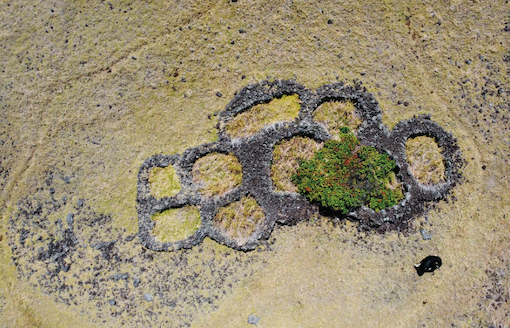
Rapanui agriculture: At first, the Rapanui people used slash-and-burn agriculture on Easter Island. But the plants on the island grew too slowly for that to work long-term, and the soil was thin and the rain erratic. They adapted by adding rocks to their gardening plots instead, which leeched nutritious minerals into the soil that helped plants grow, allowed the soil to retain moisture and held it in place.
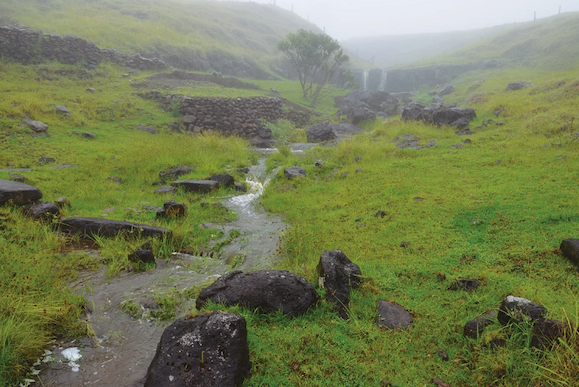
Hydraulic engineering: The Rapanui left behind a system for controlling the island’s only seasonal stream, complete with walls reaching into the riverbed and the rim of a stone water tank. Archaeological excavations also revealed a system of dams, basins and underground aqueducts channeling water from the crater lake on the Terevaka volcano toward the southern coast of the island.
Low conflict: All Polynesian islands had inter-island and inter-tribal conflict, and the Rapanui were likely no exception. However, archaeologists have not found evidence of major conflict, like mass graves or even much weaponry.
|
|
Walls and channels helped to manage the island’s only seasonal stream. Annette Kühlem/DAI
|
|
So what really happened? Archaeologists have confirmed there was deforestation on the island, but not necessarily because of wasteful tree-cutting. For one, rats on the island regularly ate the palm nuts, preventing these slow-growing trees from replenishing. But also, the island’s limited agricultural setting required some palm trees to be cut down to make way for farming—out of foresight, not ignorance. What likely played a stronger role in the decline of Easter Island was the arrival of European ships. These sailors brought diseases (smallpox, tuberculosis, STIs) and kidnapped some Rapanui for slavery, leaving barely 100 Rapanui left on the island by 1870. Many of the island’s knowledge keepers were lost.
|
|
Stone-walled manavai sheltered crops from the elements. Terry Hunt
|
|
What the experts say: The ecocide hypothesis is “a story of people being too stupid to realize what they were doing,” says archaeologist Annette Kühlem of the German Archaeological Institute in Bonn. Ava Ranga Uka a Toroke Hau and similar sites on Easter Island point instead to people “mindfully planning” and “making the best out of very difficult environmental circumstances.” —Emma Gometz, Newsletter Editor
|
|
|
|
|
Outside her official duties as a program specialist at NASA, astrobiologist Amber Young volunteers her time to make exoplanet research easier. Searching for life off-Earth is an interdisciplinary field, she says, with multiple types of science (biology, earth science, physics to name a few) converging in a shared mission. “I am really invested in the search for life elsewhere,” she says. “It’s not just what I do; it’s who I am.”
Read all the Young American Scientist profiles here.
|
|
A pioneering AI researcher says technologists need to do a better job of communicating the incredible economic value of AI. | Bloomberg
Some bottlenose dolphins have learned to hunt using seashells as tools. | Gizmodo
The controversial Flock traffic cameras do much more than track license plates, an investigation finds. | WIRED ($)
|
|
It seems strange to discuss Captain James Cook twice in one week, but here we are. The British explorer visited Rapa Nui once, in 1774 as part of his second Pacific voyage, and noted of the island that, "Nature has hardly provided it with any thing fit for man to eat or drink.” Cook kept detailed journals of his explorations. And for many years they stood as the definitive history of what occurred on the Pacific islands, places with rich traditions of oral storytelling. A lesson I remember from early in life is that there are always two sides of a story. And more recently I've come to believe there are many sides to a story. Especially when it comes to analyzing history, it's our job to acknowledge that lesson and try to seek out more facts, in any form they arise.
|
|
Thanks for reading and send any other comments, observations or questions: newsletters@sciam.com. I'll be back tomorrow.
—Andrea Gawrylewski, Chief Newsletter Editor
|
|
|
|
|
Subscribe to this and all of our newsletters here.
|
|
Scientific American
1000 N West Street, Suite 1200
Wilmington, Delaware 19801
|
|
|
|
|