Eating less protein may increase longevity ͏ ͏ ͏ ͏ ͏ ͏ ͏ ͏ ͏ ͏ ͏ ͏ ͏ ͏ ͏ ͏ ͏ ͏ ͏ ͏ ͏ ͏ ͏ ͏ ͏ ͏ ͏ ͏ ͏ ͏ ͏ ͏ ͏ ͏ ͏ ͏ ͏ ͏ ͏ ͏ ͏ ͏ ͏ ͏ ͏ ͏ ͏ ͏ ͏ ͏ ͏ ͏ ͏ ͏ ͏ ͏ ͏ ͏ ͏ ͏ ͏ ͏ ͏ ͏ ͏ ͏ ͏ ͏ ͏ ͏ ͏ ͏ ͏ ͏ ͏ ͏ ͏ ͏ ͏ ͏ ͏ ͏ ͏ ͏ ͏ ͏ ͏ ͏ ͏ ͏ ͏ ͏ ͏ ͏ ͏ ͏ ͏ ͏ ͏ ͏ ͏ ͏ ͏ ͏ ͏ ͏ ͏ ͏ ͏ ͏ ͏ ͏ ͏ ͏ ͏ ͏ ͏ ͏ ͏ ͏ ͏ ͏ ͏ ͏ ͏ ͏ ͏ ͏ ͏ ͏ ͏ ͏ ͏ ͏ ͏ ͏ ͏ ͏ ͏ ͏ ͏ ͏ ͏ ͏ ͏ ͏ ͏ ͏ ͏ ͏
August 4, 2026—A new study suggests that less dietary protein might extend lifespan. Emma Gometz has the details. Plus, a piece of a SpaceX rocket is colliding with the moon tonight and one ancient reptile had a very bad day.
—Andrea Gawrylewski
Chief Newsletter Editor
P.S. If this newsletter sparks your curiosity, consider forwarding it to a friend!
|
|
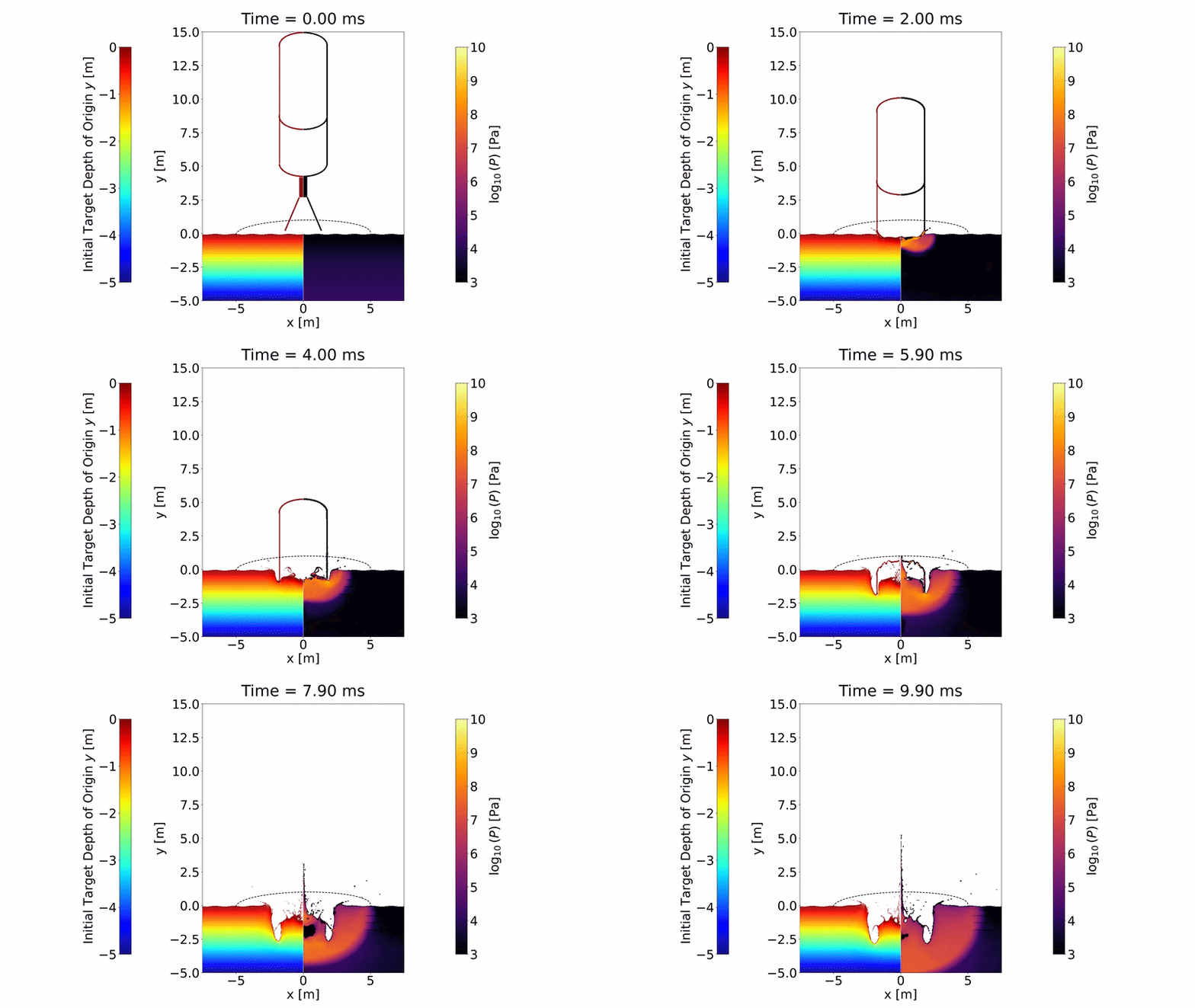
A simulation of a rocket fragment impacting the moon. Computational Fluid Physics Lab/University of Texas at Austin
|
|
A piece of a SpaceX rocket is set to collide with the moon tonight. New simulations show what scientists might observe when it hits. | 2 min read
The fires in Washington State are a warning for the rest of the country. Climate change is putting more and more places at risk of wildfires as increasingly hot air sucks moisture from forests. | 2 min read
A new project backed by Leonardo DiCaprio and Jeff Bezos pledges $200 million to save 100 critically endangered species around the globe. | 2 min read
Wormholes could be the key to traveling through time to the past, physicists hypothesize. | 4 min read
-
Scientists discovered a new carnivorous plant. It's small with yellow flowers and grows in the mountainous forests of China, where it waits to eat the blood of its prey. | 2 min read
-
A mining company has repeatedly tried to get at a large supply of tungsten beneath the Great Basin Desert in eastern Nevada. But a NASA test site possesses exclusive rights to the plot. | 3 min read
-
A rare fossil of an ichthysaur shows a tooth embedded in its vertebra, where it was likely left when a giant pliosaurid chomped down on the dolphin-resembling reptile. Ouch. | 3 min read
|
|
Support the newsletter. Feed your curiosity. Subscribe to Scientific American for 90 days for just $1.
|
|
Slow the Protein?
A review of more than 350 studies showed that reducing protein in the diet is associated with a longer lifespan. Most of these studies were in mice, but researchers behind the review argue that mice serve as good models for humans in this context, since we eat the same food and use the same processes to grow and reproduce. Until recently, the U.S. Department of Agriculture’s dietary guidelines for Americans recommended a daily intake of 0.8 gram of protein per kilogram of body weight. But in the latest edition, Secretary of Health RFK, Jr., upped that to 1.2 to 1.6 g/kg daily.
Why protein might shorten lifespan:
-
Protein is our main source of amino acids, and some of them can be harmful in excess. For example, by cutting down on the amino acid valine, the median lifespan of male mice has been shown to increase by 23 percent, or half a year.
-
When humans and mice restrict protein, it boosts the production of a hormone called FGF21, which prompts white adipose tissue cells to generate more mitochondria—causing fat to get burned as fuel. Having that excess fat disappear can help reduce the risk of illnesses such as diabetes, heart disease and some cancers.
-
When protein is digested, the end metabolic product, called urea, is produced in the liver, and excess urea can lead to kidney issues.
What the experts say: After metabolizing enough protein to maintain your muscles, organs and other essential bits, your body doesn’t benefit from more of it. “If you’re eating a ton of protein beyond that essential amino acid need, it’s going to get either converted to something else like fat or ... oxidized for calories,” says Steven Heymsfield, a professor at Louisiana State University, who wasn’t involved in the new review. “So I don’t see the massive protein intake [trend] being anything more than just BS.” —Emma Gometz, Newsletter Editor
|
|
|
|
|
|
YOUNG AMERICAN SCIENTISTS
|
|
Samagya Banskota is biomedical engineer at Boston University, studying ways to create safer, more effective therapies for a multitude of diseases. She builds so-called viruslike particles to deliver gene-editing technologies to cells. These viruslike particles could be used to deliver therapies other than gene-editing materials. “With our delivery system being so good for protein delivery,” Banskota says, “I think it opens up a whole new category of medicines for diseases that we potentially can treat.”
Read all Young American Scientists profiles here.
|
|
The more I learn about nutrition, the more I think we're fixating on the wrong macro in our diets. Most people on the planet don't get nearly enough of it, but fiber may be the true powerhouse when it comes to health and longevity. One landmark study of nearly one million people found that people who ate the most fiber were less likely to die of any cause. Fiber helps clear cholesterol from our blood and enriches our gut microbiota populations and diversity. I am proudly NOT a health influencer, so don't take my word on any of this. But here are some good resources to get you thinking about your fiber intake.
Higher-Fiber Diet Linked to Lower Risk of Death | 3 min read
Fiber-Famished Gut Microbes Linked to Poor Health | 4 min read
How Do Ultraprocessed Foods Affect Your Health? | 8 min read
|
|
Thanks for reading and let me know what you think about this newsletter by sending comments to: newsletters@sciam.com. See you tomorrow.
—Andrea Gawrylewski, Chief Newsletter Editor
P.S. A few astute readers caught that yesterday I erroneously referred to the daddy longlegs insect in this article as a spider. Both spiders and the longlegs are arachnids. Mea culpa!
|
|
|
|
|
Subscribe to this and all of our newsletters here.
|
|
|
|
|