And their brains light up when they see you smile ͏ ͏ ͏ ͏ ͏ ͏ ͏ ͏ ͏ ͏ ͏ ͏ ͏ ͏ ͏ ͏ ͏ ͏ ͏ ͏ ͏ ͏ ͏ ͏ ͏ ͏ ͏ ͏ ͏ ͏ ͏ ͏ ͏ ͏ ͏ ͏ ͏ ͏ ͏ ͏ ͏ ͏ ͏ ͏ ͏ ͏ ͏ ͏ ͏ ͏ ͏ ͏ ͏ ͏ ͏ ͏ ͏ ͏ ͏ ͏ ͏ ͏ ͏ ͏ ͏ ͏ ͏ ͏ ͏ ͏ ͏ ͏ ͏ ͏ ͏ ͏ ͏ ͏ ͏ ͏ ͏ ͏ ͏ ͏ ͏ ͏ ͏ ͏ ͏ ͏ ͏ ͏ ͏ ͏ ͏ ͏ ͏ ͏ ͏ ͏ ͏ ͏ ͏ ͏ ͏ ͏ ͏ ͏ ͏ ͏ ͏ ͏ ͏ ͏ ͏ ͏ ͏ ͏ ͏ ͏ ͏ ͏ ͏ ͏ ͏ ͏ ͏ ͏ ͏ ͏ ͏ ͏ ͏ ͏ ͏ ͏ ͏ ͏ ͏ ͏ ͏ ͏ ͏ ͏ ͏ ͏ ͏ ͏ ͏ ͏
August 13, 2026—An estimated one billion people saw a view of the solar eclipse yesterday. I share some photos below. Plus, your dog can read your facial expressions, and the drug metformin transforms your gut into a sugar sink.
—Andrea Gawrylewski
Chief Newsletter Editor
|
|
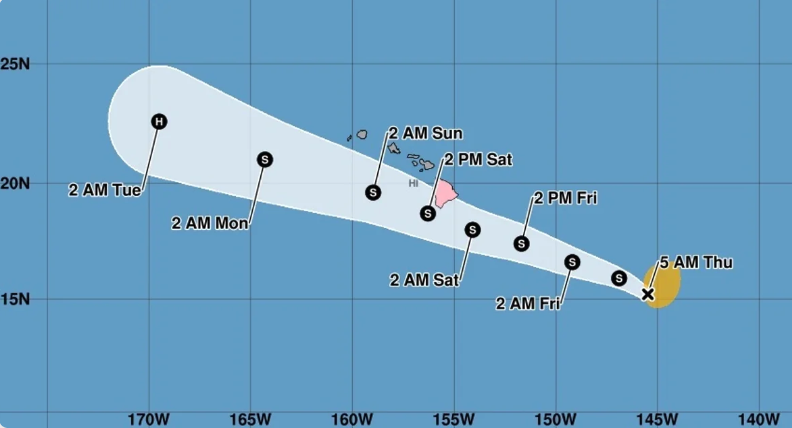
A forecast cone showing the probable path of the storm center for Tropical Storm Lala, as of 5 A.M. HST on Thursday. NOAA/NHC
|
|
Tropical storm Lala is barreling toward Hawaii. The cyclone is expected to make landfall this weekend, bringing heavy rains, strong wind, and the potential for “life-threatening flooding” and mudslides on the islands. | 2 min read
A controversial 2024 study that some vaccine skeptics used to argue that millions of people likely died as a result of COVID vaccines has been retracted by the journal BMJ Public Health over misinformation and issues with the research. | 2 min read
The popular drug metformin works by turning the human gut into something of a sugar sink. | 2 min read
Popular squishy toys are everywhere. But finding out what they're made of is no easy task. All we know for sure: Please do not microwave them. | 4 min read
Scientists calculated how much money and how many lives a universal, single-payer health care system might save the U.S. It's a lot. | 2 min read
Check out this cool animation, based on new data from the MOTHRA telescope. It shows how material expelled from a dying star in the Helix Nebula moves through interstellar space, releasing elements that will be incorporated into future stellar generations. | 4 min read
Yes, AI is transforming mathematics. But humans will remain essential to the field, interpreting results and guiding new research, says mathematician and physicist Yang-Hui He of the London Institute for Mathematical Sciences. | 3 min read
|
|
Eclipse Around the World
Yesterday’s total solar eclipse swept across the Northern Hemisphere, traveling from Russia to Spain and passing over parts of Greenland, Iceland and Portugal. An estimated one billion people experienced partly or fully dark skies as the moon passed directly in front of our star, blocking its light. Enjoy some of my favorite images of the eclipse captured around the world, and in the coming days I’ll feature a few from fellow Today in Science readers.
|
|
Scientific American contributor and eclipse chaser Lucie McCormick was on the ground in Spain near its capital of Madrid. From there, she captured several stunning images of the total solar eclipse as it passed over the skies. This one she took using a drone. Click here to watch a time lapse of the whole eclipse in 4K.
|
|
Joel Kowsky/NASA via Getty Images
|
|
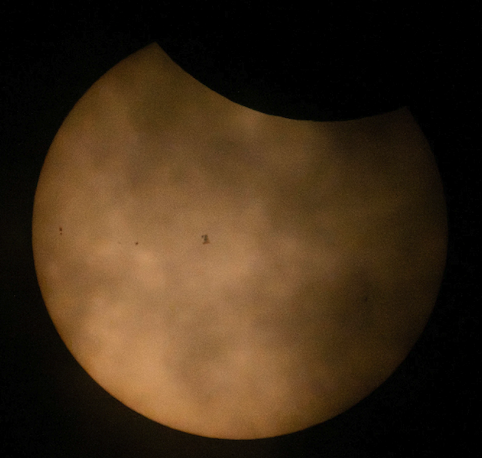
Man, I love this photo. If you look closely at the center of the image you can see the International Space Station, with a crew of seven onboard, in silhouette as it transits across the sun at roughly five miles per second. Taken from a view near Hodgdon, Maine.
|
|
Clara Moskowitz/Scientific American
|
|
Our own editor Clara Moskowitz captured this beauty from a boat in the Mediterranean Sea moments before the eclipsed sun sank beneath the horizon.
|
|
|
|
|
Dogs Can Read Faces
If you smile at a dog, it might start wagging its tail and join in the glee. Humans have evolved and lived alongside dogs for perhaps tens of thousands of years, so our furry friends have gotten pretty good at reading us. In a new study, scientists used functional magnetic resonance imaging (fMRI) to identify activation in dogs’ brain regions when they see different human facial expressions. They found that not only can dogs tell the difference between positive and negative emotions, they can differentiate between specific emotions like fear or anger.
How it works: Dogs seem to have the biggest reactions to happy humans. In one experiment, dogs were shown pictures of happy or neutral human faces. Distinct parts of the dogs’ brains lit up when they looked at happy faces, and these areas included the caudate nucleus, a region that is thought to be involved in reward processing. In another experiment, dogs were shown a mix of faces expressing happiness, sadness, anger and fear. The dogs showed the strongest response to happiness, but there were also differences in the brain activity associated with faces showing fear versus anger or sadness. Interestingly, there wasn't a difference in brain activity between anger and sadness.
What the experts say: “Dogs do pay attention to you; [they] do pay attention to your face. Just by smiling at them, you are giving them something,” says Raúl Hernández-Pérez, the study’s lead author and a postdoctoral researcher at the University of Vienna. “You're provoking a small response in the brain related to reward processing—just by smiling.” —Emma Gometz, Newsletter Editor
|
|
If you've read this far it's fair to say you'd get a lot out of a subscription to Scientific American. Join us: 90 days for just $1.
|
|
Maybe you don't quite get what makes a total solar eclipse so special or rare. Well consider this. The next total solar eclipse viewable by millions from many U.S. states won't be until 2045! And in the upcoming 100 years, just 11 more will be visible. How the moon and sun move in relation to Earth and each other is highly calculable by astronomers, but also a case of cosmic good luck. At least for us curious humans.
|
|
Thanks to readers who have sent in their photos of yesterday's solar eclipse. It's not too late if you want to send yours: newsletters@sciam.com. See you tomorrow!
—Andrea Gawrylewski, Chief Newsletter Editor
|
|
|
|
|
Subscribe to this and all of our newsletters here.
|
|
Scientific American
1000 N West Street, Suite 1200
|
|
|
|
|