A bold procedure could buy more time for both Voyager spacecrafts ͏ ͏ ͏ ͏ ͏ ͏ ͏ ͏ ͏ ͏ ͏ ͏ ͏ ͏ ͏ ͏ ͏ ͏ ͏ ͏ ͏ ͏ ͏ ͏ ͏ ͏ ͏ ͏ ͏ ͏ ͏ ͏ ͏ ͏ ͏ ͏ ͏ ͏ ͏ ͏ ͏ ͏ ͏ ͏ ͏ ͏ ͏ ͏ ͏ ͏ ͏ ͏ ͏ ͏ ͏ ͏ ͏ ͏ ͏ ͏ ͏ ͏ ͏ ͏ ͏ ͏ ͏ ͏ ͏ ͏ ͏ ͏ ͏ ͏ ͏ ͏ ͏ ͏ ͏ ͏ ͏ ͏ ͏ ͏ ͏ ͏ ͏ ͏ ͏ ͏ ͏ ͏ ͏ ͏ ͏ ͏ ͏ ͏ ͏ ͏ ͏ ͏ ͏ ͏ ͏ ͏ ͏ ͏ ͏ ͏ ͏ ͏ ͏ ͏ ͏ ͏ ͏ ͏ ͏ ͏ ͏ ͏ ͏ ͏ ͏ ͏ ͏ ͏ ͏ ͏ ͏ ͏ ͏ ͏ ͏ ͏ ͏ ͏ ͏ ͏ ͏ ͏ ͏ ͏ ͏ ͏ ͏ ͏ ͏ ͏
August 7, 2026—A daring maneuver to buy more time for the Voyager spacecrafts. Plus, sugar may have been a prominent part of our ancestors' diets, and physicists successfully entangle sunlight.
—Andrea Gawrylewski,
Chief Newsletter Editor
|
|
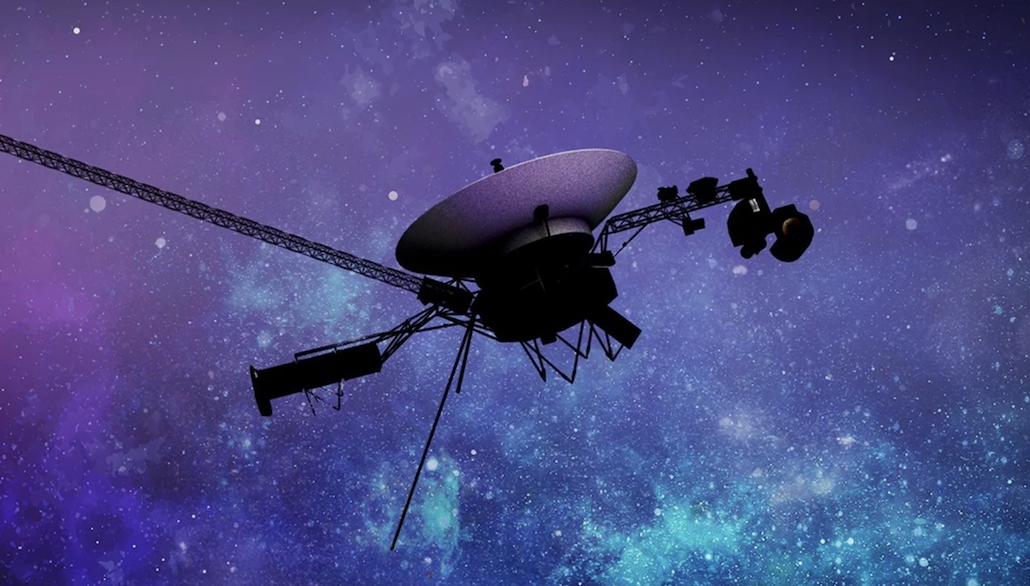
NASA engineers are swapping which instruments get powered on its decades-old Voyager spacecrafts in order to buy the ships more time. They successfully completed the maneuver for Voyager 2 in July, and are now completing the same procedure for Voyager 1. | 4 min read
AI just created a virus not found in nature, and scientists are worried. | 3 min read
Smoking in movies and TV is up, and “cigfluencers” on social media are gaining followers. But the data on whether young people really are smoking more hasn't caught up. | 5 min read
More on smoking: Our reporter Adam Kovac appears on our podcast Science Quickly to discuss the "vibes" that smoking is cool again among young people. | 14 min podcast
How many times do you have to fold a piece of paper in half so that its thickness reaches to the moon? The answer is going to explode your brain (hint: it's fewer than 100 times). | 5 min read
Sugar may have played an outsize role in our evolutionary history. A new analysis suggests early hominins may have gotten as much as 66 percent of their energy from sweet foods such as fruit and honey. | 3 min read
Life on Earth is thought to have emerged from the primordial ooze some four billion years ago. A provocative new study argues that this miraculous transition from chemistry to biology happened not once but twice. | 3 min read
|
|
Entangled Sunlight
Physicists just achieved quantum entanglement using good ole’ sunlight. For decades, creating entangled photons—pairs of light particles linked in a way that measuring one instantly reveals the state of the other, no matter the distance between them—was thought to require the pristine, orderly beam of a laser. But in a new study researchers concentrated ordinary sunlight through a cone-shaped glass funnel, beamed it into a special crystal and produced entangled photon pairs as well as laser-made ones. They toiled outdoors, over three days, waiting out each cloud that passed by.
Why it matters: Lasers are energy hogs. They run on electricity, need constant babysitting to keep them stable and waste much of their power as heat. Sunlight is… free, and everywhere, which means future quantum devices like satellites generating unhackable encryption keys in Earth’s orbit could someday skip the laser entirely and run on the light they already bask in.
What the researchers say: The research team sees this advance as potentially a way to democratize quantum technology before its energy appetite becomes a real problem. "What we want is really to make quantum technology more and more accessible for everybody," says author Cheng Li, who co-led the work and is now at Lawrence Berkeley National Laboratory. "If it's possible with sunlight, then you can virtually do it anywhere." Or, as he puts it more bluntly: "Sunlight is just there. We just cut out the middleman and let sunlight do all the work." —Sanidhya Sharma, Intern
|
|
Scientific American, Vol. 35, No. 3; July 15, 1876
|
|
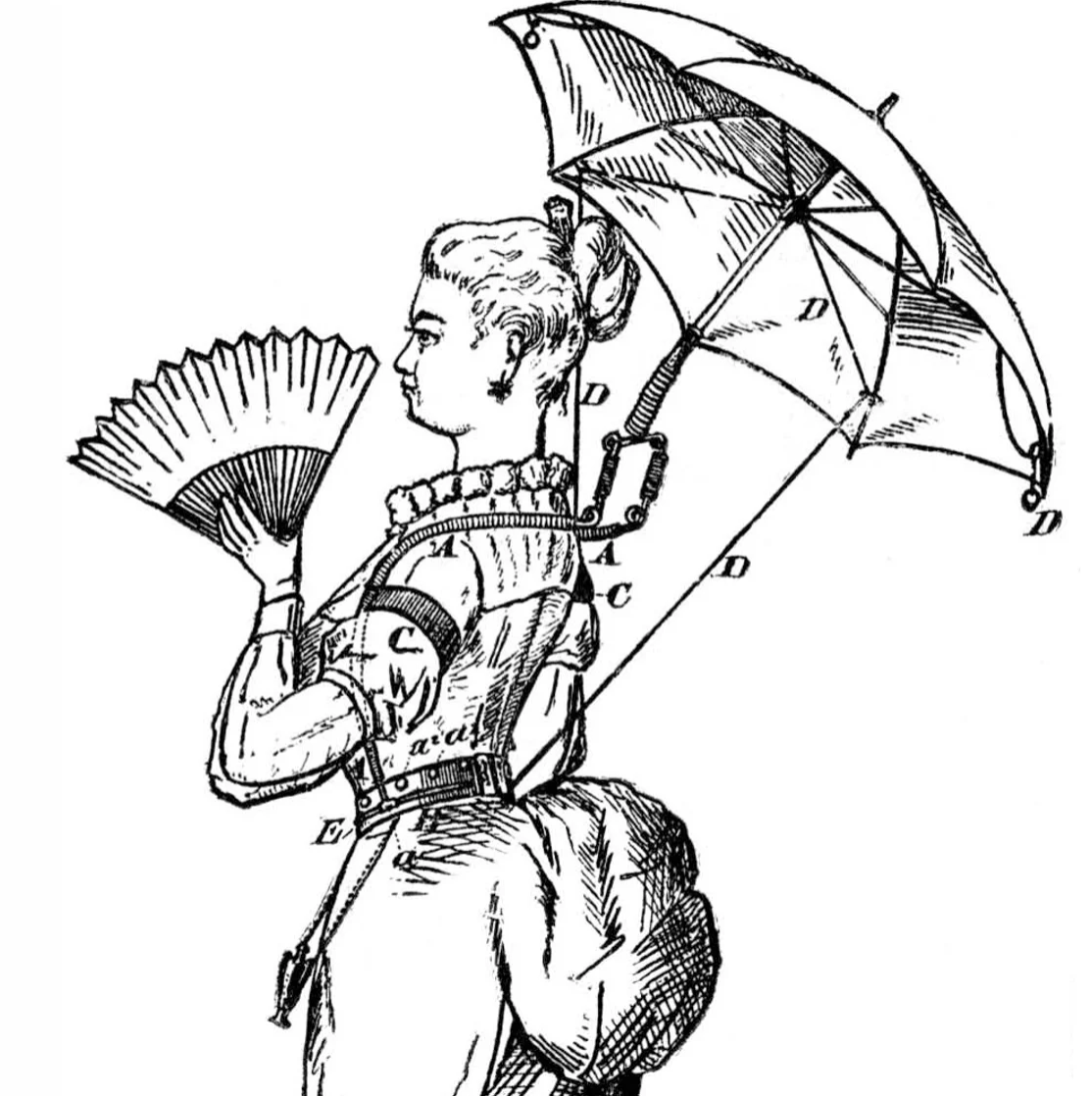
From the July 1876 issue: "Here is a view of a new parasol and umbrella supporter invented by Eliza M. Arnold of Houston, Texas. The contraption is fitted to its wearer with rods and elastic straps."
|
|
|
|
|
Every Friday in summer we're recommending a great, freshly-published science (or science-ish) book. Tell us what you're reading, fill in your bingo card and happy reading!
|
|
Cat Love: A Novel
By
Tomás Q. Morin. Penguin Random House, June 9, 2026.
 Author
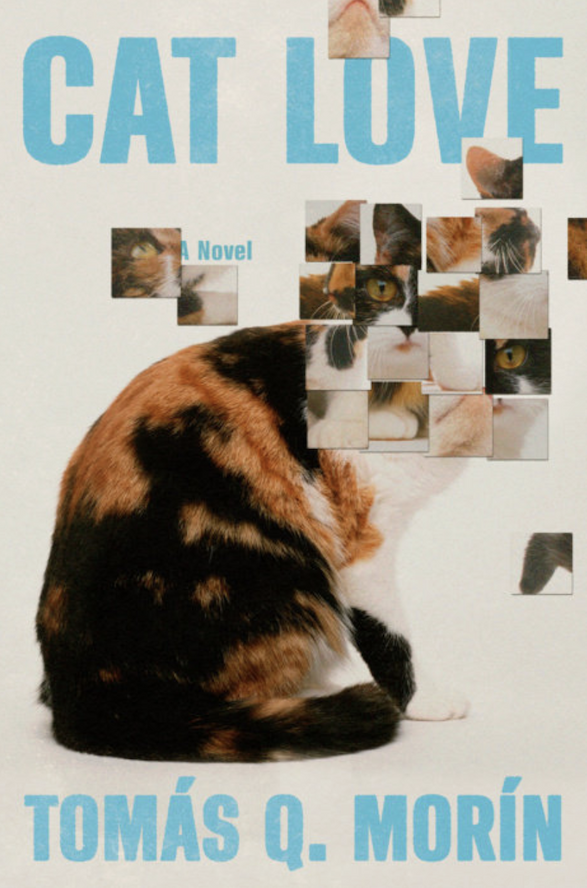
Tomás Q. Morin’s new novel Cat Love takes the perspective of the cat in Schrödinger’s famous thought-experiment. Plucked from its loving home, the furry protagonist is thrust into one of science’s biggest ethical questions. In a disturbing possible near future, the observers of this experiment are training to become “Emotional Support Humans,” and as our furry friend questions reality, metaphysically leaves the box, and meets ghostly friends along the way, readers and cats alike question the ethical methodology of this experiment. Morin's writing becomes more lyrical and fragmented the farther the cat wanders, but overall the book operates as a tribute to the love shared between cat and human, and maybe even subject and scientist. —Brianne Kane, Books and Culture Lead Author
Tomás Q. Morin’s new novel Cat Love takes the perspective of the cat in Schrödinger’s famous thought-experiment. Plucked from its loving home, the furry protagonist is thrust into one of science’s biggest ethical questions. In a disturbing possible near future, the observers of this experiment are training to become “Emotional Support Humans,” and as our furry friend questions reality, metaphysically leaves the box, and meets ghostly friends along the way, readers and cats alike question the ethical methodology of this experiment. Morin's writing becomes more lyrical and fragmented the farther the cat wanders, but overall the book operates as a tribute to the love shared between cat and human, and maybe even subject and scientist. —Brianne Kane, Books and Culture Lead
|
|
|
|
|
MOST POPULAR STORIES OF THE WEEK
|
|
It’s 90 degrees in the Arctic right now | 2 min read
Eating less protein could help you live longer | 5 min read
Mathematicians make a breakthrough on Gauss’s riddle, unsolved for 200 years | 6 min read
|
|
In my estimation, any technological advance that takes advantage of free and abundant sunlight is a step in the right direction. All life on the planet owes its origin to our star, so it makes sense that our science would too.
|
|
Thank you for being a part of the Today in Science community! Reach out any time to newsletters@sciam.com with your comments or questions. See you back here on Monday.
—Andrea Gawrylewski, Chief Newsletter Editor
|
|
|
|
|
Subscribe to this and all of our newsletters here.
|
|
Scientific American
1000 N West Street, Suite 1200
|
|
|
|
|