Plus, DNA fragmentation in sperm may be behind repeat miscarriages ͏ ͏ ͏ ͏ ͏ ͏ ͏ ͏ ͏ ͏ ͏ ͏ ͏ ͏ ͏ ͏ ͏ ͏ ͏ ͏ ͏ ͏ ͏ ͏ ͏ ͏ ͏ ͏ ͏ ͏ ͏ ͏ ͏ ͏ ͏ ͏ ͏ ͏ ͏ ͏ ͏ ͏ ͏ ͏ ͏ ͏ ͏ ͏ ͏ ͏ ͏ ͏ ͏ ͏ ͏ ͏ ͏ ͏ ͏ ͏ ͏ ͏ ͏ ͏ ͏ ͏ ͏ ͏ ͏ ͏ ͏ ͏ ͏ ͏ ͏ ͏ ͏ ͏ ͏ ͏ ͏ ͏ ͏ ͏ ͏ ͏ ͏ ͏ ͏ ͏ ͏ ͏ ͏ ͏ ͏ ͏ ͏ ͏ ͏ ͏ ͏ ͏ ͏ ͏ ͏ ͏ ͏ ͏ ͏ ͏ ͏ ͏ ͏ ͏ ͏ ͏ ͏ ͏ ͏ ͏ ͏ ͏ ͏ ͏ ͏ ͏ ͏ ͏ ͏ ͏ ͏ ͏ ͏ ͏ ͏ ͏ ͏ ͏ ͏ ͏ ͏ ͏ ͏ ͏ ͏ ͏ ͏ ͏ ͏ ͏
August 10, 2026—The Pentagon releases new footage of unidentified anomalous phenomena. Plus, a magnitude 7.4 earthquake hits Colombia and a total solar eclipse happens Wednesday. Welcome to a new week of discovery! Let's go.
—Andrea Gawrylewski
Chief Newsletter Editor
|
|
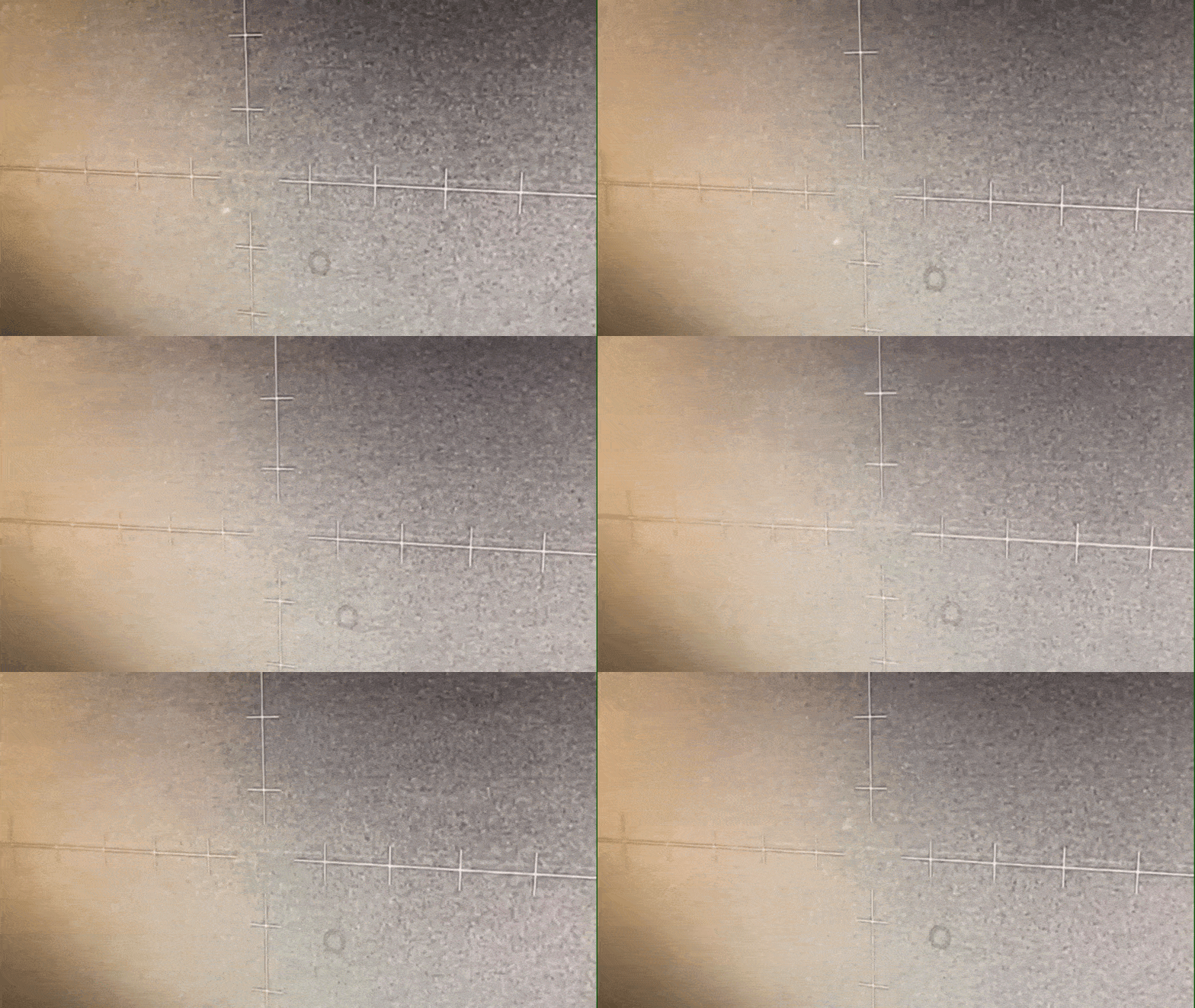
A UAP captured on an infrared sensor display onboard a U.S. Special Operations Forces AC-130J gunship in 2021. U.S. Department of War
|
|
The U.S. Pentagon released its fifth tranche of files related to unidentified anomalous phenomena (UAP). The trove includes video footage from a military plane that shows jittery blips of light bouncing around in the sky. | 2 min read
An earthquake of magnitude 7.4 hit Colombia today, killing dozens of people. It occurred along a strike-slip fault where tectonic plates slide horizontally past one another. | 2 min read
The popular science communicator Hank Green sparked an outcry among his fans for using AI in his research process for video scripts. | 3 min read
The vocalizations of birds and whales follow a fundamental structural principle found in all human languages, according to a new analysis. | 3 min read
After eight years, more than 200 million predictions and a Nobel Prize for two of its creators, Google DeepMind dissolved the team behind AlphaFold—the artificial intelligence program aimed at predicting protein structures. What does this mean? | 3 min read
The forests of Europe are full of buried explosives left over from WWII and the Cold War. Now the continent’s wildfires are reaching them, requiring bomb disposal teams to work alongside firefighters. | 4 min rad
Taylor Farms, the produce distributor linked to the ongoing nationwide cyclosporiasis crisis, has issued a voluntary recall of products containing jalapeño peppers amid an outbreak of infections with Salmonella. | 2 min read
DNA fragmentation in sperm may be partially responsible for increased risk of repeat miscarriages. | 4 min read
|
|
The Path of Totality
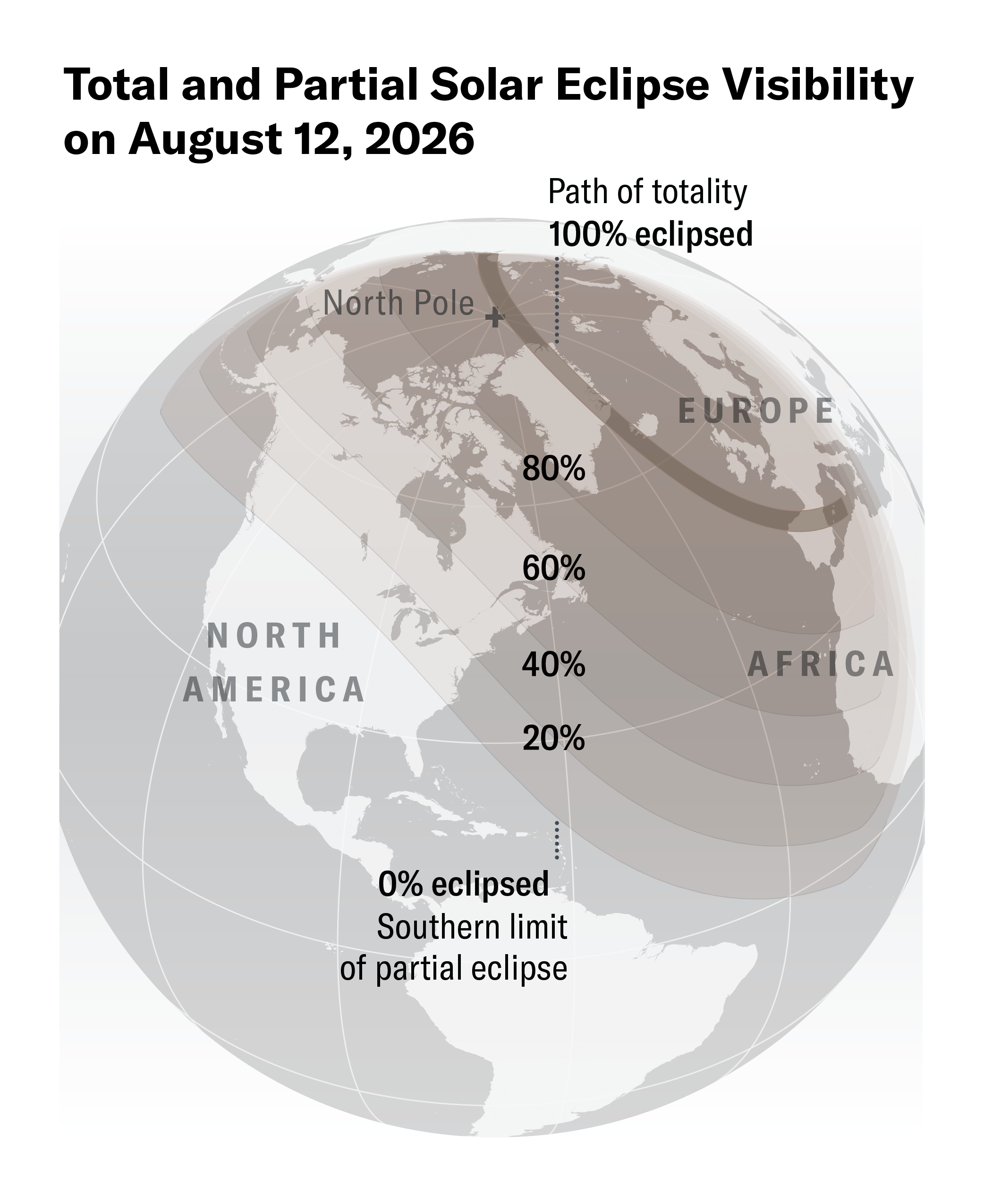
It’s eclipse week! On Wednesday, August 12 a total solar eclipse will occur. The best views of this solar eclipse are from the Arctic Circle, Iceland, Spain and parts of Portugal. For viewers in northern Russia, Alaska and northern Canada, the eclipse will take place in the morning local time. For locations in Europe like Iceland and Spain, the eclipse will occur in early evening local time. Unlike the eclipse of 2024, most people in North America won’t see a lot of coverage of the sun—though people in Portland, Maine, will see about 20 percent of the sun covered just before 2 P.M. EDT.
|
|
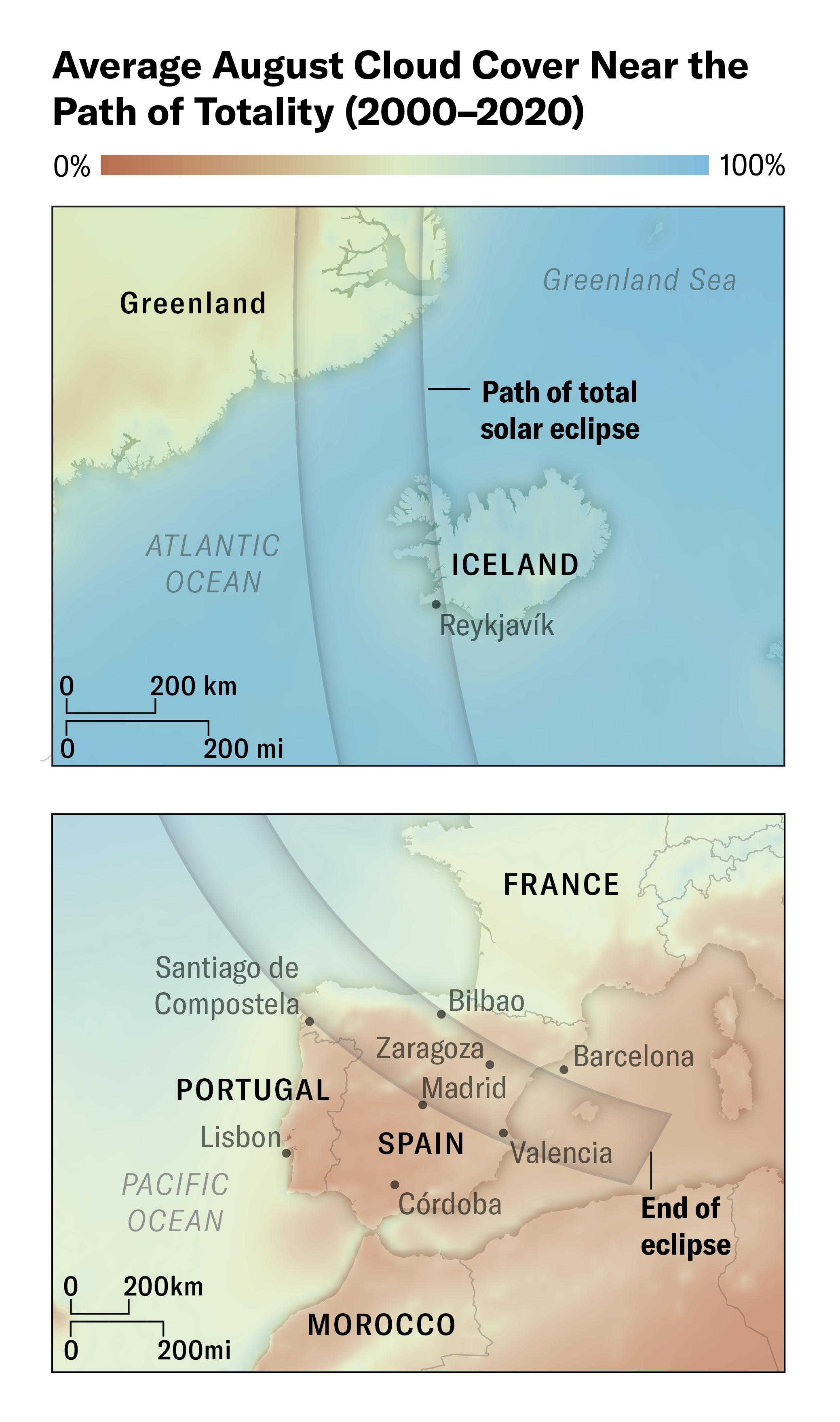
What will the weather be like? Scientific American reporters will be on the ground in Iceland and off the coast of Spain during totality. Average cloud cover for this time of year in Reykjavik, for example, is, sadly, cloudy (but maybe we’ll get lucky!). In Spain viewers will have a much better chance of clear skies (though, please stay indoors as much as possible during the day because the temperatures will be over 38 degrees C, 100 degrees F).
|
|
How to view the eclipse: Never look directly at the eclipse without eye protection (other than for the moments during totality, and not a second longer!). Eclipse glasses and binoculars should have a safety rating called ISO 12312-2. This is an international standard that ensures glasses filter 99.99 percent of all sunlight—anything less can lead to eye damage. Check out local weather and cloud reports like those on Ventusky and AccuWeather to find areas with clear skies during totality.
Tips for photography: If you’re in the right spot under the path of the eclipse, the clouds are clear and you have a great view of the sky, here are a few tricks for photographing the eclipse:
-
Make sure you have an appropriate solar filter for your camera to use during the partial eclipse. This will protect your sensor and help you get the clearest image. During totality, you can take the solar filter off your camera.
-
Using a tripod is helpful for stability. You can also add a star tracker for an extra layer of precision.
-
Don’t use autofocus, as environmental factors (like bugs!) can disorient the camera.
-
Be present! Yes, a photo keepsake is wonderful, but take a moment to look away from your camera and experience the wild and rare moment of our sun being blocked out.
|
|
|
|
|
|
JOIN THE SUMMER READING CHALLENGE!
|
|
There's still time to join our summer reading challenge! Download and fill in your SciAm Summer Reading bingo card by exploring everything from eco-horrors to STEMinist romances to movie adaptations. After completing a square on the bingo card (maybe you've already done this!), tag us on social media or email contests@sciam.com for a chance to win one of 40 prize packages.
|
|
|
|
|
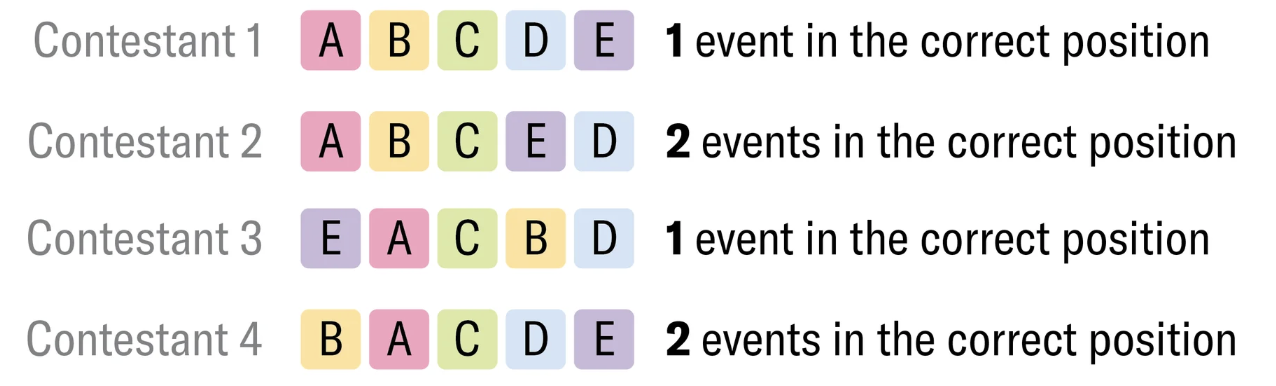
A game show asks four contestants to list five historical events, labeled A, B, C, D and E, in chronological order. They receive one point for each event that they position correctly in the order—so if the correct order is A B C D E and a contestant guesses E B A D C, they will get two points for B and D being placed correctly. Here are the contestants’ guesses and scores:
|
|
What is the correct order?
Click here for the solution.
|
|
The rise of GLP-1 medications is setting up the youngest generations for lifelong struggles with food and body image. | Bloomberg
An "outlaw" chemist who makes videos teaching his followers to concoct drugs from LSD to DMT vapes. | WIRED ($)
The neurological explanation for why some people buy more books than they will ever read. | The Conversation
|
|
It's one thing to read about a total solar eclipse. It's another to experience one. I was lucky to be in Vermont in 2024 for the great North American solar eclipse, very near to the path of totality. It was my first near-totality experience and I'll never forget the strange dimness that descended on us as the moon slowly obscured the sun, the quietness in the forests as birds stilled, and the rare occasion to consider how vital the sun is to life on this planet. I do hope you'll share your 2026 eclipse plans with our community if you have any! And send your photos. I'll remind you again tomorrow.
|
|
—Andrea Gawrylewski, Chief Newsletter Editor
P.S. Did this newsletter spark your curiosity? Share it with a science-loving friend and help our community grow.
|
|
|
|
|
Subscribe to this and all of our newsletters here.
|
|
Scientific American
1000 N West Street, Suite 1200
|
|
|
|
|