Swirling plasma roiling on our star's surface ͏ ͏ ͏ ͏ ͏ ͏ ͏ ͏ ͏ ͏ ͏ ͏ ͏ ͏ ͏ ͏ ͏ ͏ ͏ ͏ ͏ ͏ ͏ ͏ ͏ ͏ ͏ ͏ ͏ ͏ ͏ ͏ ͏ ͏ ͏ ͏ ͏ ͏ ͏ ͏ ͏ ͏ ͏ ͏ ͏ ͏ ͏ ͏ ͏ ͏ ͏ ͏ ͏ ͏ ͏ ͏ ͏ ͏ ͏ ͏ ͏ ͏ ͏ ͏ ͏ ͏ ͏ ͏ ͏ ͏ ͏ ͏ ͏ ͏ ͏ ͏ ͏ ͏ ͏ ͏ ͏ ͏ ͏ ͏ ͏ ͏ ͏ ͏ ͏ ͏ ͏ ͏ ͏ ͏ ͏ ͏ ͏ ͏ ͏ ͏ ͏ ͏ ͏ ͏ ͏ ͏ ͏ ͏ ͏ ͏ ͏ ͏ ͏ ͏ ͏ ͏ ͏ ͏ ͏ ͏ ͏ ͏ ͏ ͏ ͏ ͏ ͏ ͏ ͏ ͏ ͏ ͏ ͏ ͏ ͏ ͏ ͏ ͏ ͏ ͏ ͏ ͏ ͏ ͏ ͏ ͏ ͏ ͏ ͏ ͏
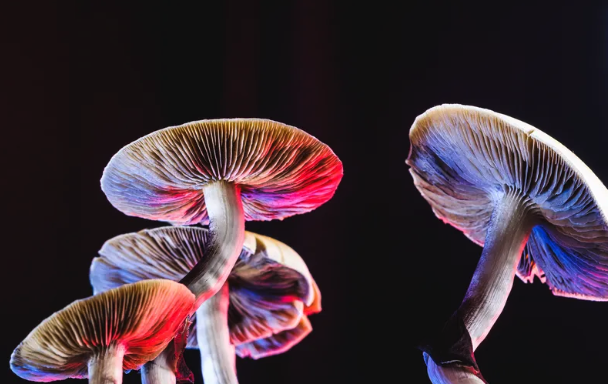
August 5, 2026—Astronomers capture unprecedented views of whirlpools of plasma swirling on the sun. Our senior space editor Lee Billings reports below. Plus, mountain lions can make nighttime driving safer, and psychedelic mushrooms might treat eating disorders.
—Andrea Gawrylewski
Chief Newsletter Editor
|
|
Psilocybe cubensis. Alexander_Volkov/Getty Images
|
|
All science, all the time. Read about what you care about with a subscription to Scientific American. Try it out for 90 days for just $1!
|
|
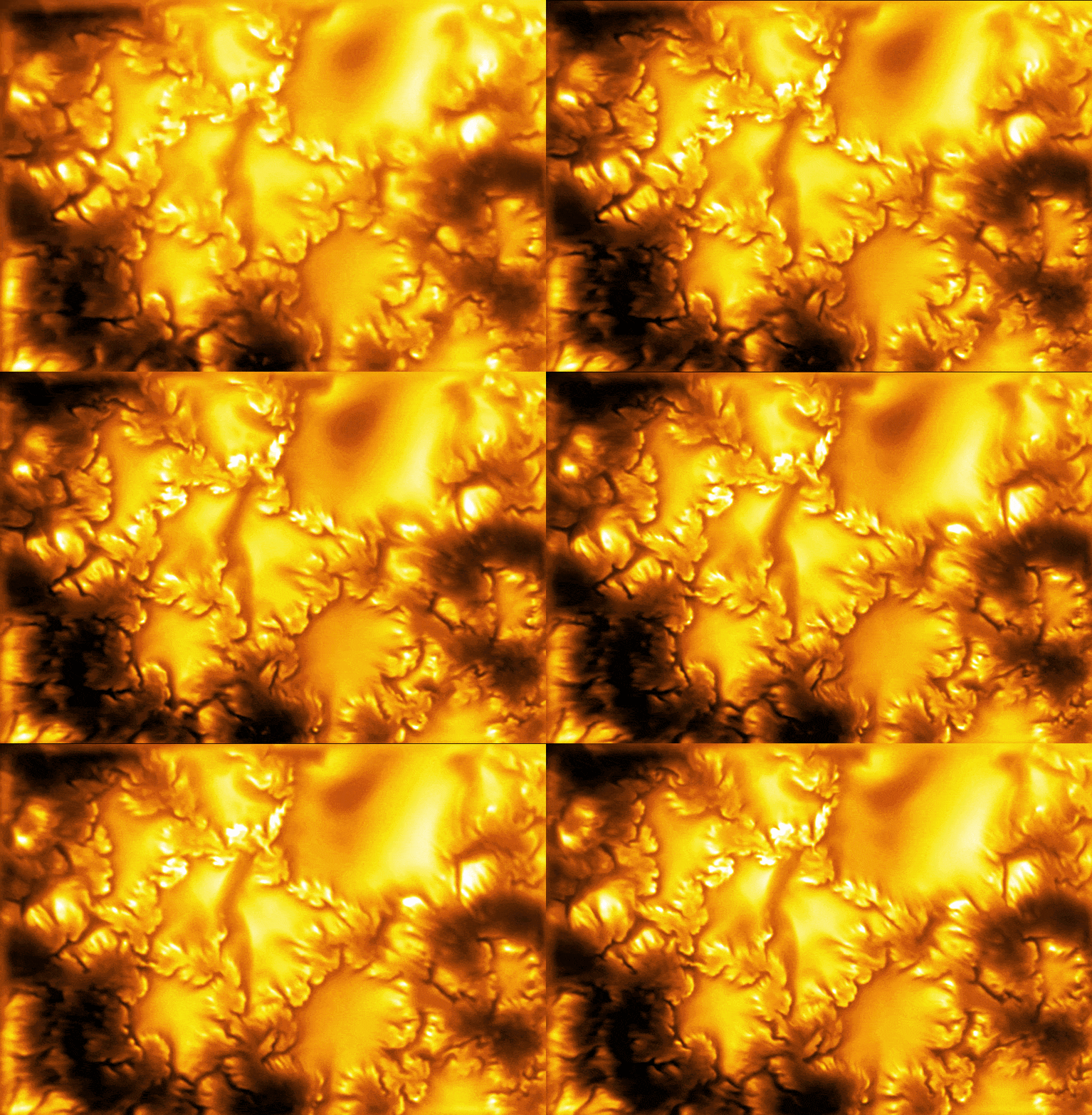
The highest-resolution images of the sun’s surface, or photosphere, ever captured. NSF/NSO/AURA/MPS
|
|
Surface of the Sun
Using the four-meter Daniel K. Inouye Solar Telescope in Hawaii, an international team of scientists has obtained the sharpest-ever images of the sun’s surface (called its photosphere), revealing never-before-seen whirlpools of plasma. The team pushed the telescope to its limits, zooming in on the outskirts of a sunspot. The feat, says study coauthor and NSO senior scientist Friedrich Wöger, is equivalent to seeing ants crawling on Earth’s surface from an altitude of 100 miles (161 km).
How it works: The “tiny” whirlpools, which range in size from about 20 to nearly 200 kilometers across, arise from a well-studied effect called the Kelvin-Helmholtz instability, which occurs when two fluids slip past each other at different velocities. The resulting “shear” at the boundary as the fluids mix creates eye-catching vortices that resemble cresting ocean waves; you can see them on Earth in some cloud formations and even in cream stirred into a cup of coffee.
What the experts say: “This is a major breakthrough in solar physics,” says Mihalis Mathioudakis, an astronomer at Queen’s University Belfast, who was not a part of the study. The team “has identified this fundamental physical process in the smallest astrophysical scales,” an achievement that applies not only to the sun but also to other stars throughout the universe. —Lee Billings, Senior Space Editor
|
|
Life Among the Lions
Living in a region with higher populations of mountain lions (also known as pumas or cougars) can drastically decrease the number of potentially deadly collisions between deer and vehicles. Researchers analyzed data from 503 camera traps and 59 GPS collars tracking pumas’ presence in Washington State’s Olympic Peninsula between 2020 and 2025. The scientists also looked at data on the distribution and behavior of black-tailed deer and elk in the landscape and on collisions between vehicles and the animals. Their analysis showed that areas with a high presence of pumas had 76 percent fewer deer-vehicle collisions.
How it works: The pumas aren’t hunting more deer. Rather, the presence of pumas pushed deer into more remote areas (where they can better hide in vegetation), making them 15 percent less likely to be in areas with many roads. Pumas also force deer to be more active during the daytime than at night, when most deer-car collisions occur.
What the experts say: “I hope that it helps people be more tolerant of living alongside these animals when they realize that there is tremendous value in having them live alongside us,” says study co-author Mark Elbroch, a mountain lion biologist and director of the Puma Program at Panthera, a conservation organization. “They're saving lives. They’re reducing damage to infrastructure. They’re saving millions of dollars just in our place.”
|
|
|
|
|
More and more veterinarians are learning to treat honeybees. | New York Times ($)
Influencers are promoting unproven natural alternatives to treat ADHD. | WIRED ($)
Anthropic chose to destructively scan books rather than pay digital copyright in order to train its large language model. | The Guardian
|
|
Have you ever painted with watercolors? The mesmerizing churn of plasma on the sun's surface reminds me of how watercolor ink will spread and distribute in a blot of water. Or perhaps you see cream swirling in coffee when you gaze at this image. This solar view is unprecedented, but feels very familiar to our own experiences. Amazing!
|
|
Reach out to me anytime with any other comments, observations or questions: newsletters@sciam.com. I'll be back tomorrow.
—Andrea Gawrylewski, Chief Newsletter Editor
P.S. Folks, yesterday, I sent out a note correcting my erroneous description of daddy longlegs as "spiders" in the previous newsletter. But in that correction I mistakenly called daddy longlegs "insects," which is ALSO INCORRECT. I have decided to stop discussing daddy longlegs altogether as the topic seems to be some sort of accuracy Kryptonite for me. Thanks to all you sharp readers for keeping me in line!
|
|
|
|
|
Subscribe to this and all of our newsletters here.
|
|
Scientific American
1000 N West Street, Suite 1200
Wilmington, Delaware 19801
|
|
|
|
|