4 reasons solar power is seeing a meteoric rise ͏ ͏ ͏ ͏ ͏ ͏ ͏ ͏ ͏ ͏ ͏ ͏ ͏ ͏ ͏ ͏ ͏ ͏ ͏ ͏ ͏ ͏ ͏ ͏ ͏ ͏ ͏ ͏ ͏ ͏ ͏ ͏ ͏ ͏ ͏ ͏ ͏ ͏ ͏ ͏ ͏ ͏ ͏ ͏ ͏ ͏ ͏ ͏ ͏ ͏ ͏ ͏ ͏ ͏ ͏ ͏ ͏ ͏ ͏ ͏ ͏ ͏ ͏ ͏ ͏ ͏ ͏ ͏ ͏ ͏ ͏ ͏ ͏ ͏ ͏ ͏ ͏ ͏ ͏ ͏ ͏ ͏ ͏ ͏ ͏ ͏ ͏ ͏ ͏ ͏ ͏ ͏ ͏ ͏ ͏ ͏ ͏ ͏ ͏ ͏ ͏ ͏ ͏ ͏ ͏ ͏ ͏ ͏ ͏ ͏ ͏ ͏ ͏ ͏ ͏ ͏ ͏ ͏ ͏ ͏ ͏ ͏ ͏ ͏ ͏ ͏ ͏ ͏ ͏ ͏ ͏ ͏ ͏ ͏ ͏ ͏ ͏ ͏ ͏ ͏ ͏ ͏ ͏ ͏ ͏ ͏ ͏ ͏ ͏ ͏
August 25, 2026—Solar power is outpacing all other energy sources in global growth. Here's why. Plus, robots beat Usain Bolt's 100-meter-dash record and Italy just unleashed 130,000 octopuses on the Mediterranean.
—Andrea Gawrylewski
Chief Newsletter Editor
|
|
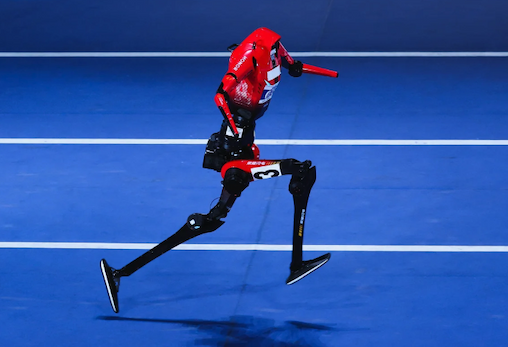
This robot ran the 100-meter dash in 9.47 seconds, and another managed to do so in just 9.39 seconds. Lintao Zhang/Getty Images
|
|
Two robots at the humanoid robot "Olympics" beat Usain Bolt’s 100-meter-dash record—then promptly crashed into a padded wall. | 2 min read
In a 2023 podcast interview, Heidi Overton, now Trump's pick to lead the FDA, called for the creation of “alternate systems” for publishing research that would support conservative policies. | 2 min read
This Thursday, people in the Americas, Africa and Europe can expect to see a near-total lunar eclipse. Here's how to spot it. | 2 min read
An "extreme" wildfire outside Reno, Nev., began on August 22 and has already burned more than 15,000 acres of land. It's expected to continue to spread. | 2 min read
-
-
-
|
|
Support the newsletter. Feed your curiosity. Subscribe to Scientific American for 90 days for just $1.
|
|
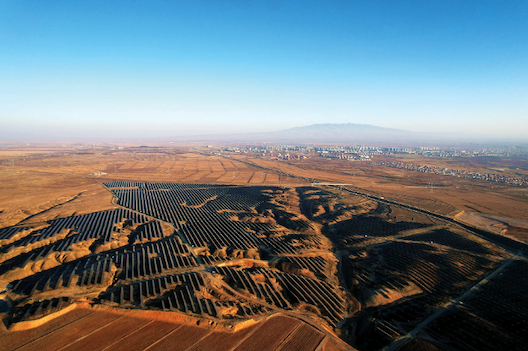
Rows of solar panels stand in the Gobi Desert in Wuzhong, China. China has made use of its desert spaces for large solar projects, which it hopes will also combat desertification and dust storms. VCG/Getty Images
|
|
Rocketing Solar Power
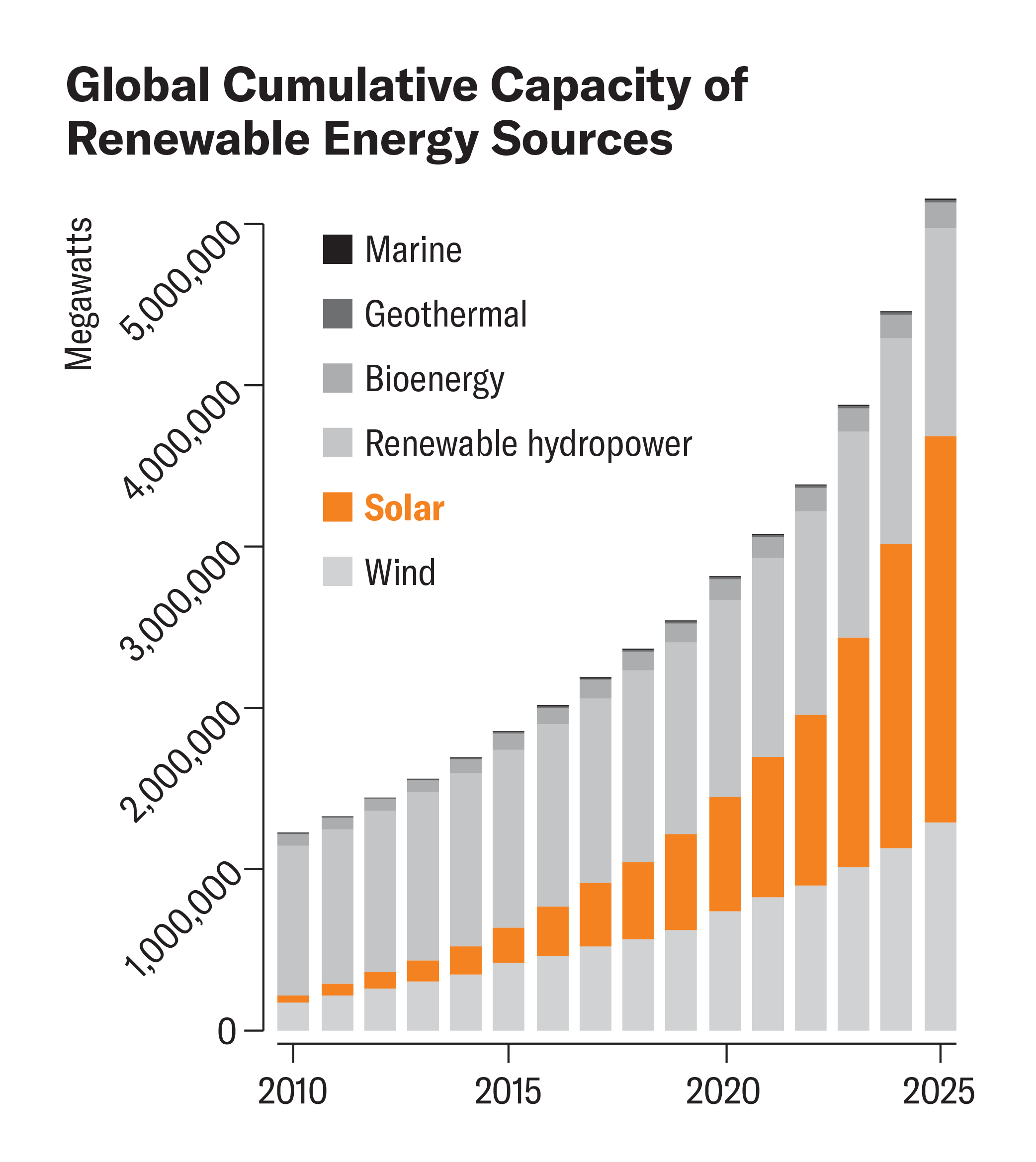
In a globalized economy in which conflict can shut down shipments of millions of barrels of fossil fuel overnight, solar power is rising to meet demand. Last year the world added 600 terawatt-hours of solar photovoltaic generation, enough to power Canada for a year. It was the first time that a renewable source took the top slot in global supply growth. And although solar is still catching up to natural gas and coal, its share of energy generation grew by nearly 19 times from 2014 to 2025. Despite a hostile attitude by the current U.S. administration, solar power still has momentum, thanks in part to tax incentives and investments that predated the administration. In fact, this May solar outpaced coal’s monthly power share in the U.S. for the first time ever.
Falling costs: Last year financial advisory firm Lazard published a report showing that the levelized cost of energy—the cost of a project divided by its expected lifetime energy production—for new utility-scale solar was $38 to $78 per megawatt-hour (MWh), compared with $48 to $109 per MWh for new natural gas plants. Just 16 years ago solar contributed a mere 41,000 megawatts to global energy capacity, and the average utility-scale solar project cost around $5,300 per kilowatt to build. But project costs shrank to $758 per kilowatt by 2023, and solar capacity now stands at about 2.4 million megawatts, making solar cost-competitive with new fossil-fuel projects.
|
|
Jen Christiansen; Source: International Renewable Energy Agency
|
|
How this happened: The biggest global solar innovator is China. After the 2009 economic crisis, China set up solar import agreements with the E.U., which served to support exports of the technology in the coming years. The country began investing billions in the development of renewables. China now drives innovation in the materials science behind solar (for example, the silicon used in commercial panels today is 99.9999999 percent pure). As of 2024, China produced more than 93 percent of the world’s polycrystalline silicon, nearly 97 percent of its silicon wafers, about 92 percent of its photovoltaic cells and about 86 percent of its photovoltaic modules. Last year, renewables met all of China’s new demand, allowing it to stabilize greenhouse gas emissions even as its energy requirements continued to grow. And China is by far the largest patent holder in solar technology.
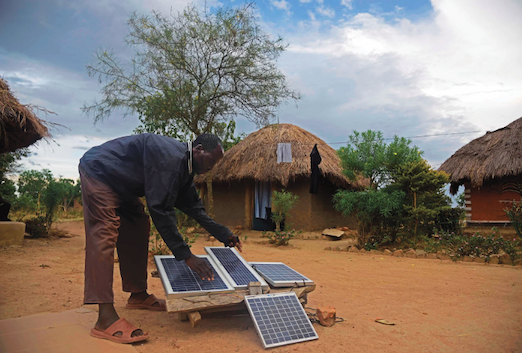
The potential: Inexpensive solar systems manufactured in China are competitive with the cost of new coal and gas projects. So small-scale solar is now an option in places with developing economies where individuals can set up plug-in solar arrays. The tech doesn’t have major local environmental impacts or displace people from their homes. And the energy starts flowing immediately. Across Africa, nations installed 4.5 new gigawatts of solar capacity in 2025, a 54 percent increase from 2024—the continent’s largest solar-growth year so far. Ten U.S. states have legalized solar systems that can be set up outside your windows and plugged into standard wall outlets (some robust enough to run a refrigerator).
|
|
Robert Otala of Alaki Village in Uganda, about 300 kilometers northeast of the country’s capital, checks the solar panels he uses for home purposes.ISAAC KASAMANI/Stringer/Getty Images
|
|
|
|
|
|
SPONSORED CONTENT BY BIOFUTURE
|
|
Your Science Deserves the Right Stage and Audience
|
|
Industry analyst-led Spotlight Panels put emerging companies and their science in the spotlight, giving attendees a closer look at innovative technologies, breakthroughs and trends shaping biotech.
Hear directly from industry experts and company leaders, gain valuable insights, and discover new opportunities to connect and collaborate.
|
|
|
|
|
Octopus paralarvae. Antonio Casalini
|
|
Italian scientists released 130,000 common octopuses (and counting) to fight invasive blue crabs that have proliferated in parts of the Mediterranean and are harming local species. These octopuses, born in the lab, are in their freshly hatched “paralarval” state and just a few millimeters long—but those that grow up will be fierce predators of the invasive crustaceans.
|
|
I'm eagerly awaiting the day that I can prop a solar panel out my window and plug it into a wall outlet. No, I don't expect it to be able to do more than charge my phone or (best case scenario) trim a sliver off the summer AC bill. But the idea of grabbing power right out of the sky feels liberating and empowering. What about you? Do you have solar panels on your home or would you install a balcony-appropriate version if permitted?
|
|
—Andrea Gawrylewski, Chief Newsletter Editor
|
|
|
|
|
Subscribe to this and all of our newsletters here.
|
|
|
|
|