Plus, the health benefits of coffee ͏ ͏ ͏ ͏ ͏ ͏ ͏ ͏ ͏ ͏ ͏ ͏ ͏ ͏ ͏ ͏ ͏ ͏ ͏ ͏ ͏ ͏ ͏ ͏ ͏ ͏ ͏ ͏ ͏ ͏ ͏ ͏ ͏ ͏ ͏ ͏ ͏ ͏ ͏ ͏ ͏ ͏ ͏ ͏ ͏ ͏ ͏ ͏ ͏ ͏ ͏ ͏ ͏ ͏ ͏ ͏ ͏ ͏ ͏ ͏ ͏ ͏ ͏ ͏ ͏ ͏ ͏ ͏ ͏ ͏ ͏ ͏ ͏ ͏ ͏ ͏ ͏ ͏ ͏ ͏ ͏ ͏ ͏ ͏ ͏ ͏ ͏ ͏ ͏ ͏ ͏ ͏ ͏ ͏ ͏ ͏ ͏ ͏ ͏ ͏ ͏ ͏ ͏ ͏ ͏ ͏ ͏ ͏ ͏ ͏ ͏ ͏ ͏ ͏ ͏ ͏ ͏ ͏ ͏ ͏ ͏ ͏ ͏ ͏ ͏ ͏ ͏ ͏ ͏ ͏ ͏ ͏ ͏ ͏ ͏ ͏ ͏ ͏ ͏ ͏ ͏ ͏ ͏ ͏ ͏ ͏ ͏ ͏ ͏ ͏
August 11, 2026—Animals can behave oddly during solar eclipses, the health benefits of coffee are accumulating and new anatomical maps of the vagus nerve.
—Andrea Gawrylewski
Chief Newsletter Editor
|
|
SEBASTIAN KAULITZKI/SCIENCE PHOTO LIBRARY
|
|
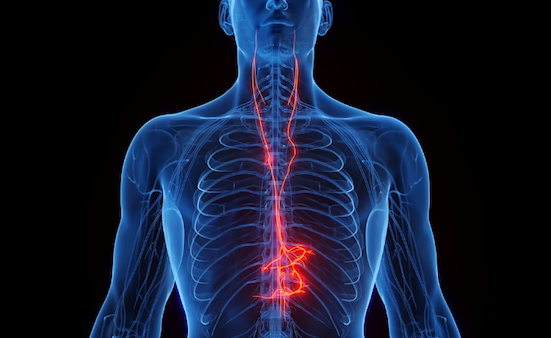
Researchers released a public dataset that maps the left and right branches of the vagus nerve—a bundle of some 200,000 nerves running from our brain to the rest of our body. | 2 min read
A deluge of poop sinking deep into the ocean may have helped spur the Cambrian explosion some 540 million years ago. Not exactly a glamorous explanation, but fun! | 2 min read
The use of psychedelics for medical reasons in the U.S. is growing, but they prompt rare and possibly serious long-term harm. New clinics are popping up to study and treat long-term side effects triggered by psychedelic use. | 4 min read
Yesterday, President Trump signed an executive order altering the childhood vaccine schedule. Despite decades of research showing that the combined measles, mumps and rubella MMR vaccine is safe and effective, the order would split the combined vaccine into separate shots. | 3 min read
-
Last week scientists announced that they had used AI to create a virus totally new to science. The question is should they be allowed to? | 3 min read
-
A U.K. safety agency reported that artificial intelligence agents—models designed to complete assigned tasks entirely on their own—powered by OpenAI and Anthropic took unsanctioned actions online. And then lied about it. | 5 min read
|
|
Support the newsletter. Feed your curiosity. Subscribe to Scientific American for 90 days for just $1.
|
|
Animals During an Eclipse
In 2017, a biologist at a South Carolina zoo saw animals behave strangely during a total solar eclipse. Baboons huddled together; a colony of flamingos circled up around the juveniles; a Komodo dragon “ran erratically” around its enclosure; a pair of Galápagos tortoises inexplicably began mating, and more odd observations were described in the resulting paper published in 2020. The animal reactions were notable, but the researchers couldn’t tell if they were genuine or in response to the humans around them.
Why might this happen? During the eclipse some of the animals began their dusk and nighttime routines: lorikeets flew to their nest boxes and gorillas gathered by the gate to their den. But the researchers recording these behaviors also noted that the human guests at the zoo were acting strangely, too (clapping, oohing, aahing), and the animals might have been reacting to our behavior while watching the eclipse. Indeed, some later studies of zoos that were closed to guests during eclipses show the animals having fewer reactions than during events with big crowds.
What the experts say: “We don’t think about it, but animals at the zoo are perceptive of what’s happening with the humans, just as the humans are perceiving what’s happening with the animals,” says Adam Hartstone-Rose, a biologist at North Carolina State University and co-author of the 2020 paper.
What Emma says: I witnessed my first ever total solar eclipse in 2024, and it unlocked primal fear and awe in me that felt so unfamiliar. The experience made me feel like a little monkey looking up at the sky, an animal just like everyone else. If you haven’t seen a total eclipse yet, it’s worth traveling to see! —Emma Gometz, Newsletter Editor
|
|
Drink to Your Health
Last month the American Heart Association released a statement saying that drinking up to five cups of caffeinated coffee a day has been linked to a lower risk of heart attack, diabetes, stroke and irregular heartbeat. Indeed, in 2026 alone, studies across disciplines have found that coffee could reduce dementia risk, protect your liver and improve your gut microbiome. A 2025 literature review that drew on more than 100 studies concluded “that moderate coffee intake is more beneficial than harmful across a wide range of health outcomes.”
Why this is interesting: Humans have been drinking coffee for centuries, and in the last 50 years, scientists have been trying to pin down whether it’s good for us or not. As evidence, especially from long-term observational studies, has started piling up, scientists have observed more associations between everyday habits, like coffee-drinking, and lifelong health outcomes. This has led to correlations between coffee and lower liver disease and dementia risk; improved microbiomes; and better heart health.
What the experts say: Though questions remain about exactly how coffee’s relationship with our health works, experts like epidemiologist Farin Kamangar say there’s no doubt we’ve seen a shift in how science thinks about the beverage. “Science in general is not a speedboat,” Kamangar says. “It’s a large ship that changes direction slowly. And especially since we are very risk averse, if somebody said in the 1980s that this is bad, it takes a lot of information to reverse that. We have gotten to a point that we have so much data from good studies that we can.” —Mary Randolph, News Intern
|
|
|
|
|
Discover the Wonder: The Monarch Butterfly Migration
|
|
Snag your spot to join me in Mexico in February! This will be a trip of a lifetime. We'll hike into the mountains among the oyamel fir trees to witness the migration of monarch butterflies. Plus, we'll see some other fabulous cultural sites and eat some bangin' food. Email me with questions or click below for more details. I hope you'll join me!
|
|
|
|
|
Scientific American, June, 1991.
|
|
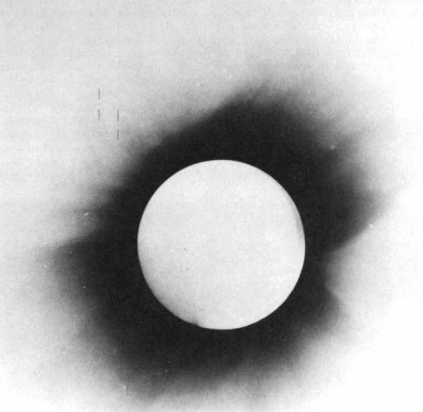
Conducted on May 29, 1919, during a total solar eclipse, an experiment by British astronomer Arthur Eddington (and dubbed the Eddington experiment) made the pages of Scientific American that same year. The goal was to verify Albert Einstein’s general theory of relativity, which posited that gravity was not a pulling force but actually the warping of spacetime. Eddington set up telescopic cameras in two locations—the island of Príncipe off the coast of Africa and the Brazilian city Sobral—and compared the resulting photographs to existing star maps. Sure enough, during the eclipse the stars appeared where Einstein’s calculations predicted they would. The deflection amounted to only a few hundredths of a millimeter on this photograph (negative), taken at Sobral in Brazil. (The stars are marked by vertical lines.)
During tomorrow' eclipse, University of Iceland Ph.D. student Matthias Harksen will be recreating the famed experiment. The experiment can be recreated by anyone with a telescope, and Harksen hopes his example will inspire others to try it out and learn more about Einstein’s work.
|
|
It's a great week for astronomy lovers around the world. Astrotourists are arriving in Europe to catch a glimpse of a rare total solar eclipse tomorrow, August 12, and the Perseid meteor shower will be peaking the same night! I've never wanted to be a space photographer more.
|
|
Thanks for reading and let me know what you think about this newsletter by sending comments to: newsletters@sciam.com. See you tomorrow.
—Andrea Gawrylewski, Chief Newsletter Editor
|
|
|
|
|
Subscribe to this and all of our newsletters here.
|
|
|
|
|