Plus, how to keep your skills sharp despite AI ͏ ͏ ͏ ͏ ͏ ͏ ͏ ͏ ͏ ͏ ͏ ͏ ͏ ͏ ͏ ͏ ͏ ͏ ͏ ͏ ͏ ͏ ͏ ͏ ͏ ͏ ͏ ͏ ͏ ͏ ͏ ͏ ͏ ͏ ͏ ͏ ͏ ͏ ͏ ͏ ͏ ͏ ͏ ͏ ͏ ͏ ͏ ͏ ͏ ͏ ͏ ͏ ͏ ͏ ͏ ͏ ͏ ͏ ͏ ͏ ͏ ͏ ͏ ͏ ͏ ͏ ͏ ͏ ͏ ͏ ͏ ͏ ͏ ͏ ͏ ͏ ͏ ͏ ͏ ͏ ͏ ͏ ͏ ͏ ͏ ͏ ͏ ͏ ͏ ͏ ͏ ͏ ͏ ͏ ͏ ͏ ͏ ͏ ͏ ͏ ͏ ͏ ͏ ͏ ͏ ͏ ͏ ͏ ͏ ͏ ͏ ͏ ͏ ͏ ͏ ͏ ͏ ͏ ͏ ͏ ͏ ͏ ͏ ͏ ͏ ͏ ͏ ͏ ͏ ͏ ͏ ͏ ͏ ͏ ͏ ͏ ͏ ͏ ͏ ͏ ͏ ͏ ͏ ͏ ͏ ͏ ͏ ͏ ͏ ͏
July 21, 2026—Using AI for work can quickly erode skills. Plus, the thymus plays a role in inflammation and the Jellyfish Nebula has been hiding a big cosmic secret.
—Andrea Gawrylewski Chief Newsletter Editor
P.S. If this newsletter sparks your curiosity, consider forwarding it to a friend!
|
|
Support the newsletter. Feed your curiosity. Subscribe to Scientific American for 90 days for just $1.
|
|
Outsourced Cognition
As we become more reliant on AI for our jobs, what will happen to our skills? Early studies suggest that professional abilities can quickly erode as AI is integrated into workplaces. So-called de-skilling is a growing concern for medical specialists, computer scientists and other workers. Seventy percent of nurses and 77 percent of physicians, for example, are worried about losing their skills because of over-reliance on AI systems, according to a June survey of U.S. health care workers.
Two examples:
-
Medicine. Scientists performed a study of physicians in Poland who specialize in endoscopy. Doctors who had each performed at least 2,000 colonoscopies during their career were given access to an AI system that analyzes colonoscopy images in real-time and flags pre-cancerous lesions. During the three-month period before the AI tool was introduced, the specialists found at least one adenoma during 28.4 percent of colonoscopies. During the three-month period after the tool was introduced, the adenoma detection rate for colonoscopies performed without AI assistance decreased to 22.4 percent.
-
Computer science. The AI company Anthropic designed a randomized controlled trial in which 52 software engineers were asked to perform a basic coding task. During the exercise, all 52 participants could search the web and access instructions on how to do the task. Half of the participants were prompted to use an AI assistant as well. After the task, participants were quizzed on the task they had just completed. The AI-assisted participants did significantly worse on the quiz than those who hadn’t used AI: the average score was 50 percent in the AI group versus 67 percent in the non-AI group.
What the experts say: To prevent AI-driven skill erosion, people need to be aware of how much they are offloading to generative AI tools, says Tapani Rinta-Kahila, an information-systems researcher at the Hanken School of Economics in Helsinki. “People need to manage the competing dynamics of relying on generative AI and staying mindfully vigilant.”
|
|
An artist’s concept of Dragonfly soaring over the dunes of Saturn’s moon Titan. NASA/Johns Hopkins APL/Steve Gribben
|
|
Octocopter to Titan!
In 2034, NASA scientists plan to fly a probe nearly the size of a sedan around Saturn’s moon Titan. The Dragonfly mission's octocopter (it looks like a drone with eight spinning wings) will get power from a nuclear battery to sail through Titan’s frigid air and assess its habitability. Launch is planned for July 2028, and Dragonfly will cruise for six years before (hopefully!) landing on the surface of Titan, where it would then transmit pictures from the surface and sample the moon’s soil.
Why this matters: Titan is of great interest to astronomers because there are a lot of signs it might support life. But it’s quite hard to get to (see the 2024 movie “Slingshot” for a little sci-fi drama about it). The moon has a methane cycle that is hauntingly similar to our Earthly water cycle, and there’s also evidence of water beneath Titan’s surface. With an abundance of methane and other carbon-based molecules on Titan, scientists are itching to find out whether life might exist there.
What the experts say: “With so much carbon-based chemistry going on, it’s possible Titan cooked up at least the precursors for life,” SciAm contributor Phil Plait writes. However, because the planet is cryogenically cold (about –180 degrees Celsius), “if some kind of biology did get a pseudopodal hold there, it would be very different from Earth’s.” —Emma Gometz, Newsletter Editor
|
|
|
|
|
|

YOUNG AMERICAN SCIENTISTS
|
|
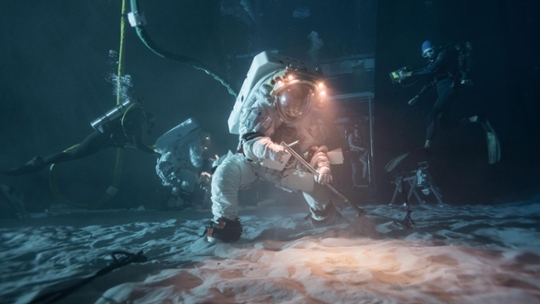
Colin Carlson is an assistant professor of epidemiology at Yale University. There he runs a research project called Verena which looks for emerging viral threats. He also studies how climate change is affecting public health. “For the rest of our lives, the world will never be cooler than it is today,” he says. “We will never have more rainforests than we do today, and the health issues we face, maybe we’ll make progress on them, but they’ll never be the same as they used to be.” Preparedness is the key, he says. "It’s about knowing what’s coming and being ready for the next emergency.”
Read all Young American Scientists profiles here.
|
|
How often do you go for a drive to a new destination and forgo using the car's GPS or your mobile phone's map tool for navigation? I made a deal with myself many years ago that I'd only use GPS the first time going someplace new, but paid attention, knowing I would try to get home without it. Keeping our skills (even when AI is popping up in every task) is a choice and it requires effort.
|
|
Thanks for reading and let me know what you think about this newsletter by sending comments to: newsletters@sciam.com. See you tomorrow.
—Andrea Gawrylewski, Chief Newsletter Editor
|
|
|
|
|
Subscribe to this and all of our newsletters here.
|
|
|
|
|