|
|
 
 |
It's only Tuesday, but it's already shaping up to be a big week in space.
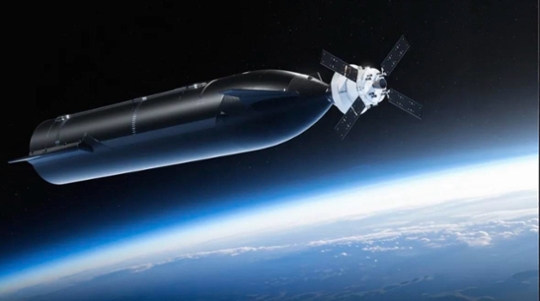
NASA is continuing preparations for the upcoming Artemis III mission. And it's looking like this might be the most complicated crewed mission in history (according to some), as the four astronauts will have to coordinate three different spacecraft. The crew will launch aboard an Orion spacecraft atop the agency's SLS megarocket, and then the crew will test out docking with both Blue Origin and SpaceX's separate lunar landers (Blue Moon and Starship, respectively). This will be a serious test of not just the spacecraft themselves, but of the crew and NASA as a whole as some serious coordination will be required to pull this off safely and successfully.
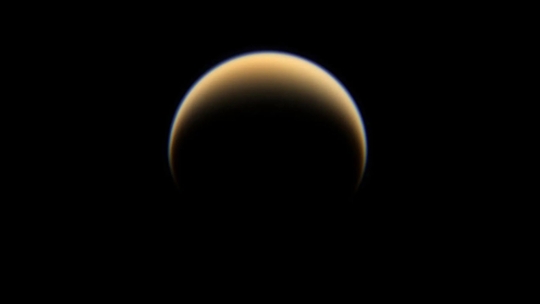
When it comes to stranger things, scientists have discovered a molecule on Pluto and Saturn's moon Titan. What is this molecule? They actually don't know. And while they are continuing to investigate this mystery molecule, this finding shows just how much we have yet to learn about even our own solar system. Researchers have also located a massive crater using Google Earth and think it could be from an ancient meteorite impact. Speaking of stranger things ... Netflix's "Stranger Things" hits its 10-year anniversary and we reflect on the sci-fi franchise giant that made it cool to like science again.
Check out what's big in space below:
|
|
|

|
Despite being separated by billions of miles, Saturn's moon Titan and the dwarf planet Pluto share an unexplained surface signature.
|
|
|
|
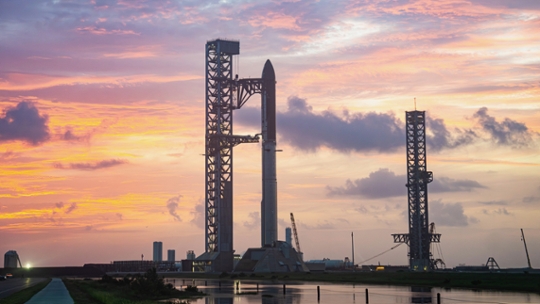
SpaceX is now targeting Thursday (July 23) for Flight 13 of its giant Starship rocket, after the first launch attempt aborted at the last second on July 16.
|
|
|
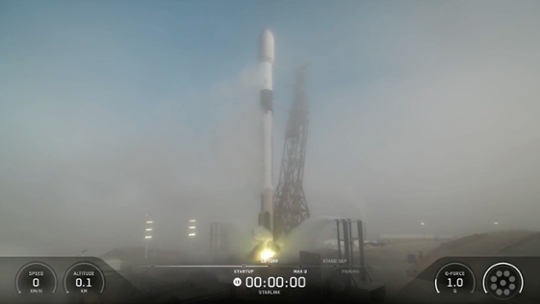
SpaceX suffered its second last-second abort in a row this morning (July 20), this time during an attempted Falcon 9 launch of Starlink broadband satellites.
|
|
|
|
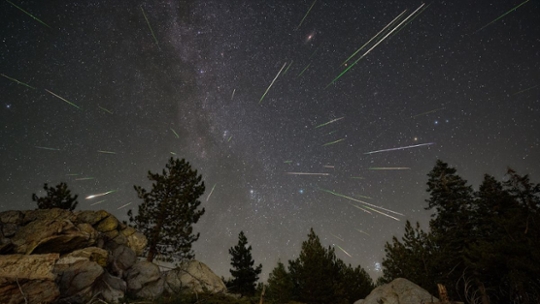
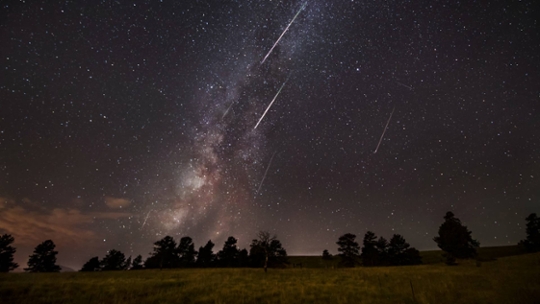
The Perseid meteor shower begins on July 17 alongside two others, making "shooting stars" likely any night this month and next.
|
|
|
A partial solar eclipse by day and the peak of the Perseid meteor shower by night make Aug. 12, 2026, one of the best nights for skywatching and camping in years, but only for some parts of North America.
|
|
|
|
While getting ready for a camping trip, an amateur astronomer spotted a possible crater. It appears to be a match, pending microscopic results.
|
|
|
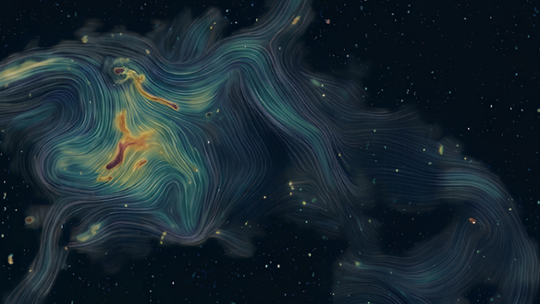
"We believe that the mechanism that 'turns on' these gigantic radio emissions is linked to the formation process of galaxy clusters."
|
|
|
|
Stranger Things changed the face of streaming, but it also had a significant impact on piquing the younger audience's interest in science.
|
|
|
That's it for our space update today!
Are you excited for Artemis III? It seems like Artemis II just splashed down, but it's wild to think how different this next mission will be as NASA prepares to land astronauts on the moon with the next mission. Jumping back to the present, this upcoming Thursday (July 23), SpaceX will attempt to launch its Starship V3 spacecraft again. This will be the second attempt at the craft's second test flight after the first attempt was aborted at the last second last week. Starship is supposed to be one of two (in addition to Blue Origin's Blue Moon) spacecraft that Artemis III docks with to test its capability for future lunar landings, so this test flight is critical. Will you be watching?
Speaking of amazing things in the sky, we have finally reached Perseid meteor shower season in the night sky. However dark the skies available to you may be, it's a great opportunity to get together with friends and family and spend some good, quality time sitting together and looking up. We have some guides for the best ways to spot the Perseids, though the most important thing you'll want to bring is patience. You never know exactly when or where a shooting star will appear. This night sky show is coinciding with a partial solar eclipse visible across the U.S. and Canada, though elsewhere in the world a total solar eclipse will be stunning skywatchers. Space.com correspondents around the world will help to transport us all through this experience, no matter where you live. And to stay as in the loop as possible, you can now get Space.com right in the palm of your hand with our new app available now on iOS and Android.
Ad astra, per aspera
Chelsea Gohd
Content Manager, Space.com
|
|
|
| Stay up-to-date on all things space science, news, and entertainment by subscribing to our newsletters. |
|
 |
|
|
|
|
|
When you purchase through links in our content, we may earn an affiliate commission.
Future US LLC © |
| Full 7th Floor, 130 West 42nd Street, New York, NY, 10036 |
|
|
|