Night owls and early birds are just the beginning ͏ ͏ ͏ ͏ ͏ ͏ ͏ ͏ ͏ ͏ ͏ ͏ ͏ ͏ ͏ ͏ ͏ ͏ ͏ ͏ ͏ ͏ ͏ ͏ ͏ ͏ ͏ ͏ ͏ ͏ ͏ ͏ ͏ ͏ ͏ ͏ ͏ ͏ ͏ ͏ ͏ ͏ ͏ ͏ ͏ ͏ ͏ ͏ ͏ ͏ ͏ ͏ ͏ ͏ ͏ ͏ ͏ ͏ ͏ ͏ ͏ ͏ ͏ ͏ ͏ ͏ ͏ ͏ ͏ ͏ ͏ ͏ ͏ ͏ ͏ ͏ ͏ ͏ ͏ ͏ ͏ ͏ ͏ ͏ ͏ ͏ ͏ ͏ ͏ ͏ ͏ ͏ ͏ ͏ ͏ ͏ ͏ ͏ ͏ ͏ ͏ ͏ ͏ ͏ ͏ ͏ ͏ ͏ ͏ ͏ ͏ ͏ ͏ ͏ ͏ ͏ ͏ ͏ ͏ ͏ ͏ ͏ ͏ ͏ ͏ ͏ ͏ ͏ ͏ ͏ ͏ ͏ ͏ ͏ ͏ ͏ ͏ ͏ ͏ ͏ ͏ ͏ ͏ ͏ ͏ ͏ ͏ ͏ ͏ ͏
July 9, 2026—Scientists are going way beyond "early birds" and "night owls" to categorize sleep types. Plus, we do a deep dive on how biologists calculated the total number of insects on Earth; and timekeepers are considering ditching the leap second.
—Andrea Gawrylewski
Chief Newsletter Editor
|
|
William Whitehurst/Getty Images
|
|
Join a community of science loving readers with a subscription to Scientific American. Try it out for 90 days for just $1.
|
|
Sleep Subtypes
Are you a night owl or an early bird? For decades, scientists considered us all in one of two camps. But a new analysis suggests that there are five sleeping pattern subtypes, each with its own distinct brain-imaging patterns, behaviors and health outcomes.
The subtypes:
Night owls. Three of the five subtypes were different flavors of night owls. “High-performance night owls,” are more likely to engage in risky behaviors and have emotional regulation difficulties but also higher cognitive performance. In contrast, “vulnerable night owls,” have more laid-back tendencies, with less physical activity and a greater chance of smoking. The final, “male-biased” night owl skewed more toward men and was associated with higher cigarette and alcohol consumption, higher testosterone levels and higher cannabis use than other subtypes.
Early birds. One of two in this category, the “classic early birds” have efficient brain networks, low alcohol and smoking rates, low risk-taking and more emotional stability (and are the healthiest overall). The “female-biased” early bird subtype, however, which was skewed toward women, was linked to higher rates of depression symptoms, lower testosterone levels and more menstrual issues than the classical early bird.
What this means: These chronotypes likely come from complex interactions between people’s genetics, hormone fluctuations and environment, which includes aspects such as their work schedules or light exposure. But it’s unclear exactly how all those factors cause a specific sleep pattern. In other words, scientists haven’t pinned down a cause-and-effect relationship among all these factors.
|
|
|
|
|
|
TRAVEL WITH SCIENTIFIC AMERICAN
|
|
Space Now Open for Icelandic Eclipse Adventure
|
|
New availability! Grab your spot while they last and experience the 2026 solar eclipse in the Land of Ice and Fire on this trip of a lifetime led by Senior News Editor Andrea Thomspon.
|
|
|
|
|
So Many Bugs
A new analysis suggests that there are as many as 20 million unique insect species on Earth, more than triple the previous estimate. We’ve only formally described about 1.5 million, so confirming this projection by counting alone would be impossible. Instead, scientists used an advanced guesstimation technique to arrive at the updated number.
First, they started with research on parasitoid wasps. They identified 1,414 species of parasitoid wasps in a Costa Rican park, of which there was very little overlap among them, suggesting that the initial count only scratched the surface. Next, the researchers used a statistical technique originally developed to calculate the scope of a Hepatitis B outbreak to estimate how many total insect species were in the park. To expand that estimate worldwide, the researchers took one final note from tree diversity. Based on a survey of trees across a gridded map of every piece of land on the planet, the researchers calculated an “upscaling factor” to go from the estimated number of insect species in the Costa Rican forest and species worldwide. —Emma Gometz, Newsletter Editor
|
|
|
YOUNG AMERICAN SCIENTISTS
|
|
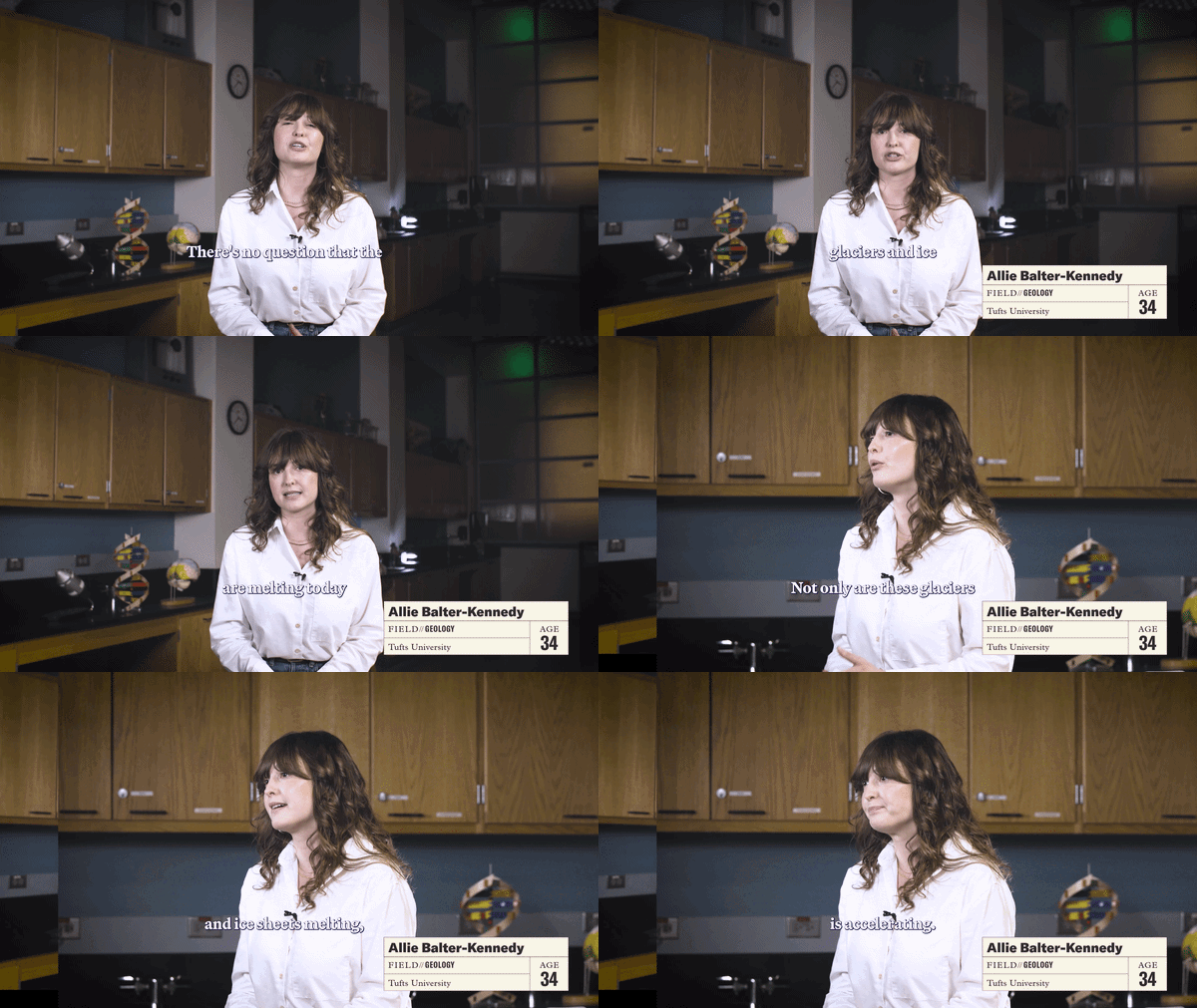
Allie Balter-Kennedy goes to some of the harshest places on Earth (Antarctica, the Arctic, Greenland) to try to predict how a warming climate will impact the planet’s ice sheets. The Tufts University scientist works with a team, sometimes drilling hundreds of feet down into the ice to obtain ice cores that can give them a glimpse into the ancient history of the glacier. Balter-Kennedy studies the cores using a method called cosmogenic-nuclide exposure dating, which measures the levels of isotopes in long-buried core samples. Earth is constantly being bombarded by cosmic rays, which interact with atoms in the atmosphere. Scientists can date the ice cores by estimating how long it’s been since that rock was exposed to the air. “The aspect of getting to be outside and work in remote places and the collaborative nature of all this fieldwork are essentially what drew me to this field in the first place,” she says.
|
|
I'm glad we're uncovering more nuance about sleep types, because I do not fully relate to either night owl (I like an earlier bedtime) OR early bird (let me snooze, please). I'm not sure my sleep style is found within these five new subgroups either, but I'm pleased the experts are opening the door to more possibilities!
What sleep subtype feels most like you? Let me know and send any other comments or questions to newsletters@sciam.com.
|
|
—Andrea Gawrylewski, Chief Newsletter Editor
P.S. If this newsletter sparked your curiosity today, consider forwarding it to a friend!
|
|
|
|
|
Subscribe to this and all of our newsletters here.
|
|
|
|
|