Wildfire smoke is pouring across the mid-Atlantic and Northeast ͏ ͏ ͏ ͏ ͏ ͏ ͏ ͏ ͏ ͏ ͏ ͏ ͏ ͏ ͏ ͏ ͏ ͏ ͏ ͏ ͏ ͏ ͏ ͏ ͏ ͏ ͏ ͏ ͏ ͏ ͏ ͏ ͏ ͏ ͏ ͏ ͏ ͏ ͏ ͏ ͏ ͏ ͏ ͏ ͏ ͏ ͏ ͏ ͏ ͏ ͏ ͏ ͏ ͏ ͏ ͏ ͏ ͏ ͏ ͏ ͏ ͏ ͏ ͏ ͏ ͏ ͏ ͏ ͏ ͏ ͏ ͏ ͏ ͏ ͏ ͏ ͏ ͏ ͏ ͏ ͏ ͏ ͏ ͏ ͏ ͏ ͏ ͏ ͏ ͏ ͏ ͏ ͏ ͏ ͏ ͏ ͏ ͏ ͏ ͏ ͏ ͏ ͏ ͏ ͏ ͏ ͏ ͏ ͏ ͏ ͏ ͏ ͏ ͏ ͏ ͏ ͏ ͏ ͏ ͏ ͏ ͏ ͏ ͏ ͏ ͏ ͏ ͏ ͏ ͏ ͏ ͏ ͏ ͏ ͏ ͏ ͏ ͏ ͏ ͏ ͏ ͏ ͏ ͏ ͏ ͏ ͏ ͏ ͏ ͏
July 16, 2026—The U.S. approval of giant "space mirror" satellites alarms scientists. Plus, we visit a city being constructed in the heart of a biodiversity hotspot, and hazardous wildfire smoke is pouring through the mid-Atlantic and Northeast.
—Andrea Gawrylewski
Chief Newsletter Editor
|
|
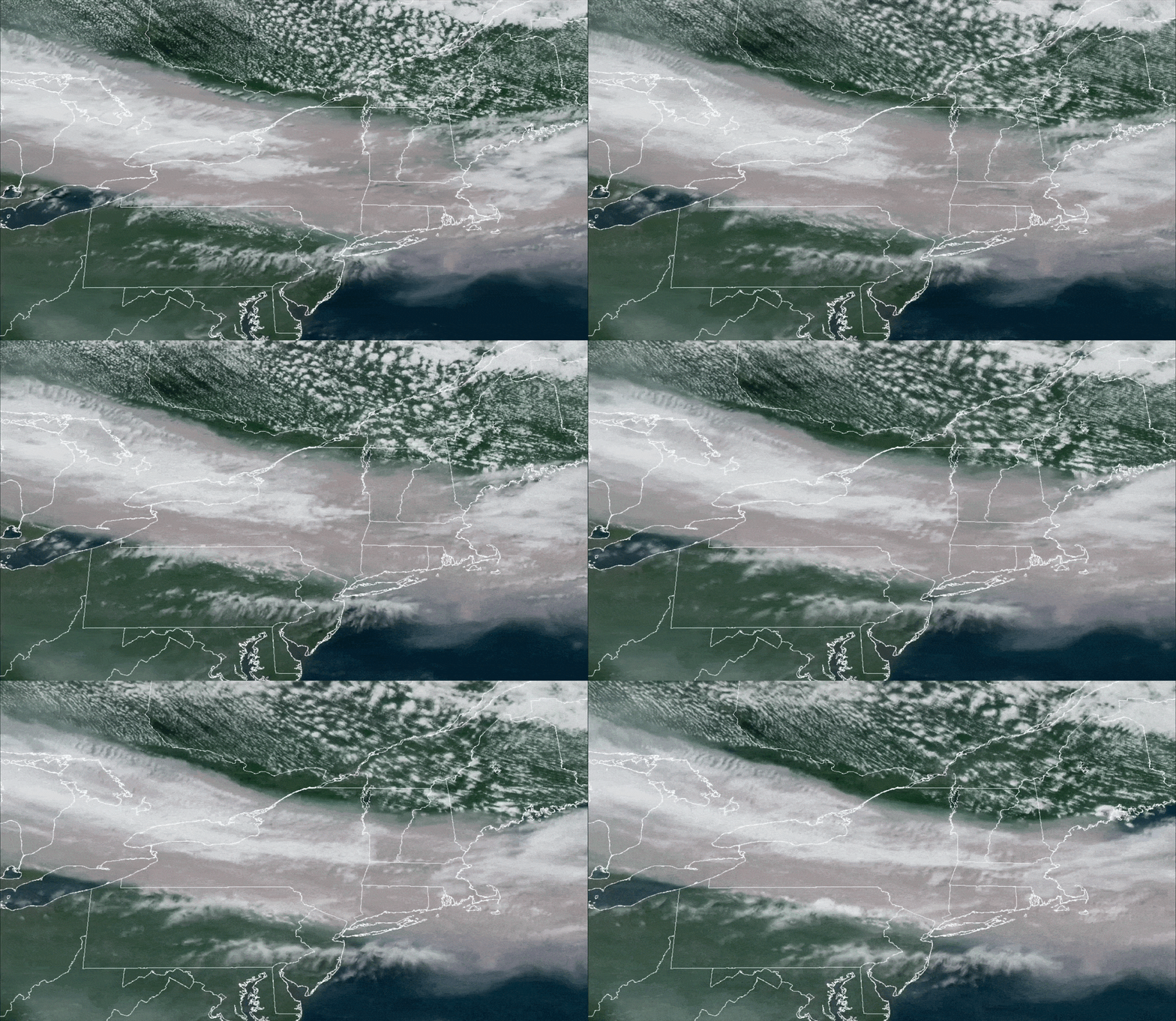
Smoke from wildfires in Minnesota and Ontario pour over the Great Lakes and New York on Wednesday, July 15. NOAA
|
|
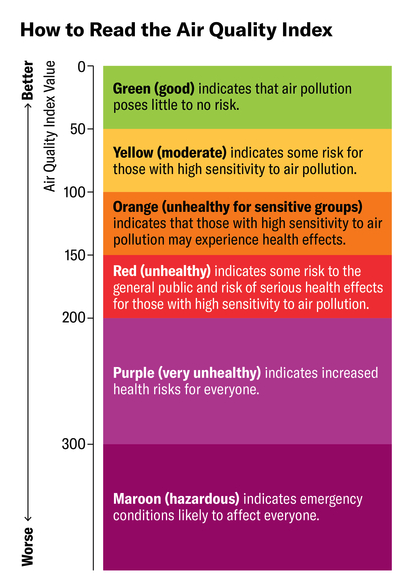
Smoke from northern Minnesota and western Ontario wildfires is pouring over the Great Lakes, mid-Atlantic and Northeast, bringing record levels of hazardous air pollution to major cities. And scroll down for tips on how to read the Air Quality Index. | 3 min read
The U.S. Food and Drug Administration approved a new cholesterol-busting drug that appears to reduce harmful cholesterol far below levels that can be achieved using statins. | 2 min read
Speeding may be costing drivers far more than a ticket. Shaving just under a minute off their daily commutes costs Americans $22 million daily in extra gas costs, a new study finds. | 2 min read
Scientists discovered a “remarkable” new species of African monkey with a distinct orange patch around its mouth and a deep, croaky roar in the Democratic Republic of the Congo. Click through to listen. | 2 min read
SpaceX is gearing up to launch its Starship megarocket tonight no earlier than 6:45 P.M. EDT. The rocket will hopefully reach space and then its booster will attempt a controlled descent and splashdown in the Gulf of Mexico. | 3 min read
When conditions get sticky in the Midwest, headlines start blaming "corn sweat"—the phenomenon of increased humidity over agricultural fields. But the term is misleading, scientists say. | 3 min read
The Perseid meteor shower aligns with August's total solar eclipse—here’s how to see it. | 2 min read
Join the discussion: Cases of cyclosporiasis have been growing in the past week. Tell us what questions you have about this outbreak and I'll include the answers in the coming days in this newsletter. Click here to post your questions.
|
|
Join a community of science loving readers with a subscription to Scientific American. Try it out for 90 days for just $1.
|
|
Mirrors in Space
Last week, the Federal Communications Commission approved a California startup to launch a test satellite that aims to provide “sunlight on demand.” The demonstration is the first of 50,000 satellites the company, Reflect Orbital, hopes to launch by 2035. The mirror-covered spacecrafts would reflect beams of solar light through the night sky to illuminate things like solar power plants and round-the-clock construction projects. Flocks of aghast astronomers raised warnings about the satellites’ impact on light pollution. The FCC’s response? Not our problem.
Why this matters: Scattered light from the satellites’ solar beams could brighten the night sky by 200 to 300 percent, astronomers say. This could mean disturbed circadian rhythms for animals, ruined stargazing, and completely destroyed astronomical data. But because the FCC technically oversees the radio spectrum, these impacts are outside its purview—a regulatory gap that astronomers urge national and international bodies to address as more than 1.7 million satellites await approval.
What the experts say: “In their order and authorization, the FCC talked about the public interest of fostering American technological innovation in space,” says Roohi Dalal, the deputy director for public policy at the American Astronomical Society. “I would just emphasize that scientific research and astronomical research have actually been at the forefront of American innovation and global leadership for decades. That innovation that they’re looking to foster can’t come at the cost of imperiling scientific research.” —Mary Randolph, News Intern
|
|
City in the Jungle
Jakarta, the capital of Indonesia, is sinking fast. Because of sea-level rise, excess groundwater pumping and other factors, experts estimate that one third of the city could be underwater by 2050. In response, Indonesia is building a new capital city on the island of Borneo—a biodiversity hotspot. The city is projected to be completed by 2045. It will house a fraction of Jakarta’s population— mostly government workers. Before the new city of Nusantara is completed, scientists are racing to record all the species living in the region, in an effort to track how the development is affecting animals.
What scientists are doing: Wendy Erb, a bioacoustic scientist at Cornell University, and her team are recording audio samples from 20 different locations in the region. “Sound is a unique kind of data,” says Erb. “It becomes, in some ways, a time capsule of a place.” By examining data across 18 months of recordings they’re looking for major signals of change as the new capital is being built: what environmental changes are happening, what social changes are happening, and what animals are being displaced.
What locals are doing: The local people are playing a central role in collecting the data, says Erb. They are helping the scientists identify research sites, understand the history of this landscape, and most importantly, the relationships between the people and the forest. “My hopes for my children, when they’re my age, is that they don’t forget the culture of our tribe,” says Abidin, a life-long resident of Pemaluan, a village inside the planned capital zone. “I’ll keep trying to teach them not to let our own language disappear. I can teach my children the sounds of animals in the forest. Even though there are changes now, I still feel that this is my home."
Click here to watch a short documentary on the construction of Nusantara and its impact on the surrounding region.
|
|
|
|
|
|
TRAVEL WITH SCIENTIFIC AMERICAN
|
|
Experience Yellowstone as a Winter Wonderland
|
|
Reservations now open! This January, journey deep into Yellowstone National Park with your guide, Senior Desk Editor Andrea Thompson, for a spectacular weeklong exploration of snowy landscapes, steaming geysers and roaming wildlife.
|
|
|
|
|
The color-coded Air Quality Index categories you’ll find on the Environmental Protection Agency’s AirNow website rank air quality on a 500-point scale and are meant to give the public an easy way to understand the health effects of the air around them daily. The lowest numbers on the scale indicate healthy air, and the high end is hazardous.
|
|
Many of you had strong opinions about whether private individuals should be allowed to buy scientific specimens like dinosaur fossils. I was particularly interested in some replies that suggested that sales to private purchasers should include stipulations regarding their proper preservation or care, or requirements that the items be on permanent loan to museums or research institutions. One theme that carried throughout the discussion: Relics of the dinosaur age belong to all of humanity and should be treated as such.
|
|
—Andrea Gawrylewski, Chief Newsletter Editor
P.S. If this newsletter sparked your curiosity today, consider forwarding it to a friend!
|
|
|
|
|
Subscribe to this and all of our newsletters here.
|
|
|
|
|