Experts don't agree on how long the cyclosporiasis outbreak will last ͏ ͏ ͏ ͏ ͏ ͏ ͏ ͏ ͏ ͏ ͏ ͏ ͏ ͏ ͏ ͏ ͏ ͏ ͏ ͏ ͏ ͏ ͏ ͏ ͏ ͏ ͏ ͏ ͏ ͏ ͏ ͏ ͏ ͏ ͏ ͏ ͏ ͏ ͏ ͏ ͏ ͏ ͏ ͏ ͏ ͏ ͏ ͏ ͏ ͏ ͏ ͏ ͏ ͏ ͏ ͏ ͏ ͏ ͏ ͏ ͏ ͏ ͏ ͏ ͏ ͏ ͏ ͏ ͏ ͏ ͏ ͏ ͏ ͏ ͏ ͏ ͏ ͏ ͏ ͏ ͏ ͏ ͏ ͏ ͏ ͏ ͏ ͏ ͏ ͏ ͏ ͏ ͏ ͏ ͏ ͏ ͏ ͏ ͏ ͏ ͏ ͏ ͏ ͏ ͏ ͏ ͏ ͏ ͏ ͏ ͏ ͏ ͏ ͏ ͏ ͏ ͏ ͏ ͏ ͏ ͏ ͏ ͏ ͏ ͏ ͏ ͏ ͏ ͏ ͏ ͏ ͏ ͏ ͏ ͏ ͏ ͏ ͏ ͏ ͏ ͏ ͏ ͏ ͏ ͏ ͏ ͏ ͏ ͏ ͏
July 24, 2026—Experts aren't sure when lettuce will be safe to eat again. Plus, scientific evidence of cats' independence and severe impacts from Europe's extreme weather.
—Andrea Gawrylewski
Chief Newsletter Editor
|
|
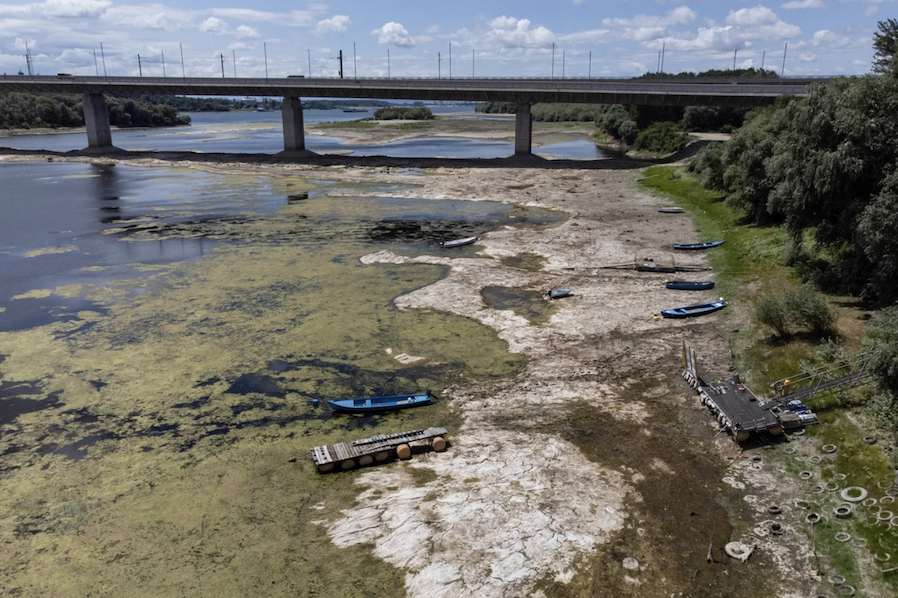
Boats lay on the dried Danube river bed in front of the Calafat-Vidin bridge, connecting Bulgaria and Romania on July 22, 2026. Prolonged drought and hot weather across Europe have pushed water levels along the Danube River to record seasonal lows. NIKOLAY DOYCHINOV/Getty Images
|
|
The European continent is facing a dual reckoning this summer—extreme heat is killing thousands and draining its rivers, soils and reservoirs at a record pace. | 4 min read
Doctors successfully transplanted testicular tissue in an infertile patient and got it to produce sperm. | 3 min read
Iran’s Pickaxe Mountain, or Kuh-e Kolang Gaz La in Persian, is part of a volcanic arc that formed tens of millions of years ago and is made of a tough-to-penetrate rock. It may house the country's nuclear centrifuges and would be well-protected from any bombing. | 3 min read
Joan Birman, a 99-year-old mathematician, and two colleagues have devised a new proof that reveals insights into the geometry of braids. | 4 min read
Is it possible to regain the sense of smell? Researchers are working on devices that could help. | 4 min read
Lost shipping containers help scientists map global ocean currents. | 5 min read
The U.S. government pledged $5 billion to boost AI in government-backed scientific research (overall funding for science will decline in 2027). | 2 min read
|
|
Cyclospora Update
When can we eat lettuce again without fear of explosive diarrhea? Experts can’t quite agree on an answer. As of today, Michigan recorded 8,176 cases of cyclosporiasis, the gastrointestinal illness caused by the Cyclospora parasite. Michigan has seen the largest outbreak this summer and is tracking cases most closely. Compared with the 40 to 50 cases the state sees in a typical year, this is unprecedented, says Natasha Bagdasarian, the chief medical executive for the state. And that’s likely a vast underestimate of the true number of cases.
How it works: The parasite Cyclospora is transmitted when human feces contaminate lettuce and other crops during growing or processing. Cases of infection are especially difficult to trace because the parasite can take up to two weeks to produce spores after contamination and another two weeks to cause symptoms if someone consumes infected produce. Based on Cyclospora’s typical lifespan and contamination cycle, cyclosporiasis infections usually increase in early summer and drop off by August.
What can be done: Tracing and recalls. The FDA traced some cases back to lettuce from the company Taylor Farms de Mexico last week, which recalled all its products from stores and restaurants before the FDA discovered the test for Cyclospora had been a false positive. The false positive doesn’t change the fact that the cases seemingly stemmed from that source, and the affected products have been removed from circulation, says Gerardo Lopez, who studies the parasite at University of Arizona. He believes these actions will cause the outbreak to fade away soon. But not all experts agree. Recalling the affected lettuce doesn’t account for the food that might be fueling additional outbreaks, says Nicole Arnold, a food safety researcher at The Ohio State University.
What the experts say: Only with coordinated tracing on the state and national level will the culprit produce be tracked down. This emergency is “a wake-up call for the American public,” Bagdasarian says. “Those of us who work in public health, we have been shouting from the rooftops that the system is underfunded, that the system cannot withstand additional stress. When there is a public health emergency, when there is a large outbreak, when something big happens, it really tests this very stretched system.” —Mary Randolph, News Intern
|
|
Cat Autonomy
Cats only help humans when there’s something in it for them, according to a recent study. In it, an adult human played with a sponge in front of cats, dogs, and toddlers, then pretended to lose sight of it and looked around. All three groups paid attention to the scene. But children and dogs were more likely to help by approaching the person or retrieving their sponge. More than half the dogs and nearly half the toddlers showed the person the location of the sponge, and some brought it to them. Cats never approached the sponge, and only rarely did they show the person where it was. But when the sponge was replaced by a toy or food, the cat “helped” just as much as dogs and toddlers did.
Why this is interesting: Cats and dogs have vastly different evolutionary histories, which could explain why some species are inclined to help others and some aren’t. Dogs and toddlers are evolutionarily hardwired to treat another’s problem as their own. Cats, however, remain autonomous, understanding the situation without being compelled to intervene unless there’s a direct benefit for them.
What the experts say: It’s a strong experiment, says University of Vienna cognitive biologist Ludwig Huber, who was not involved in the study. “The authors made considerable efforts to rule out alternative explanations [for dogs’ motivation] such as attention, eye contact, object interest, and getting used to the situation.” It seems that they really were trying to help, while cats simply didn’t feel the need.
What Emma says: I’m fine with it if my cat doesn’t help me find my things or fetch my slippers. He helps me every day by being his elegant, dignified self. —Emma Gometz, Newsletter Editor
|
|
|
|
|
|
BROUGHT TO YOU BY SCIENTIFIC AMERICAN
|
|
Join the SciAm Summer Reading Challenge!
Fill in your Scientific American Summer Reading bingo card by exploring everything from eco-horrors to STEMinist romances to movie adaptations. After completing a square on the bingo card, tag us on social media or email contests@sciam.com for a chance to win one of 40 prize packages.
|
|
|
|
|
Every Friday in summer we're recommending a great, freshly-published science read. Tell us what you're reading, fill in your bingo card and happy reading!
|
|
Black Bear: A Story of Siblinghood and Survival
By Trina Moyes. Simon & Schuster, January 6, 2026.
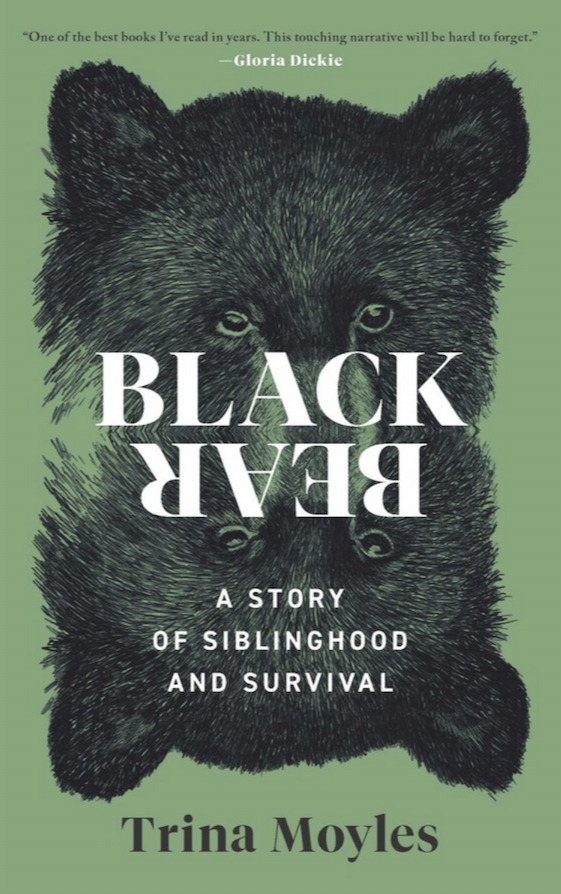 Environmental journalist Trina Moyles has always had a fascination with the black bear. It began at age five when her father, a wildlife biologist, brought home an orphaned black bear cub. Working later as a spotter in a fire tower in Alberta, Canada, Moyles lived in close proximity to the bears, learning to recognize individuals and families over multiple generations. In this absorbing memoir, Moyles describes the thrilling reward and tension of living solo in the wilderness among bears, while also navigating a fraught relationship with her brother. Surviving in this world, she learns, whether as a bear or human, requires perseverance and strong relationships. Environmental journalist Trina Moyles has always had a fascination with the black bear. It began at age five when her father, a wildlife biologist, brought home an orphaned black bear cub. Working later as a spotter in a fire tower in Alberta, Canada, Moyles lived in close proximity to the bears, learning to recognize individuals and families over multiple generations. In this absorbing memoir, Moyles describes the thrilling reward and tension of living solo in the wilderness among bears, while also navigating a fraught relationship with her brother. Surviving in this world, she learns, whether as a bear or human, requires perseverance and strong relationships.
|
|
|
|
|
MOST POPULAR STORIES OF THE WEEK
|
|
FDA approves cholesterol pill more powerful than statins | 2 min read
America is embarking on a risky experiment with GLP-1s and aging | 4 min read
How a Futurama writer’s plot problem led to a totally new math proof | 5 min read
|
|
One way to reduce your chances of contracting food-borne illnesses is to buy from local farmers when you can. The USDA keeps a directory of more than 7,000 farmer's markets in the nation, which you can search here. Why does this work? Eating locally reduces the number of people handling food, shortens travel times (long travel times at variable temperatures can help bacteria spread) and makes it much easier to trace contamination if it does happen. Lots of other factors make eating locally a great alternative, but staying healthy is a major one.
|
|
You can reach out to me anytime with comments and questions, I read every email and respond to many! newsletters@sciam.com. See you on Monday.
—Andrea Gawrylewski,
Chief Newsletter Editor
|
|
|
|
|
Subscribe to this and all of our newsletters here.
|
|
Scientific American
1000 N West Street, Suite 1200
|
|
|
|
|