In eons to come, the moon will drift farther away ͏ ͏ ͏ ͏ ͏ ͏ ͏ ͏ ͏ ͏ ͏ ͏ ͏ ͏ ͏ ͏ ͏ ͏ ͏ ͏ ͏ ͏ ͏ ͏ ͏ ͏ ͏ ͏ ͏ ͏ ͏ ͏ ͏ ͏ ͏ ͏ ͏ ͏ ͏ ͏ ͏ ͏ ͏ ͏ ͏ ͏ ͏ ͏ ͏ ͏ ͏ ͏ ͏ ͏ ͏ ͏ ͏ ͏ ͏ ͏ ͏ ͏ ͏ ͏ ͏ ͏ ͏ ͏ ͏ ͏ ͏ ͏ ͏ ͏ ͏ ͏ ͏ ͏ ͏ ͏ ͏ ͏ ͏ ͏ ͏ ͏ ͏ ͏ ͏ ͏ ͏ ͏ ͏ ͏ ͏ ͏ ͏ ͏ ͏ ͏ ͏ ͏ ͏ ͏ ͏ ͏ ͏ ͏ ͏ ͏ ͏ ͏ ͏ ͏ ͏ ͏ ͏ ͏ ͏ ͏ ͏ ͏ ͏ ͏ ͏ ͏ ͏ ͏ ͏ ͏ ͏ ͏ ͏ ͏ ͏ ͏ ͏ ͏ ͏ ͏ ͏ ͏ ͏ ͏ ͏ ͏ ͏ ͏ ͏ ͏
July 28, 2026—What will happen to the moon in the far future? Plus, here's what caused the 6.8 magnitude earthquake in Japan and astronomers finally get a look at Betelgeuse's companion star.
—Andrea Gawrylewski
Chief Newsletter Editor
P.S. If this newsletter sparks your curiosity, consider forwarding it to a friend!
|
|
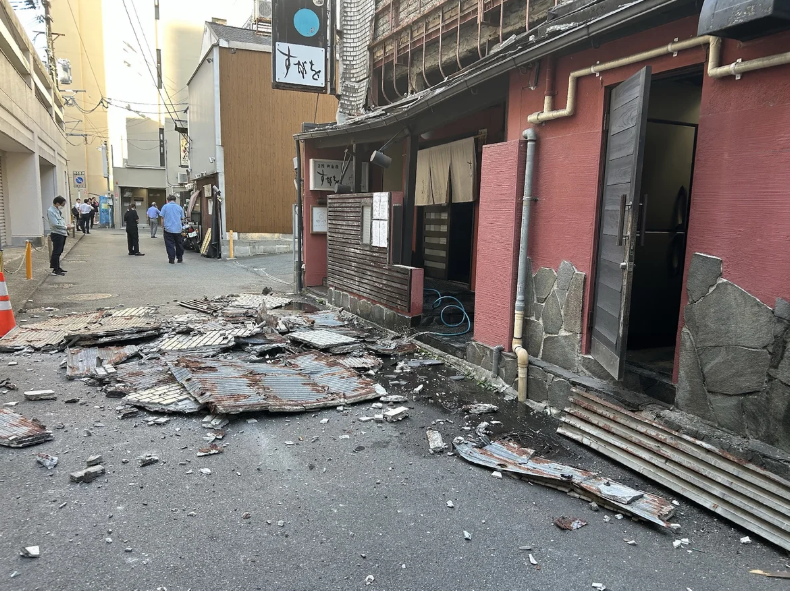
The exterior wall of a shop that collapsed in an earthquake in Kumamoto, Japan, on July 28, 2026. JIJI Press/AFP via Getty Images
|
|
A magnitude 6.8 earthquake struck the southern Japanese island of Kyushu today. The earthquake occurred along a strike-slip fault. Here's how it works. | 2 min read
Has NASA already found life on Mars? In searches for past and present Martian life, some scientists say signs of life have been there the whole time. | 12 min read
Researchers devised a new AI model that uses a routine ECG to flag people at high risk of sudden cardiac death—and reveals a warning sign in the heart’s electrical activity. | 4 min read
-
-
A handful of start-up firms are testing therapies devised with CRISPR technology that target specific epigenetic markers to treat everything from high cholesterol to a rare muscular disorder.
| 10 min read
-
Einstein’s special theory of relativity makes time travel possible to the future. But what about to the past? | 4 min read
|
|
Support the newsletter. Feed your curiosity. Subscribe to Scientific American for 90 days for just $1.
|
|
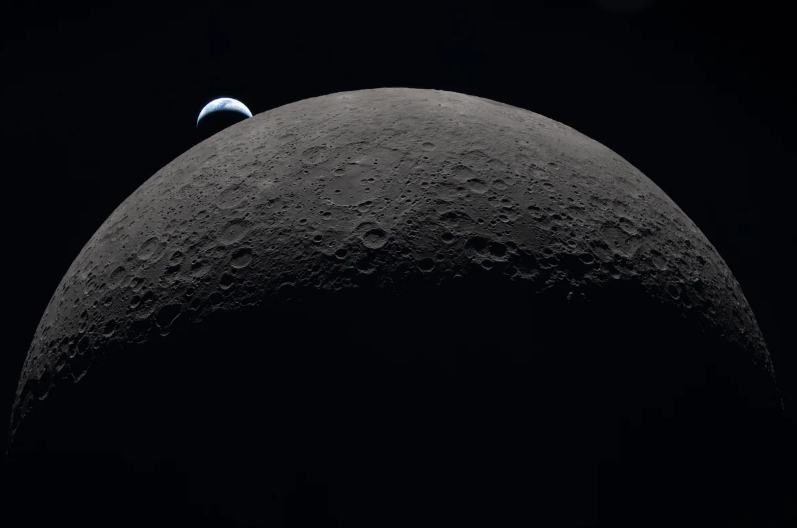
A crescent Earth sets behind the far side of the moon in this image captured by astronauts during NASA’s Artemis II lunar flyby in April 2026. NASA
|
|
The Future of the Moon
Eons from now, what will happen to the moon? The fate of our cosmic satellite is inextricably linked to the pull of Earth.
Origin story: Tens of millions of years after our planet was formed it was struck by a planet-sized body. The ejecta from that collision of Earth and the foreign planet coalesced into the moon. When the moon first formed it was rotating rapidly. But Earth’s gravitational pull was so strong at the time that it dramatically slowed lunar rotation so that the moon’s spin and orbital motion were synced. Some of the energy lost as the moon’s spin slowed was transferred to its orbital motion, moving the moon away from Earth. That recession was initially quite rapid, but it ebbed as the moon moved farther out and the tidal force diminished. Even today, billions of years after it formed, the moon recedes from Earth at a rate of about four centimeters per year.
Future story: In the eons to come, the moon will keep receding, more and more slowly, until eventually Earth’s rotation matches the moon’s orbital period. At that point Earth will always show the same face to the moon, and, for an observer on the planet, the moon will never rise nor set, always appearing in the same place in the sky. The process will take billions of years. But by that time, other things will be happening in the solar system. For instance, the sun will continue to heat up, shining brighter, which in turn will heat up Earth. In about a billion years, give or take, the Earth will become so hot that our oceans will literally boil away, leaving behind a dry, barren world. Without oceans, the gravitational pull on the moon will wane and therefore its recession away from Earth will slow. If the sun doesn’t engulf the dried-up remnants of Earth and the moon, it could cool into a white dwarf and its own gravitational pull could strip the moon away from us.
|
|
|
|
|
|
YOUNG AMERICAN SCIENTISTS
|
|
As a computational biologist at Princeton University, Kaiyi Jiang is looking for new powerful molecules to treat some of the most stubborn conditions that decrease human lifespan: metastatic cancer, aging and autoimmune disorders. The trouble with new drugs, though, is that not everyone can tolerate them. Jiang's team uses AI to sort through reams of data on the human biological system and generate drug options for safer, more effective engineered antibodies and other protein-based therapies. "There has not been a better time to do this because of the advent of technologies like AI," he says.
Read all Young American Scientists profiles here.
|
|
Soon after the moon formed, it was much closer to Earth: around 20,000 kilometers away (it's currently an average distance of 380,000 km away). The moon would have been much larger in our sky, about 10 degrees across—roughly the size of your fist held at arm’s length. What would life be like here with a much closer moon? Aside from the gravitational effects, would the moon be even more prominent in arts and literature? Would we already have human colonies there thanks to the much shorter trip? The possibilities are fascinating.
|
|
Thanks for reading and let me know what you think about this newsletter by sending comments to: newsletters@sciam.com. See you tomorrow.
—Andrea Gawrylewski, Chief Newsletter Editor
|
|
|
|
|
Subscribe to this and all of our newsletters here.
|
|
|
|
|