A bizarre "thermal anomaly" explains the Red Planet's appearance ͏ ͏ ͏ ͏ ͏ ͏ ͏ ͏ ͏ ͏ ͏ ͏ ͏ ͏ ͏ ͏ ͏ ͏ ͏ ͏ ͏ ͏ ͏ ͏ ͏ ͏ ͏ ͏ ͏ ͏ ͏ ͏ ͏ ͏ ͏ ͏ ͏ ͏ ͏ ͏ ͏ ͏ ͏ ͏ ͏ ͏ ͏ ͏ ͏ ͏ ͏ ͏ ͏ ͏ ͏ ͏ ͏ ͏ ͏ ͏ ͏ ͏ ͏ ͏ ͏ ͏ ͏ ͏ ͏ ͏ ͏ ͏ ͏ ͏ ͏ ͏ ͏ ͏ ͏ ͏ ͏ ͏ ͏ ͏ ͏ ͏ ͏ ͏ ͏ ͏ ͏ ͏ ͏ ͏ ͏ ͏ ͏ ͏ ͏ ͏ ͏ ͏ ͏ ͏ ͏ ͏ ͏ ͏ ͏ ͏ ͏ ͏ ͏ ͏ ͏ ͏ ͏ ͏ ͏ ͏ ͏ ͏ ͏ ͏ ͏ ͏ ͏ ͏ ͏ ͏ ͏ ͏ ͏ ͏ ͏ ͏ ͏ ͏ ͏ ͏ ͏ ͏ ͏ ͏ ͏ ͏ ͏ ͏ ͏ ͏
August 26, 2026—Will companies like QuantumScape and Factorial Energy be able to mass-produce solid-state batteries anytime soon? We dig in below. Plus, vaccination rates in kindergarten-age kids are at a record low, and Meta pays nearly $18 billion in social media addiction case.
—Andrea Gawrylewski
Chief Newsletter Editor
|
|
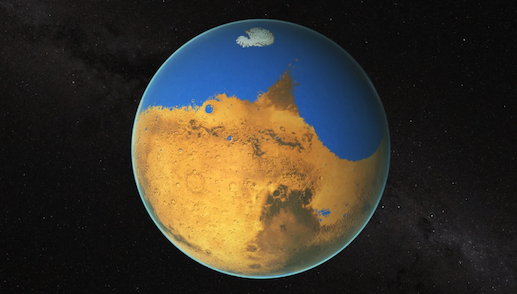
An artist’s concept of an ocean in the northern hemisphere of ancient Mars. The ocean’s shoreline traces Mars’s “crustal dichotomy,” a mysterious dividing line between the planet’s northern plains and southern highlands. NASA’s Goddard Space Flight Center
|
|
Mars has two distinct faces: one a low-lying plain, and one high, rugged and cratered. The differences extend all the way to the planet's core, a new analysis finds. | 5 min read
The FDA approved a new breakthrough drug for pancreatic cancer that doubles the survival time of people living with the disease. The cancer has the lowest five-year survival rate of any major cancer. | 2 min read
Meta agreed to pay almost $18 billion and make sweeping changes to its app to settle a lawsuit that claimed social media harms kids. | 3 min read
Two people who were not vaccinated against measles died of the disease in Pennsylvania, public health officials said yesterday—these are the first measles fatalities in the state in 35 years. | 2 min read
SpaceX announced that it will build a spaceport in Louisiana dedicated to launching its Starship megarocket. The company hopes to reach thousands of launches per year. | 2 min read
A controversial Alzheimer’s surgery is said to reverse symptoms—it relies on clearing waste out of the brain. And now, global clinical trials are getting started. Here's what the experts say about it. | 11 min read
Water droplets become electrified as they move across smooth surfaces, a new study shows. This could help explain why rain corrodes metals even if they have protective coatings. | 2 min read
NASA’s Nancy Grace Roman Space Telescope could launch as soon as this weekend. When it goes online early next year it'll conduct three massive survey projects tackling the enigma of dark energy. Here's how. | 6 min read
|
|
All science, all the time. Read about what you care about with a subscription to Scientific American. Try it out for 90 days for just $1!
|
|
Hard Cell
For decades, scientists have been chasing an elusive prize: the solid-state battery. Such a power source would be lighter and safer than traditional lithium-ion batteries, and it would be deployed in electric vehicles, drones, solar panels and electronic devices. The potential is big: higher energy density, faster charge, longer range, better safety and, ultimately, lower cost. But so far, no researcher or company has successfully created a true solid-state battery.
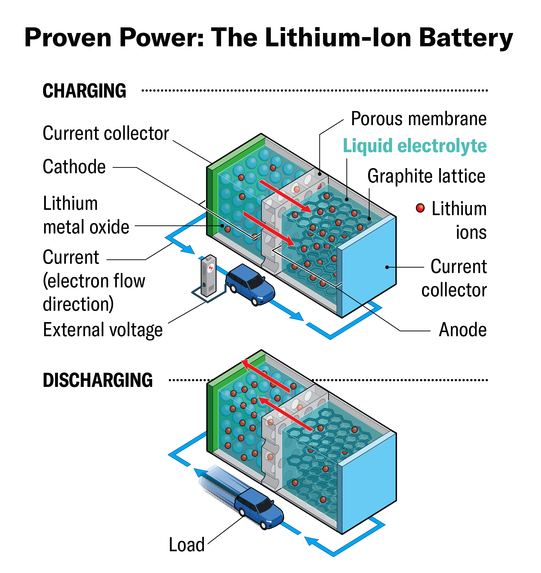
What it means: The term solid-state describes an architecture of a battery—one that replaces most or all of the liquid electrolyte in a conventional lithium-ion battery with a solid material. In a lithium-ion battery, the liquid electrolyte shuttles lithium ions back and forth—to the anode as you charge your phone and back to the cathode as you use it. That liquid is highly conductive but flammable, and fires from these batteries burn hot and toxic. In solid-state batteries most if not all that flammable liquid is replaced with a new, solid electrolyte—typically a ceramic, a sulfide, a polymer or some combination.
How it works:
|
|
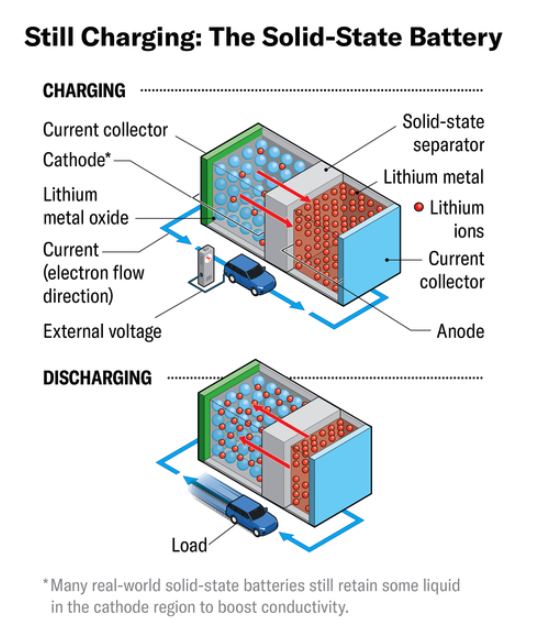
Solid-state batteries. Swapping the liquid for a solid separator helps resist the short circuits that can spark fires. With that sturdier barrier in place, designers can ditch the graphite for an anode of pure lithium, which carries far more charge for its weight.
|
|
Progress: Development of these new batteries is speeding up. Battery makers in China, Japan, South Korea and the U.S. regularly announce advancements. Toyota, which holds the most corporate patents, says solid-state cells will finally start appearing in its cars within two years. Chinese companies, which already make more than 80 percent of the world’s lithium-ion batteries, have begun shipping semisolid-state cells. Which leads us to an important caveat. The newest batteries are not true “solid-state.” In practice, most solid-state batteries contain some liquid—usually in the cathode region—to help with conductivity, making them semisolid at best. The most fundamental challenge to achieving true solid-state is the interface—the boundary between the solid electrolyte and the electrodes, where problematic electric dendrites and voids can take root.
What the experts say: Steady policy is needed to advance development of solid-state batteries. “My advice to any policymaker is to remove barriers—end tariffs, offer tax credits, support immigration for talent,” says Shirley Meng, a materials scientist at Nanyang Technological University in Singapore. “If the U.S. remains open to fair global partnerships, either in R&D or in trade,” she says, “then it is possible that the battery field will come out stronger in a few years.”
|
|
|
|
|
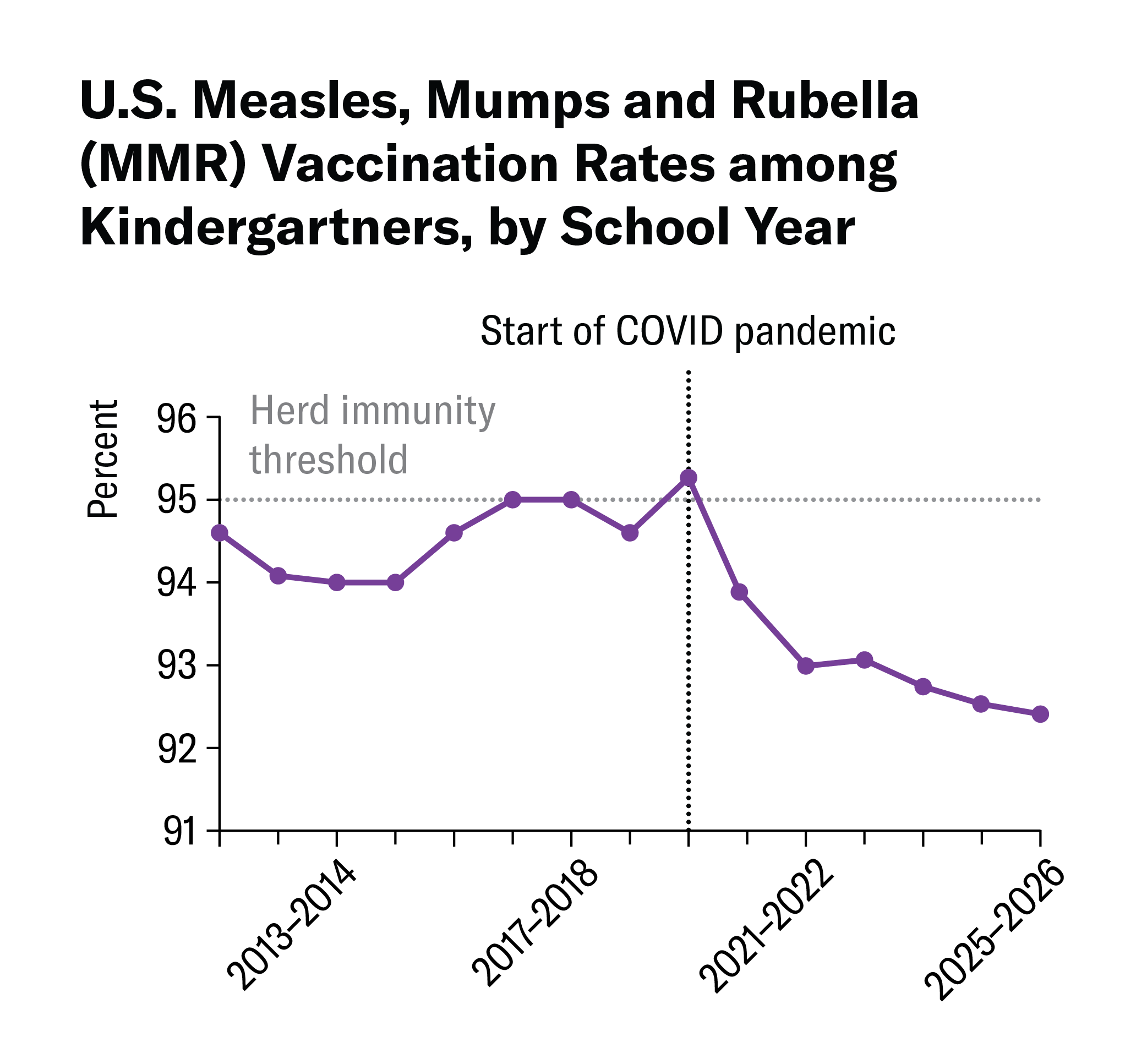
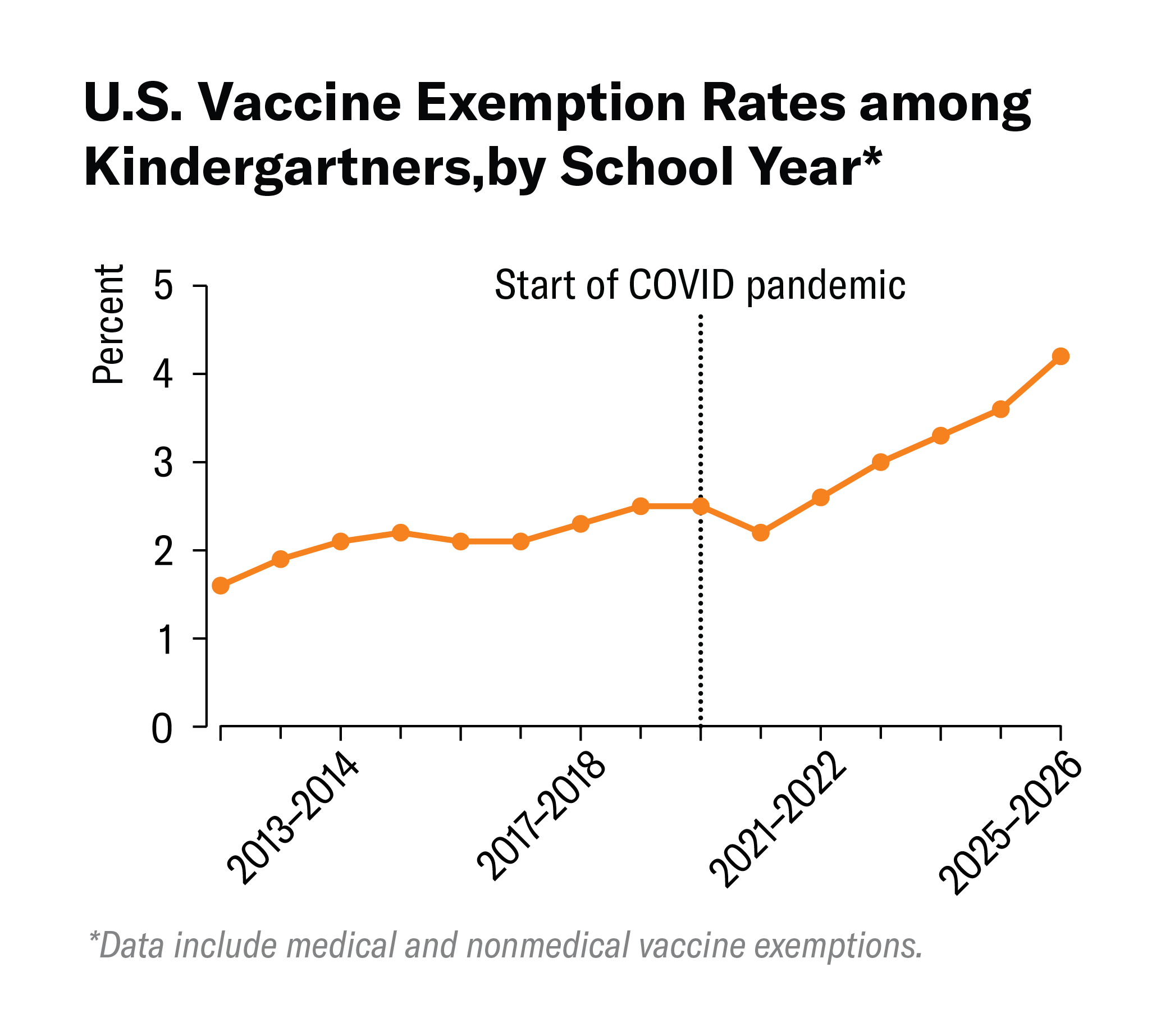
The 2025–2026 school year saw a record low number of kindergartners vaccinated for measles, polio, tetanus, and more. At the same time, more kids in this age group had exemptions from at least one vaccine that school year than at any other point in the past decade.
|
|
Sanidhya Sharma; Source: Vaccination Coverage and Exemptions among Kindergartners, U.S. Centers for Disease Control and Prevention. Updated August 17, 2026 (data)
|
|
More than 90 percent of U.S. kindergarteners still get the MMR vaccine. But according to the latest CDC data, MMR vaccination rates among kindergarteners have fallen from about 95 percent to 92.4 percent in the past 10 years. The country saw similar declines for vaccines that protect against polio, hepatitis B, and diphtheria, tetanus and acellular pertussis. For the most contagious diseases, even a small dip in vaccination can trigger population-wide problems.
|
|
Sanidhya Sharma; Source: Vaccination Coverage and Exemptions among Kindergartners, U.S. Centers for Disease Control and Prevention. Updated August 17, 2026 (data)
|
|
In most states, specific childhood vaccinations, including MMR, are required to attend public school. Depending on state policy, parents may be able to opt out of certain or all vaccines by claiming an exemption for medical, religious or philosophical reasons. Nationwide, the proportion of kindergartners with nonmedical exemptions has doubled in recent years—from about 1.9 percent 10 years ago to 4 percent today.
|
|
Lab-grown meat was supposed to help alleviate climate change, tamp down antibiotic resistance and stop the spread of zoonotic diseases. But the industry has fizzled. | Harper's
A computer science student at the University of Texas at Dallas discovered an out-of-control AI agent sabotaging open-source software on the code-sharing site GitHub. He stopped the hack. | Reuters
New student visas dropped 23 percent last year. The largest decrease was among F-1 visa holders, who are in the U.S. seeking a degree. | Inside Higher Ed
|
|
Having just written about the boom in solar technology yesterday, I'm struck today by how global the energy landscape of the future will be. China is driving the rise of solar power, while Japan holds a remarkable position in the race to commercialize solid-state batteries. What would good policy to meet the energy needs of tomorrow look like, for any nation? Certainly fostering innovation on one's own turf, but also creating international partnerships. The spark of progress can fly anywhere, and we should be ready to catch it.
|
|
Thanks for reading and send any other comments, observations or questions: newsletters@sciam.com. I'll be back tomorrow.
—Andrea Gawrylewski, Chief Newsletter Editor
|
|
|
|
|
Subscribe to this and all of our newsletters here.
|
|
Scientific American
1000 N West Street, Suite 1200
Wilmington, Delaware 19801
|
|
|
|
|