|
| Created for ceo.studentlike.spuniv@blogger.com | Web Version |
|
|
|

Happy Thursday, space fans
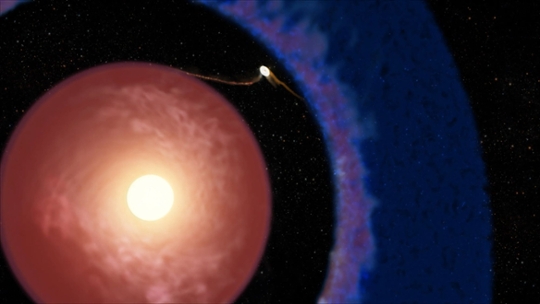
Today, we're kicking things off with some wild science. Researchers have discovered the youngest exoplanet ever seen. At under a million years old, Elias 2-24 b is much younger than the recent record holders which were all over 5 million years old. But despite being the youngest planet we've ever seen, this big baby is more massive than Jupiter. In hopeful science news, the Nancy Grace Roman Space Telescope has started waking up and turning on its instruments for the 1st time. We can't wait to see what science this amazing observatory does now that its instruments are online! And as we continue to see strange classified spaceflight news, SpaceX has launched the second classified mission in under a WEEK. Will we continue seeing this kind of cadence for secret missions?
Check out what's big in space below:
|
|
|

|
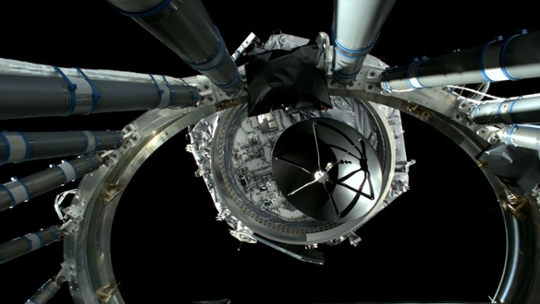
NASA has begun flipping on the instruments aboard the Roman Space Telescope to prepare the observatory for its scientific mission as it travels nearly a million miles to its final destination in orbit.
|
|
|
|
The battlefield that the U.S. military must prepare for and excel in now extends from the seafloor all the way out to the moon, according to Gen. Dan Caine, chairman of the Joint Chiefs of Staff.
|
|
|
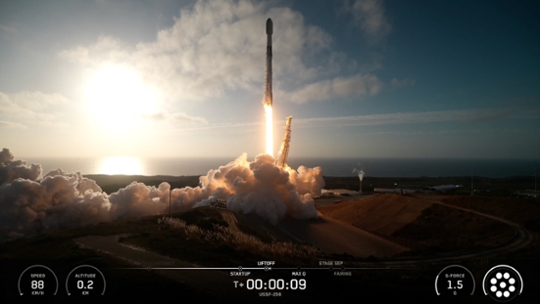
SpaceX launched its second classified mission for the U.S. Space Force in less than a week tonight (Sept. 16).
|
|
|
|
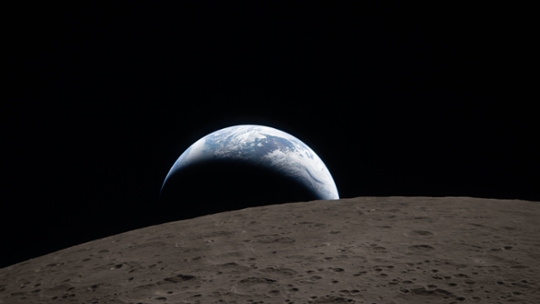
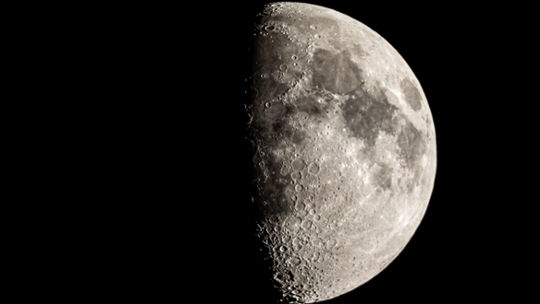
International Observe the Moon Night 2026 occurs on Sept. 19 as the lunar disk is well placed for exploring its craters, mountains and ancient lava plains.
|
|
|
Discover the 'eclipse of the century' with this comprehensive total solar eclipse 2027 guide. Find out where to see it, the timings of totality and possible weather conditions for key locations.
|
|
|
|
A storm sent a surge of current through telegraph wires that caused a train on one of Britain's early railway lines to be delayed by 16 minutes.
|
|
|
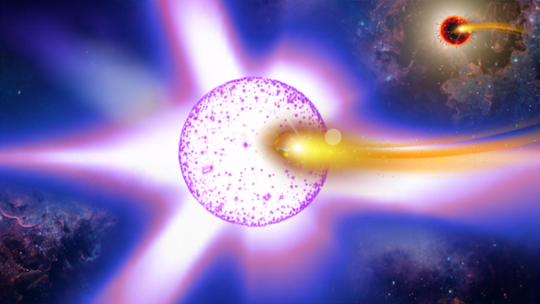
Some vampire white dwarfs that feed on companion stars can transform into neutron stars, but like a cosmic Goldilocks, conditions must be "just right" for this extreme makeover.
|
|
|
|
This was a seriously iconic lineup.
|
|
|
|
Whether they're visiting an alien world, messing around on a holodeck or the puppets of an alien entity, Starfleet's finest always love a bit of cosplay.
|
|
|
That's it for our space update today
The discovery of the youngest exoplanet opens exciting new doors for future science. Since we've never seen a planet that young, studying it and the system it's in could help us to better understand how planets form. And the Roman Space Telescope could help with that. This young exoplanet was found with a coronagraph, and Roman has the most advanced coronagraph ever flown onboard, so it's possible that future observations with Roman's coronagraph could launch exoplanet science way into the future.
Looking into the immediate future, this upcoming Monday, George Lucas' Lucas Museum of Narrative Art opens to the public and Space.com will have an exclusive look inside to share with you. And whether you love Star Wars or not, you'll want to take a peek behind the curtain and the weird and wild art behind the walls of this museum. We are also just days away from celebrating International Observe the Moon Night, one of Space.com's favorite holidays that reminds us that it's always a great time to look up and admire our natural satellite. To follow closely along and stay up to date with all things space, you can now get Space.com right in the palm of your hand with our new app available now on iOS and Android.
Ad astra, per aspera
Chelsea Gohd
Content Manager, Space.com
|
|
|
| Stay up-to-date on all things space science, news, and entertainment by subscribing to our newsletters. |
|
 |
|
|
|
|
|
When you purchase through links in our content, we may earn an affiliate commission.
Future US LLC © |
| Full 7th Floor, 130 West 42nd Street, New York, NY, 10036 |
|
|
|
|