Plus, Mercury is shrinking and August was particularly hot. ͏ ͏ ͏ ͏ ͏ ͏ ͏ ͏ ͏ ͏ ͏ ͏ ͏ ͏ ͏ ͏ ͏ ͏ ͏ ͏ ͏ ͏ ͏ ͏ ͏ ͏ ͏ ͏ ͏ ͏ ͏ ͏ ͏ ͏ ͏ ͏ ͏ ͏ ͏ ͏ ͏ ͏ ͏ ͏ ͏ ͏ ͏ ͏ ͏ ͏ ͏ ͏ ͏ ͏ ͏ ͏ ͏ ͏ ͏ ͏ ͏ ͏ ͏ ͏ ͏ ͏ ͏ ͏ ͏ ͏ ͏ ͏ ͏ ͏ ͏ ͏ ͏ ͏ ͏ ͏ ͏ ͏ ͏ ͏ ͏ ͏ ͏ ͏ ͏ ͏ ͏ ͏ ͏ ͏ ͏ ͏ ͏ ͏ ͏ ͏ ͏ ͏ ͏ ͏ ͏ ͏ ͏ ͏ ͏ ͏ ͏ ͏ ͏ ͏ ͏ ͏ ͏ ͏ ͏ ͏ ͏ ͏ ͏ ͏ ͏ ͏ ͏ ͏ ͏ ͏ ͏ ͏ ͏ ͏ ͏ ͏ ͏ ͏ ͏ ͏ ͏ ͏ ͏ ͏ ͏ ͏ ͏ ͏ ͏ ͏
September 10, 2026—Mercury is shrinking, manta rays give sharks a scratch and August ties for the hottest month on record.
—Andrea Gawrylewski,
Chief Newsletter Editor
|
|
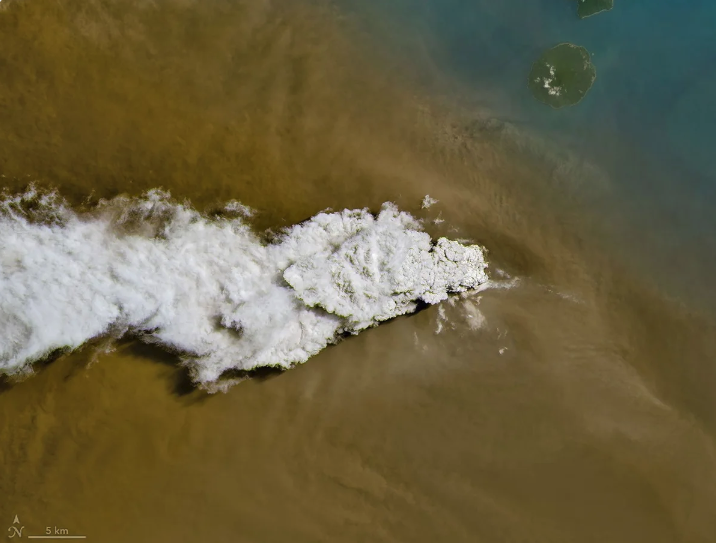
Anak Krakatau. NASA Earth Observatory/Michala Garrison
|
|
Last week the Indonesian volcano Anak Krakatau put on such a show that even satellites caught a glimpse. For more than 24 hours on September 5 and 6 it erupted, shooting gas and ash high into the sky. | 1 min read
At math's biggest conference this summer, mathematicians were contemplating their own AI-driven demise. What happens when machines surpass the most brilliant human minds? | 13 min read
August 2026 has tied for the hottest month ever, sharing the record with July 2023, according to new data from the European Union’s Copernicus Climate Change Service. | 2 min read
Gondwana, the ancient supercontinent that existed around 500 million years ago, likely accounted for around 80 percent of total global land area—much larger than previously thought. | 2 min read
The Pacific Ocean has seen an especially active hurricane season so far (poor Hawaii), but the Atlantic has been relatively quiet. What's going on? | 3 min read
|
|
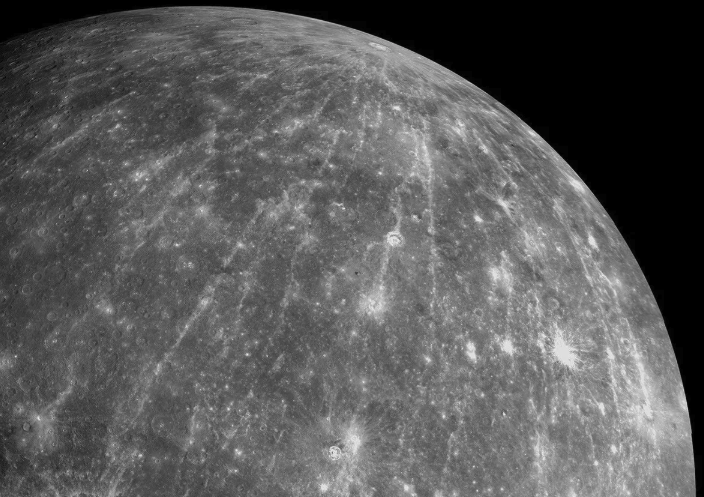
Mercury's many craters may actually be hiding its wrinkles, new research finds. NASA
|
|
Shrinking Planet
Even planets develop wrinkles as they age. As the planet Mercury shrinks, more “wrinkles” (in the form of hills and ridges) emerge, and scientists are trying to measure them. A new study focused on the planet’s surface roughness, such as craters and debris, and found that particularly rough areas have made the wrinkles harder to see. The analysis revealed that the planet has shrunk up to 14.5 miles in its history, 30 percent more than scientists previously thought.
Why this matters: Scientists know Mercury has been contracting for billions of years as it cools down from its fiery origins—and understanding exactly how much can give us a glimpse into the planet’s history and inner layers. The planet is notoriously hard to observe or land a spacecraft on because it’s so close to the sun, so planetary scientists must rely on data from remote satellites to solve Mercury’s mysteries.
What the experts say: “In this work, the authors have thought about an additional angle to figuring out Mercury's geological history from afar, which is the effect of surface roughness from billions of years of impact bombardment,” says Paul Byrne, a planetary scientist at Washington University in St. Louis who was not involved in the study. “If their results hold, and I’m confident they will, then we’ll have taken a step further in investigating planets we can’t yet visit in person.” —Mary Randolph, News Intern
|
|
Shark Scritches
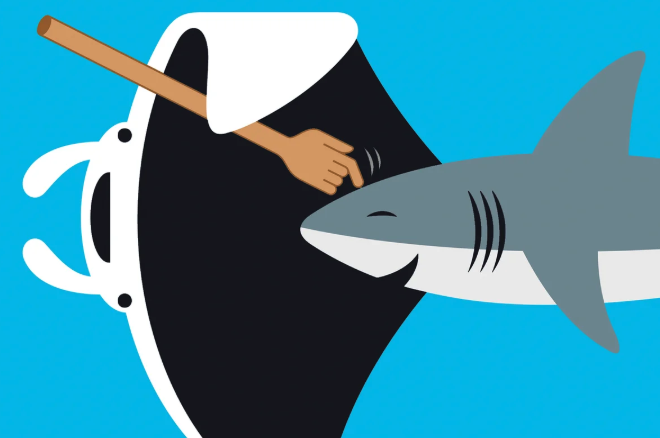
Apparently, manta rays make great scratching posts for sharks. Between December 2024 and January 2026, at three different dive sites off Mexico’s Revillagigedo archipelago, divers spotted Galapagos sharks rubbing their bodies against manta rays. The sharks specifically rubbed their snout and gill regions, known hotspots for sea lice, which suggests the mantas relieved the sharks’ itches. A total of eight of these scratching interactions were documented in two recent studies.
What does this mean? When sharks have a parasite problem, they typically pop into an area where small “cleaner fish” peck the pests off them. But sometimes these “cleaning stations” get crowded. This competition might be driving some sharks toward alternative strategies, like manta rays. Both shark and manta ray skin is made up of dermal denticles, which are shaped like sharp, rough teeth. It probably feels amazing when you’re itchy.
What the experts say: Scientists aren’t sure how sharks learned this behavior—but some suspect individuals simply tried it one day, found out it worked and kept doing it. “In the world of sharks,” says Gregory Skomal, a marine biologist who heads the Massachusetts Shark Research Program and was not involved in either study, “a lot of what they do involves trial and error.” —Emma Gometz, Newsletter Editor
|
|
|
|
|
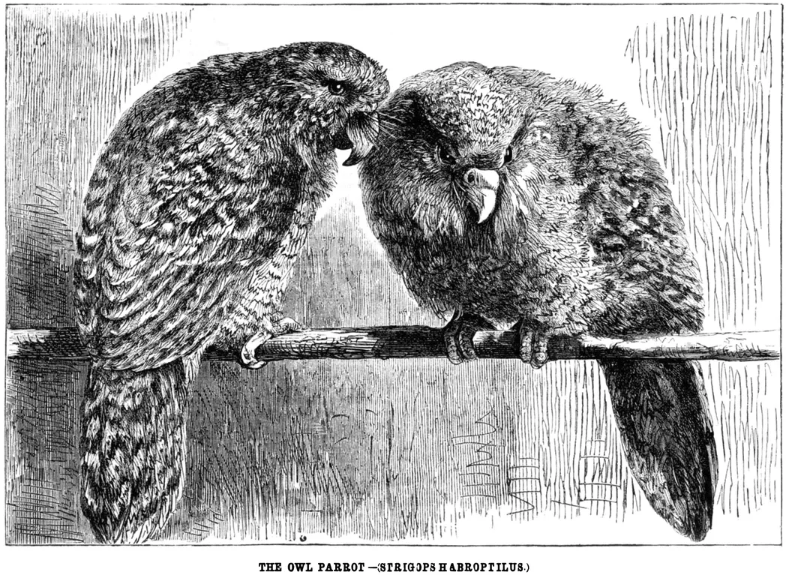
Scientific American, Vol. 34, No. 12; March 1876
|
|
From the March 1876 issue: "The owl parrot. This singular bird, sometimes called the night parrot, belongs to New Zealand. It has the form of a parrot but bears a facial aspect resembling that of an owl. But it is not a bird of prey, as it eats corn and nuts readily when in captivity. The specimens herewith illustrated are domiciled in the unrivaled collection in the gardens of the Royal Zoological Society in London, England."
|
|
If you’ve read this far, your brain probably wants a subscription. Help support this newsletter and get unlimited access to Scientific American: 90 days for just $1.
|
|
The Indonesian volcano Anak Krakatau emerged from the remnants of the infamous 1883 eruption of Krakatoa, which lasted for more than five months and is considered one of the most destructive eruptions in history. Krakatoa reminds me of a kid's book I loved—The Twenty-One Balloons, published by William Pène du Bois in 1947. One if its take-home messages is on the value of aimless exploration, that without a particular destination in mind, you may arrive someplace you could never have dreamed up. What words to live by.
|
|
—Andrea Gawrylewski,
Chief Newsletter Editor
|
|
|
|
|
Subscribe to this and all of our newsletters here.
|
|
Scientific American
1000 N West Street, Suite 1200
|
|
|
|
|