The LUX-ZEPLIN experiment records a tantalizing signal ͏ ͏ ͏ ͏ ͏ ͏ ͏ ͏ ͏ ͏ ͏ ͏ ͏ ͏ ͏ ͏ ͏ ͏ ͏ ͏ ͏ ͏ ͏ ͏ ͏ ͏ ͏ ͏ ͏ ͏ ͏ ͏ ͏ ͏ ͏ ͏ ͏ ͏ ͏ ͏ ͏ ͏ ͏ ͏ ͏ ͏ ͏ ͏ ͏ ͏ ͏ ͏ ͏ ͏ ͏ ͏ ͏ ͏ ͏ ͏ ͏ ͏ ͏ ͏ ͏ ͏ ͏ ͏ ͏ ͏ ͏ ͏ ͏ ͏ ͏ ͏ ͏ ͏ ͏ ͏ ͏ ͏ ͏ ͏ ͏ ͏ ͏ ͏ ͏ ͏ ͏ ͏ ͏ ͏ ͏ ͏ ͏ ͏ ͏ ͏ ͏ ͏ ͏ ͏ ͏ ͏ ͏ ͏ ͏ ͏ ͏ ͏ ͏ ͏ ͏ ͏ ͏ ͏ ͏ ͏ ͏ ͏ ͏ ͏ ͏ ͏ ͏ ͏ ͏ ͏ ͏ ͏ ͏ ͏ ͏ ͏ ͏ ͏ ͏ ͏ ͏ ͏ ͏ ͏ ͏ ͏ ͏ ͏ ͏ ͏
September 1, 2026—The latest dark matter signal is tantalizing. Plus, why are dinosaur fossils auctioning for so much? Emma Gometz talked to the experts. And a new school run (and taught) entirely by AI. That and more below.
—Andrea Gawrylewski
Chief Newsletter Editor
|
|
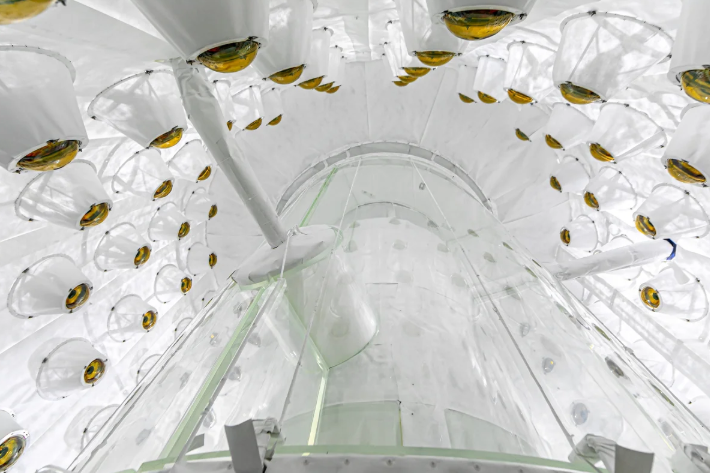
The LUX-ZEPLIN (LZ) experiment, made of seven metric tons of liquid xenon buried in an abandoned mine in South Dakota. Matthew Kapust/Sanford Underground Research Facility
|
|
Researchers working on the LUX-ZEPLIN experiment, the world's largest project searching for dark matter, observed the flash from a particle they can't identify. Have we finally found dark matter? | 5 min read
A flash flood swept through the Grand Canyon on Saturday, killing at least two people. Such events are a vital part of the canyon’s ecosystem, but this one just happened to hit in the worst possible spot to cause damage, experts say. | 3 min read
The Nancy Grace Roman Telescope is headed toward the second sun-Earth Lagrange point, or L2. This point is just shy of one million miles from Earth, and is a critical position in outer space where gravitational forces balance in special ways. | 2 min read
Sermorelin, tesamorelin and other growth hormone peptides are being touted as antiaging elixirs, but what evidence is behind the claims? | 5 min read
-
Avalanches like the one that devastated parts of Nepal and Tibet are becoming more common because of climate change. Here are other locations at similar risk. | 3 min read
-
How many times do you have to fold a piece of paper to make a doughnut? After decades, a mathematician has determined the most efficient technique. | 4 min read
-
Silicon Valley reads a lot of science fiction. But it takes away the wrong lessons, writes Jill Lepore in her latest book, The Rise and Fall of the Artificial State. We sat down with her to discuss. | 5 min read
|
|
Support the newsletter. Feed your curiosity. Subscribe to Scientific American for 90 days for just $1.
|
|
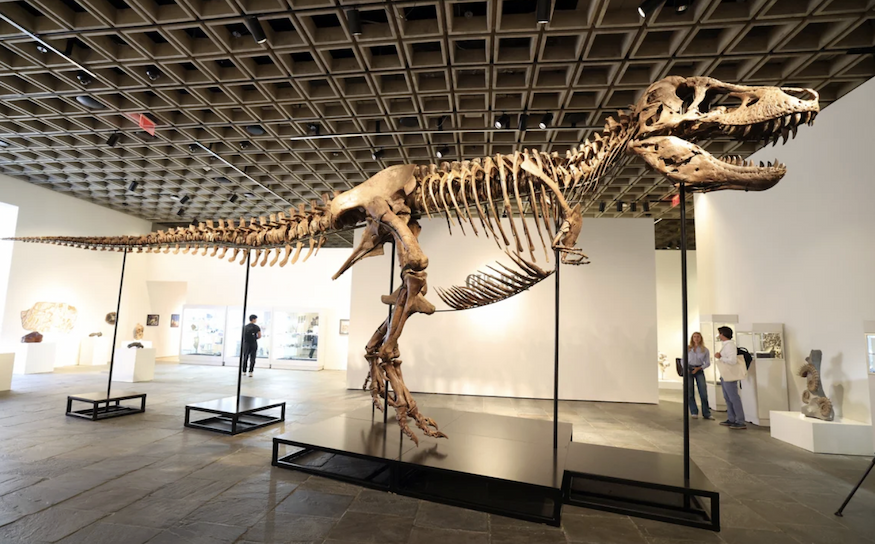
The 67-million-year-old skeleton of “Gus” the T. rex. Timothy A. Clary/AFP via Getty Images
|
|
Fossil Markets
In July, Sotheby’s sold “Gus” the T. rex fossil for $50.1 million—a record for the most money paid for a fossil at auction. The eye-popping price reflects an emerging trend: selling fossils like they’re fine art. Paleontologists say private fossil sales can keep specimens locked away from research and the public. But why are these prices so high in the first place? Because each fossil is unique, appraising them can be a real challenge. An auctioneer told me the only way to judge their “value” is by assessing their completeness and seeing what they’ve sold for in the past. For example, because Apex the Stegosaurus sold for about $44 million in 2024, it set the standard for future Stegosaurus fossil prices. And at auction, pieces can sell for much more than their appraised value, inflating future costs.
Why this matters: Paleontologists aren’t only concerned that these prices will keep scientifically valuable fossils from being researched, they’re also worried it will incentivize some commercial paleontologists to operate more aggressively. That could lead to increased fossil poaching, illegally excavating fossils from federal land or fabricating information about a fossil to buyers. In practice, paleontologists told me that they’ve witnessed weapons being brandished at dig sites and stolen fossils going up for auction.
The final word: At the end of the day, inflated prices are a reflection of increasing wealth disparity and the changing whims of the mega-rich, experts say. “The people buying the expensive dinosaurs are not necessarily hardcore natural history collectors or museums. They’re hedge fund managers. They’re celebrities ... crypto millionaires and billionaires,” says Craig Kissick, vice president of natural history at Heritage Auctions. “If you’ve already got five homes and 10 cars, what’s next? Well, maybe a dinosaur.” —Emma Gometz, Newsletter Editor
|
|
School, by AI
Alpha School, the buzzy private school network that relies entirely on artificial intelligence for its instruction, is hoping to expand to roughly 50 campuses and is adding programs to several public schools this fall. As some schools across the country commit to limiting or banning technology in the classroom, Alpha School argues technology is the solution, not the problem, in education today. But other experts say the research has a ways to go.
Why this matters: One in five U.S. students is chronically absent, and reading and math scores have been declining across the country for a decade. Adaptive learning models like Alpha School’s have shown promise in improving student performance and understanding. Alpha takes the idea considerably further, handing over much of academic instruction to software tailored to individual kids. Students in Alpha School spend the morning working with AI tutors and the afternoons attending seminars to learn life skills like coding and entrepreneurship.
What the experts say: Many learning scientists believe in the power of adaptive learning models, but if they’re not supplementary to a student-teacher relationship, “what’s the point?” says Kelly Miller, a Harvard professor who co-authored a study that showed positive effects of AI adaptive learning models. Miller says she’s optimistic but not totally convinced by Alpha School’s results. “It’s not that I don’t believe that they’re successful,” she says. “But I think to scale it, they need to understand a bit better why it’s successful and what are the things that are crucial in making it successful.” —Mary Randolph, News Intern
Join the Discussion: Would you send your child to an AI-based school? Why or why not? Click here to share your thoughts.
|
|
|
|
|
Do you remember a teacher from your childhood who had a particularly strong impact on you? Perhaps they opened your eyes to a way of thinking you'd never considered before. Or they made a special effort to encourage you and gave you new confidence to take a risk or follow an idea. I don't think it's far-fetched to say that teachers offer students much more than curriculum and canned lectures. Can a fully AI teaching system match the human touch in education? Share your thoughts on our online forum and see how others feel about the issue.
|
|
—Andrea Gawrylewski, Chief Newsletter Editor
|
|
|
|
|
Subscribe to this and all of our newsletters here.
|
|
|
|
|