An eerily simple math problem says our days are numbered ͏ ͏ ͏ ͏ ͏ ͏ ͏ ͏ ͏ ͏ ͏ ͏ ͏ ͏ ͏ ͏ ͏ ͏ ͏ ͏ ͏ ͏ ͏ ͏ ͏ ͏ ͏ ͏ ͏ ͏ ͏ ͏ ͏ ͏ ͏ ͏ ͏ ͏ ͏ ͏ ͏ ͏ ͏ ͏ ͏ ͏ ͏ ͏ ͏ ͏ ͏ ͏ ͏ ͏ ͏ ͏ ͏ ͏ ͏ ͏ ͏ ͏ ͏ ͏ ͏ ͏ ͏ ͏ ͏ ͏ ͏ ͏ ͏ ͏ ͏ ͏ ͏ ͏ ͏ ͏ ͏ ͏ ͏ ͏ ͏ ͏ ͏ ͏ ͏ ͏ ͏ ͏ ͏ ͏ ͏ ͏ ͏ ͏ ͏ ͏ ͏ ͏ ͏ ͏ ͏ ͏ ͏ ͏ ͏ ͏ ͏ ͏ ͏ ͏ ͏ ͏ ͏ ͏ ͏ ͏ ͏ ͏ ͏ ͏ ͏ ͏ ͏ ͏ ͏ ͏ ͏ ͏ ͏ ͏ ͏ ͏ ͏ ͏ ͏ ͏ ͏ ͏ ͏ ͏ ͏ ͏ ͏ ͏ ͏ ͏
September 14, 2026—The "doomsday argument" says humans are well on their way out. Plus, a promising new treatment for cocaine dependency and a woman with chronic headaches receives a startling diagnosis.
—Andrea Gawrylewski,
Chief Newsletter Editor
|
|
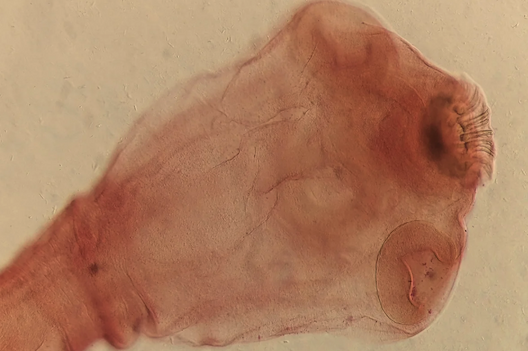
Taenia solium. Mohammed Al Ali via Getty Images
|
|
For four months, a woman in the Philippines suffered headaches and visual hallucinations. A scan revealed that her brain contained cysts filled with tapeworm larvae. | 2 min read
Twenty five winners of the Fields Medal for math released a statement saying there's a “severe misalignment” between their discipline and AI companies’ goals. | 2 min read
Quiet rest (that does NOT include looking at your phone) helps with memory consolidation in the brain. | 4 min read
There are parts of the universe, and of the electromagnetic spectrum, that we’re not covering with our telescopes. Are astronomers ignoring too much of the cosmos? | 6 min read
Get caught up on the latest science news, including big AI math discoveries, data center pushback and the release of 9/11 health data. | 13 min podcast
|
|
The End of Us
Some mathematicians say that, purely based on statistics alone, humanity’s time is running out. The so-called “doomsday argument” relies on the basic principles of probability and one data point: the total number of humans in existence. Given that roughly 117 billion people have lived before us, it seems statistically unlikely that we’re living near the very beginning of a vast, future human civilization. Instead, we’re probably somewhere closer to the middle—which suggests humanity’s end may be surprisingly near.
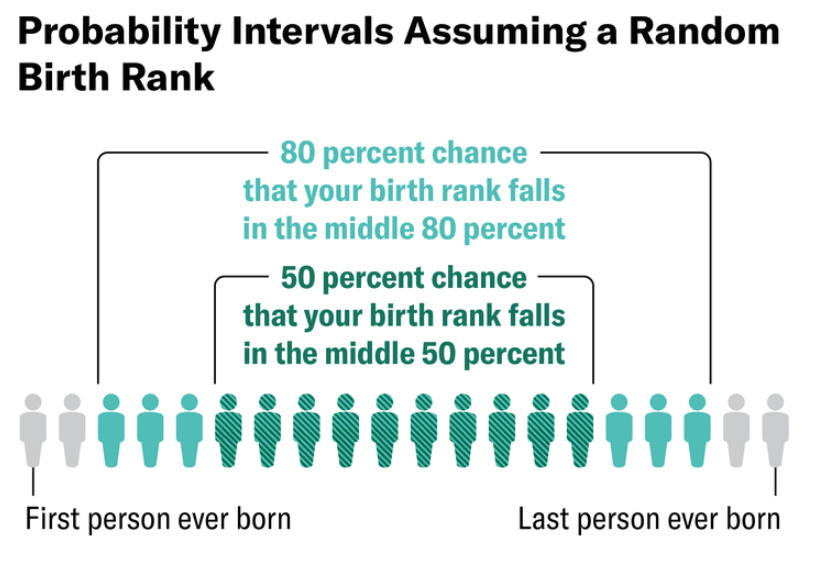
How it works: Imagine lining up every human who has ever and will ever live, from the first to the last. If your birth is a random selection from that line, there’s a 50 percent chance you fall within the middle 50 percent of all humans—and an 80 percent chance you fall within the middle 80 percent. Because about 117 billion people came before us, those probability ranges imply a total human population of roughly 156 billion to 468 billion with 50 percent probability. At today’s birth rate, that translates to roughly 295 to 2,659 years of human life remaining.
|
|
The counterarguments: Critics question whether we should really treat ourselves as random humans in the first place. Why exclude Neanderthals, aliens or future cyborgs from the reference class, for example? Others point out that an early human using the same reasoning would have badly underestimated humanity’s longevity. And, perhaps most fundamentally, our birth rank has no obvious causal connection to whatever might actually end humanity.
|
|
Cocaine Trip
Cocaine addiction kills about 22,000 adults in the U.S. every year; however no FDA-approved treatments exist for the condition. Now a small study has shown that psilocybin, the psychoactive compound in “magic mushrooms,” could help treat the illness. A total of 40 adults with cocaine use disorder received either a single dose of psilocybin or a placebo along with several psychotherapy sessions. About 30 percent of psilocybin-receiving participants remained abstinent, whereas none did in the placebo group, per tests conducted post-treatment for six months.
Why this matters: A growing body of evidence suggests psilocybin-assisted therapy may help treat alcohol and nicotine dependence, as well as other addictions. Also, most of the study participants were Black and had lower socioeconomic status, groups that are underrepresented in psychedelic clinical research and among the U.S. communities most vulnerable to cocaine addiction.
What the experts say: The sample size is too small to draw any firm conclusions about psilocybin’s effectiveness, says Yale University clinical psychologist Brian Kiluk, who wasn’t involved in the study. And the role of the psychotherapy sessions needs to be disentangled from that of the psilocybin, he adds. Despite the study’s limitations, Kiluk believes the approach is worth exploring after a decades-long search for treatments: “We’ve got to start somewhere.” —Emma Gometz, Newsletter Editor
|
|
|
|
|
The number of women who died after an ectopic pregnancy has spiked in recent years, an analysis found. | ProPublica
The number of cancer deaths in the U.S. attributable to alcohol doubled from 1990 to 2023, according to a new study. | The Washington Post ($)
A particularly strong El Niño has Ecuadorian scientists worried about rare and fragile Galapágos species. | AP
|
|
Tiny investment, enormous universe: subscribe to Scientific American for 90 days for just $1 and help keep this newsletter going.
|
|
You know we're book lovers here at Scientific American. So I'm excited to tell you about a real-life event for readers in the New York City area. On September 22, our own Bri Kane will lead a panel discussion at the Greenlight Bookstore in Fort Greene Brooklyn on science in fiction, featuring four authors who all have highly-anticipated book releases this year. Learn more and register here.
|
|
Please send any cool ideas, comments or feedback on this newsletter to: newsletters@sciam.com. See you tomorrow!
—Andrea Gawrylewski,
Chief Newsletter Editor
|
|
|
|
|
Subscribe to this and all of our newsletters here.
|
|
Scientific American
1000 N West Street, Suite 1200
|
|
|
|
|