Did AI just solve the most famous problem in math? ͏ ͏ ͏ ͏ ͏ ͏ ͏ ͏ ͏ ͏ ͏ ͏ ͏ ͏ ͏ ͏ ͏ ͏ ͏ ͏ ͏ ͏ ͏ ͏ ͏ ͏ ͏ ͏ ͏ ͏ ͏ ͏ ͏ ͏ ͏ ͏ ͏ ͏ ͏ ͏ ͏ ͏ ͏ ͏ ͏ ͏ ͏ ͏ ͏ ͏ ͏ ͏ ͏ ͏ ͏ ͏ ͏ ͏ ͏ ͏ ͏ ͏ ͏ ͏ ͏ ͏ ͏ ͏ ͏ ͏ ͏ ͏ ͏ ͏ ͏ ͏ ͏ ͏ ͏ ͏ ͏ ͏ ͏ ͏ ͏ ͏ ͏ ͏ ͏ ͏ ͏ ͏ ͏ ͏ ͏ ͏ ͏ ͏ ͏ ͏ ͏ ͏ ͏ ͏ ͏ ͏ ͏ ͏ ͏ ͏ ͏ ͏ ͏ ͏ ͏ ͏ ͏ ͏ ͏ ͏ ͏ ͏ ͏ ͏ ͏ ͏ ͏ ͏ ͏ ͏ ͏ ͏ ͏ ͏ ͏ ͏ ͏ ͏ ͏ ͏ ͏ ͏ ͏ ͏ ͏ ͏ ͏ ͏ ͏ ͏
November 20, 2026—AI may have just solved the most famous problem in math. Plus, a new kind of knitting stitch that stops mistakes from spreading. And a first-of-its-kind blood test for CTE may be coming soon.
—Andrea Gawrylewski,
Chief Newsletter Editor
|
|
-
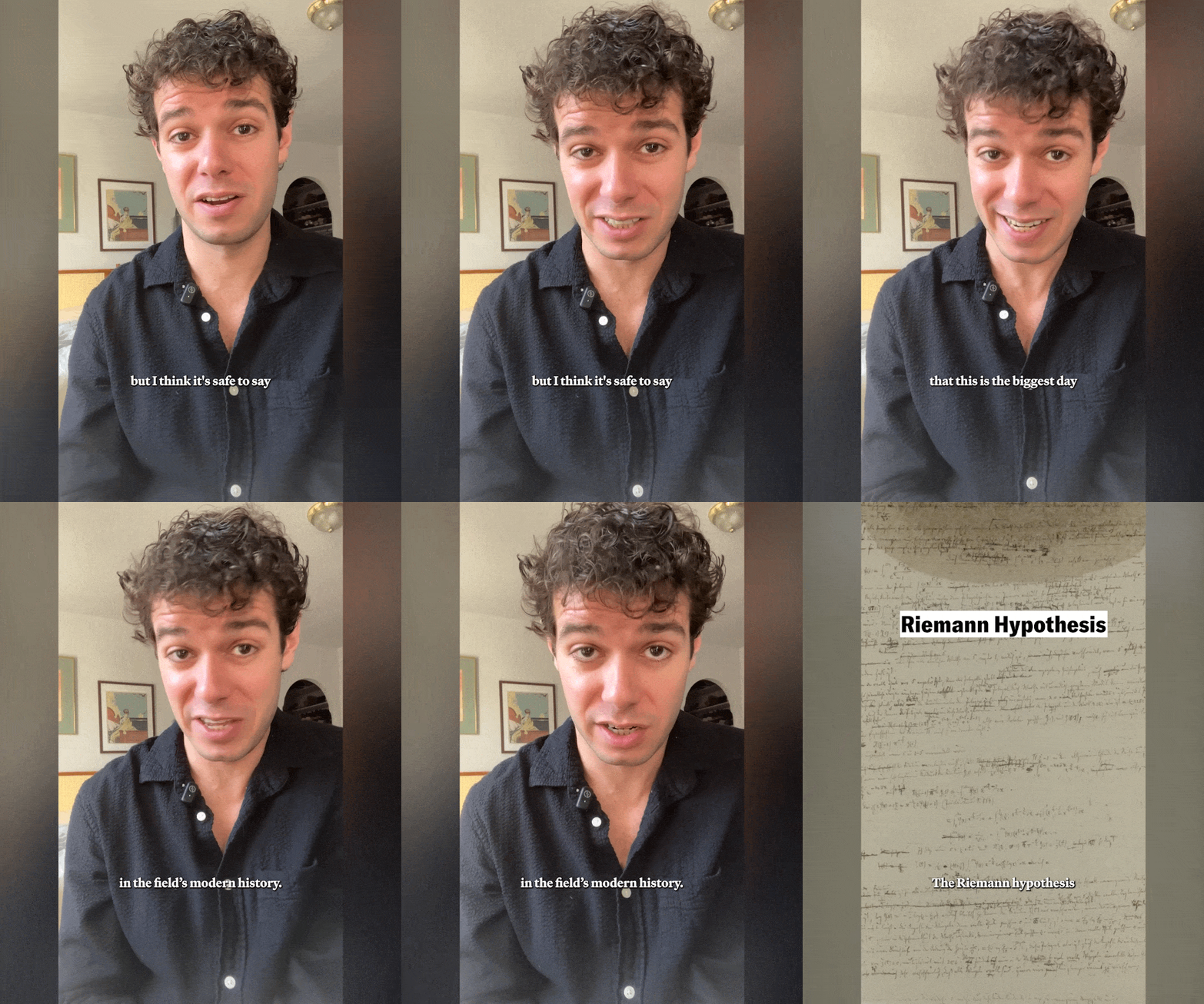
This morning, a mathematician and employee at the artificial intelligence company Anthropic claimed to have proven the Riemann Hypothesis, the most famous problem in all of mathematics, using a large language model. The problem has been unsolved for 167 years, and was long considered far out of reach for human mathematicians. The hypothesis says that the prime numbers, which appear to be randomly scattered along the number line, actually obey a hidden pattern. I touched base with Joe Howlett, our senior reporter who broke the story, about the significance of this. He said if it’s confirmed, it’s the biggest discovery in the history of modern mathematics. | 2 min read
-
Mere hours after the Riemann news broke, two top experts are saying that a human may have produced just such a proof months ago, purportedly without any assistance from artificial intelligence. | 2 min read
-
If the latest results are true, what would this actually mean for the rest of us? The answers are murkier than you might expect. | 4 min read
-
Here's Senior Reporter Joe Howlett explaining more backstory and the significance of this breakthrough. Click through to watch the full video:
|
|
-
On Monday, November 23, the Iowa Army Ammunition Plant will detonate 68 drums of lead azide, which is used in the manufacture of detonators, blasting caps and other components of explosives. Here's what you should know about it. | 3 min read
-
For 150 years, we thought we understood how brains produced language. We were wrong. | 4 min read
-
Billions of years from now—far sooner than astronomers had predicted—our dying sun could kick away its outer planets. | 5 min read
-
Two mathematicians (one of them central to the above Riemann hypothesis news) say they have closed a controversial loophole in OpenAI’s September solution of another million-dollar problem, called Navier-Stokes. | 2 min read
-
Two probes are set to arrive at Mercury on November 21 for an up-close look at this puzzling planet. Here's what they'll do there. | 6 min read
-
A first-of-its-kind blood test for chronic traumatic encephalopathy (CTE) may be just around the corner. Scientists say the new method, if validated in large studies, could help doctors spot and treat the disease. | 3 min read
-
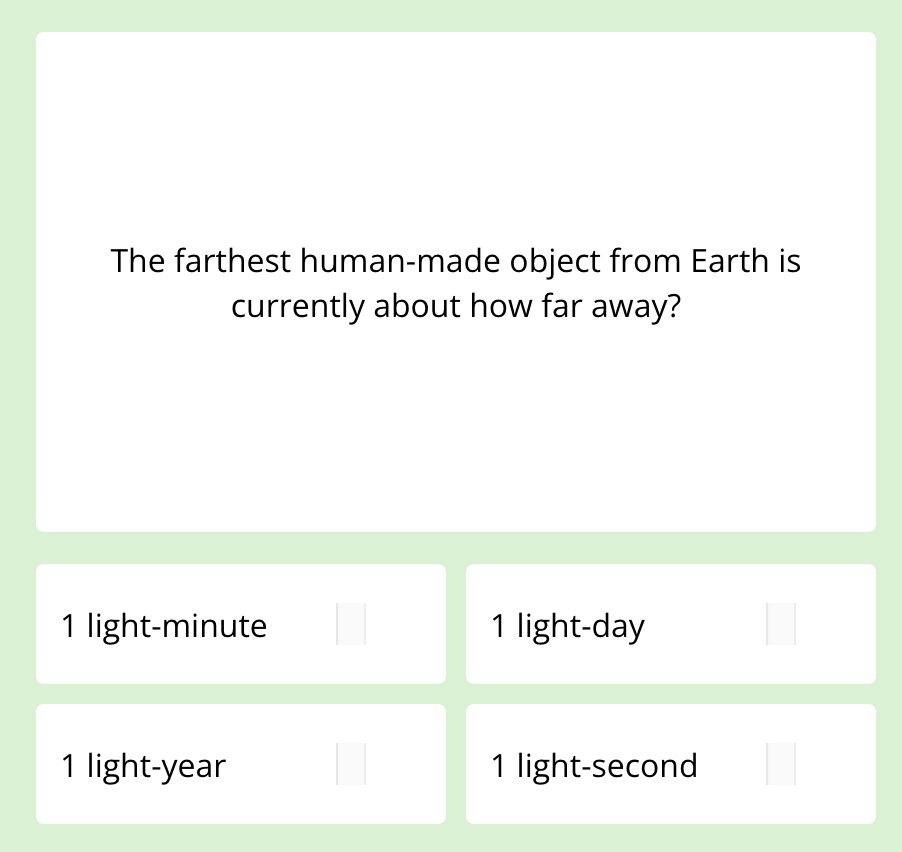
This week, the spacecraft Voyager 1 reached a "light-day's" distance from Earth. It's still gathering data from interstellar space. | 3 min read
|
|
Knitting Theory
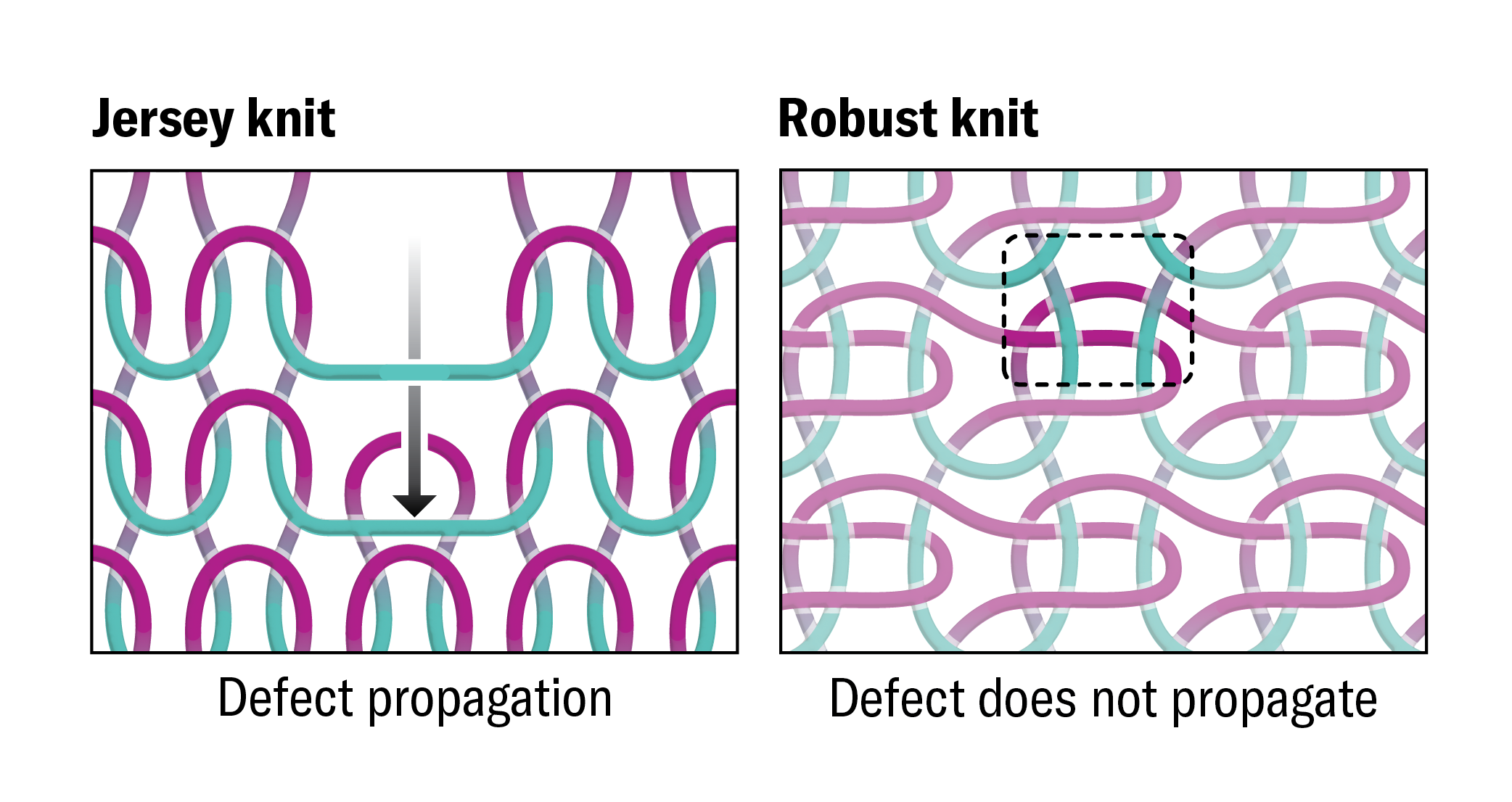
If you’re familiar with knitting, you’ll know it can be a bit of an unforgiving medium. One slipped stitch can cascade into an infinite “ladder” of unraveling yarn. But does it have to be that way? In a recent paper, a team of researchers mathematically investigated knitting to invent a new, more resilient stitch. By wrapping a three-dimensional model of knit stitches around a doughnut shape called a torus, the researchers saw how defects spread across the fabric and used basic topological moves (crossing loops of yarn over one another) to design a stitch that stops itself from spreading.
How it works: For a fabric to be “knitted,” the loops at the middle of the yarn slip through one another but the ends of the yarn always remain outside—meaning they never form a knot. That’s why it’s so easy to unravel knitted fabrics by pulling on the ends. Laddering can spread infinitely down a fabric if it’s made using the typical “jersey knit” stitch because it only takes one broken loop nearby to trigger the loop below it to unravel. Scientists created the “robust knit”—which interlocks each stitch around two loops, so for every two loops that are broken, only one loop below unravels.
What the experts say: Researchers have mathematically described stitch defects in the past, says applied mathematician Alexander Omelchenko of Constructor University in Germany, but only as static objects. This study shows how defects move dynamically across a textile. “It’s a very original approach,” says Omelchenko, who wasn’t involved in the study. —Emma Gometz, Newsletter Editor
|
|
Amanda Montañez; Source: “Topological Defect Propagation to Classify Knitted Fabrics,” by Daisuke S. Shimamoto et al., in Physical Review X, Vol. 16; July 14, 2026 (reference)
|
|
|
|
|
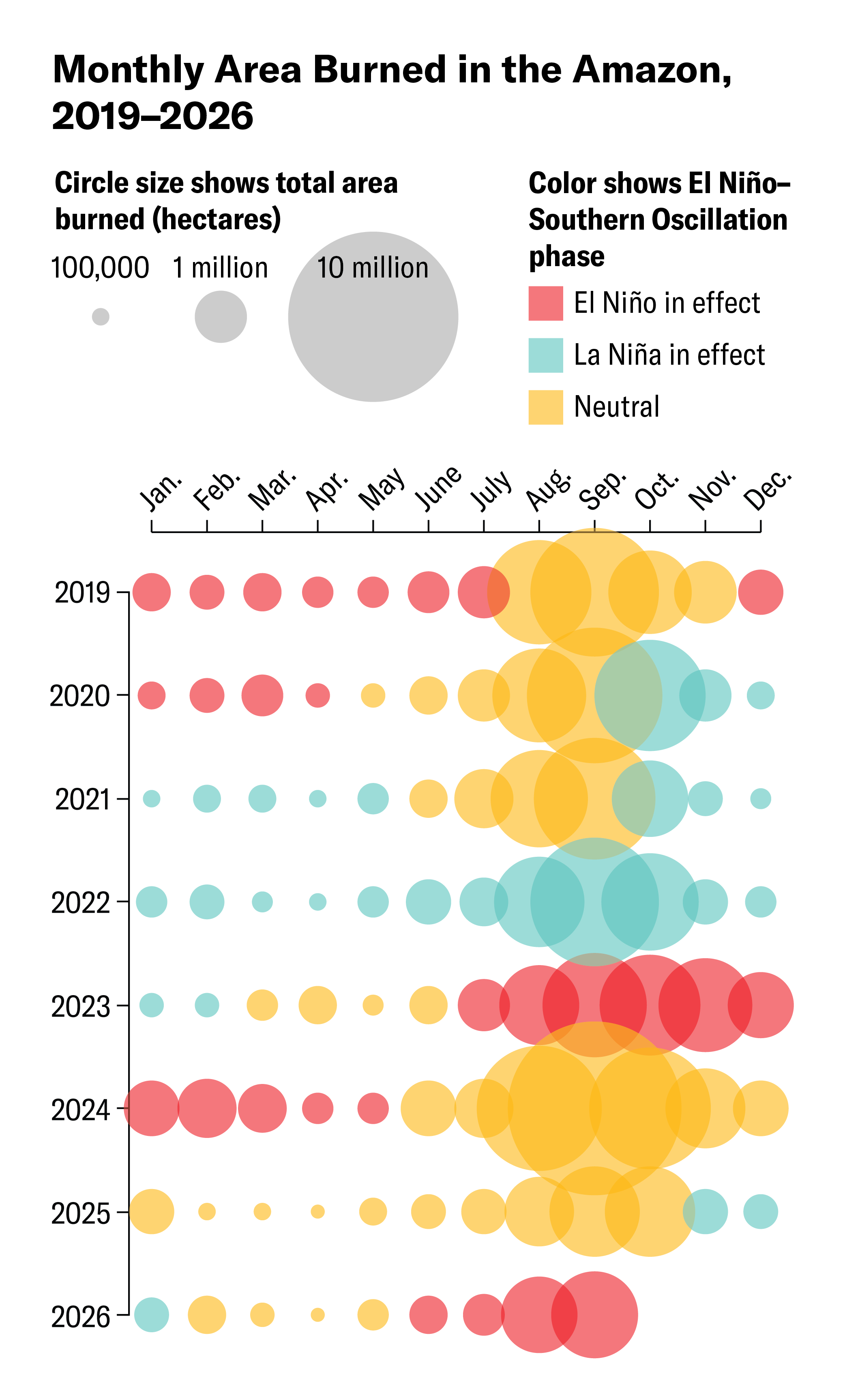
Scientists suspect the Amazon rainforest will have a long and severe fire season, spurred by a record-smashing El Niño. And that has scientists worried for the rainforest’s long-term survival.
The Amazon is still recovering from drought and fires linked to a strong El Niño in 2023 and 2024, and it has been weakened by decades of global warming and deforestation. Some researchers fear the rainforest could soon reach a “tipping point”: the threshold beyond which a self-reinforcing, runaway cascade of drying, tree death and wildfire would begin to spread across the Amazon basin, irreversibly. In just decades, that cascade could turn rainforest to savanna, releasing into the atmosphere tens of billions of tons of carbon and altering global rain and snowfall patterns.
|
|
Amanda Montañez; Source: MapBiomas (area burned data); Our World in Data (El Niño–Southern Oscillation data)
|
|
|
MOST POPULAR STORIES OF THE WEEK
|
|
-
Why so many critical tech outages are happening all at once | 3 min read
-
Hormone therapy may improve cognition after menopause | 2 min read
-
The race to understand why young people are dying from colon cancer | 12 min read
|
|
Tiny investment, enormous universe: subscribe to Scientific American for 90 days for just $1 and help keep this newsletter going.
|
|
Whew, what a week for science news. Voyager 1 reached a distance of one light-day from Earth, AI has allegedly solved one of math's toughest problems, and the U.S. lost its measles elimination status. Science moves pretty fast–I'm so glad you're a part of this science-loving community and we're on the ride together.
|
|
Please send your thoughts, comments or feedback on this newsletter to: newsletters@sciam.com. Have a great weekend!
—Andrea Gawrylewski,
Chief Newsletter Editor
|
|
|
|
|
Subscribe to this and all of our newsletters here.
|
|
Scientific American
1000 N West Street, Suite 1200
|
|
|
|
|