Scientists are racing to understand what's behind the increase ͏ ͏ ͏ ͏ ͏ ͏ ͏ ͏ ͏ ͏ ͏ ͏ ͏ ͏ ͏ ͏ ͏ ͏ ͏ ͏ ͏ ͏ ͏ ͏ ͏ ͏ ͏ ͏ ͏ ͏ ͏ ͏ ͏ ͏ ͏ ͏ ͏ ͏ ͏ ͏ ͏ ͏ ͏ ͏ ͏ ͏ ͏ ͏ ͏ ͏ ͏ ͏ ͏ ͏ ͏ ͏ ͏ ͏ ͏ ͏ ͏ ͏ ͏ ͏ ͏ ͏ ͏ ͏ ͏ ͏ ͏ ͏ ͏ ͏ ͏ ͏ ͏ ͏ ͏ ͏ ͏ ͏ ͏ ͏ ͏ ͏ ͏ ͏ ͏ ͏ ͏ ͏ ͏ ͏ ͏ ͏ ͏ ͏ ͏ ͏ ͏ ͏ ͏ ͏ ͏ ͏ ͏ ͏ ͏ ͏ ͏ ͏ ͏ ͏ ͏ ͏ ͏ ͏ ͏ ͏ ͏ ͏ ͏ ͏ ͏ ͏ ͏ ͏ ͏ ͏ ͏ ͏ ͏ ͏ ͏ ͏ ͏ ͏ ͏ ͏ ͏ ͏ ͏ ͏ ͏ ͏ ͏ ͏ ͏ ͏
November 19, 2026—Rising cases of colon cancer in young people are alarming scientists. Plus, an ancient Maya "discovery" is refuted, and Chinese AI companies are built on banned Nvidia chips.
—Andrea Gawrylewski,
Chief Newsletter Editor
|
|
United Launch Alliance’s Vulcan rocket before an October 2024 flight test from Space Launch Complex 41 at Cape Canaveral, Florida. United Launch Alliance
|
|
Colon Cancer in the Young
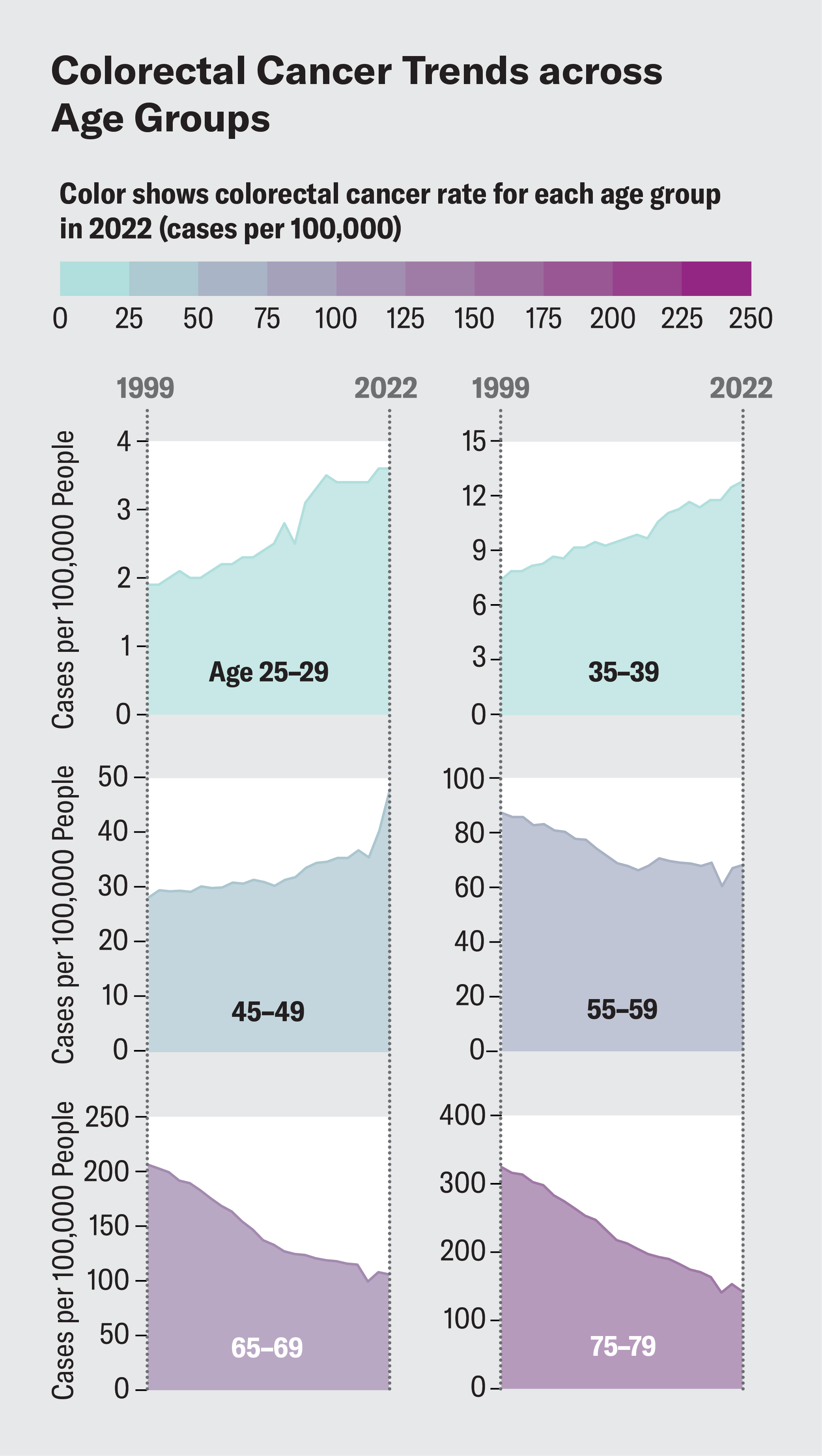
In the last 30 or so years, the number of cases of severe colorectal cancer rates among younger, traditionally low-risk people has been increasing. Overall, this type of cancer is still far more common in adults over 65. But the number of diagnoses in younger people has continued to escalate. In response to the trend, in 2021, the recommended screening age was lowered from 50 to 45. In January, the American Cancer Society’s annual report stated that colorectal cancer had officially become the deadliest cancer in people under age 50 in the U.S., though similar increases in rates have been seen globally.
|
|
Amanda Montañez; Source: Centers for Disease Control and Prevention (data)
|
|
What’s going on: Epidemiologists have noticed that the spike in incidence is tied to the time when a person was born, pointing toward generational shifts in risk or exposure. Younger people have spent their lives eating more processed foods and getting less physical activity. Environmental factors—including exposure to plastics and toxic chemicals—might play some role, too. Some scientists are investigating if colon cancer in younger people represents a new kind of colon cancer.
-
Genetic profile: In data collected in 2025 from 11 countries on four continents, researchers identified two peculiar patterns of DNA, or mutational signatures, whose prevalence was more than three times higher among people under age 40 with colorectal cancer than among people age 70 and older who also had the disease. That genetic signature was associated with a toxin called colibactin, which is produced by gut bacteria such as Escherichia coli that might damage DNA in a healthy colon and make it easy for cancer to spread.
-
Molecular markers: Under the microscope, younger individuals’ tumor cells can appear more disorganized and abnormal compared with healthy tissue. “Younger patients also have tumors more commonly in the left side of the colon and the rectum compared with older patients, and we don’t really understand why that is,” says Kimmie Ng, an oncologist at the Dana-Farber Cancer Institute.
-
Biomechanical profile: A biomechanical study of colon tissue collected from 19 people aged 57 to 70 and 14 people aged 42 to 46 with stage II or III tumors found young people with colorectal cancer had stiffer tumors than older individuals. Even more striking, their normal, noncancerous tissues were also firmer than those of older patients with colorectal cancer. The collagen in the tissue is thicker and more linear, making it easier for cancer cells to spread.
What can be done: Colonoscopy is considered the most accurate available screening option—and clinicians can remove precancerous polyps while doing the exam—but the procedure is invasive and almost always requires sedation and intensive bowel prep. At-home stool tests can provide a good initial assessment. The one blood test for colon cancer on the market is less effective at catching very early-stage cancers. More advanced, accurate blood tests could be a cheaper first-step screening, experts say.
Join the discussion: Do you think more young people should be screened for cancer, and if so, when should that screening begin? Share your perspective here.
|
|
|
|
|
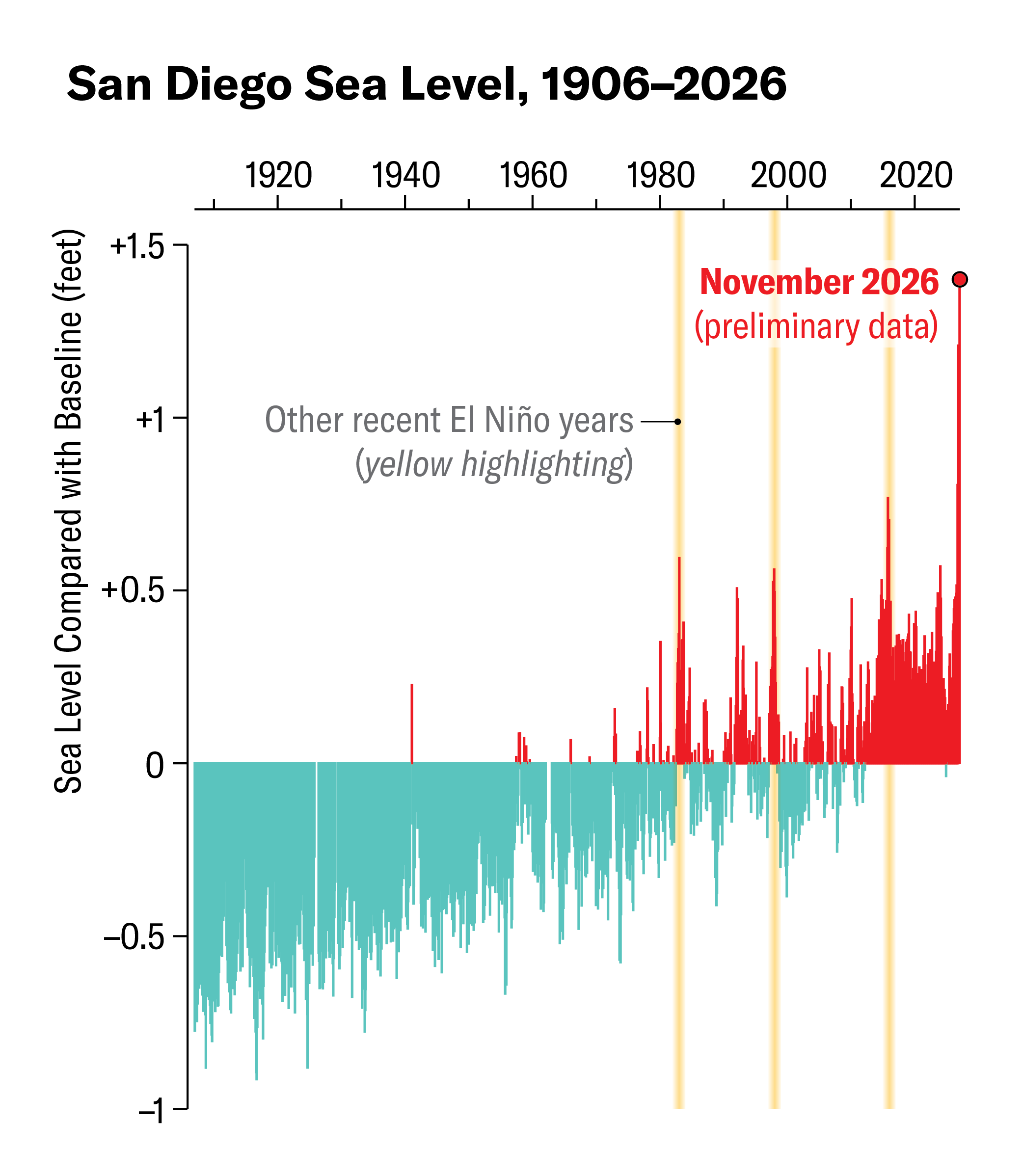
Every 28 days, the moon is at perigee, or the closest it gets to Earth in its elliptical orbit, so it exerts even more of a pull on ocean tides. When perigee aligns with the monthly high tide, you get King Tides. This year's King Tides will be coinciding with as exceptionally strong El Niño. The combination in California could bring substantial damage to coastal homes, businesses and infrastructure, such as highways and wastewater treatment facilities. And coastal erosion in California could be considerable, given that 80 percent of erosion occurs during El Niño winters.
This chart shows the 30-day running mean of sea-level measurement off the coast of San Diego, Calif., since February 1906. Values are in reference to sea levels during a baseline period of 1983-2001. Read more here.
|
|
Amanda Montañez; Source: Mark Merrifield, University of California, San Diego (data)
|
|
If you’ve read this far, your brain probably wants a subscription. Help support this newsletter and get unlimited access to Scientific American: 90 days for just $1.
|
|
Sadly, many chronic illnesses are on the rise in younger adults, including autoimmune diseases, type 2 diabetes, elevated blood pressure, and depression and other mental health disorders. On the chance that ultraprocessed foods are fueling these increases, my advice from a previous newsletter is more important than ever: Get your daily fiber intake up! Fiber is essential for healthy gut bacteria and helps offset many of the diseases I just mentioned. Start with a handful of raspberries for breakfast. Build from there.
|
|
—Andrea Gawrylewski,
Chief Newsletter Editor
|
|
|
|
|
Subscribe to this and all of our newsletters here.
|
|
Scientific American
1000 N West Street, Suite 1200
|
|
|
|
|