|
|
 
Happy Monday, space fans
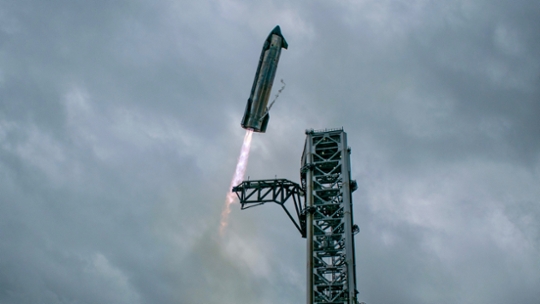
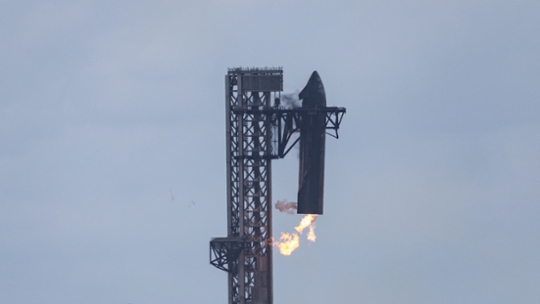
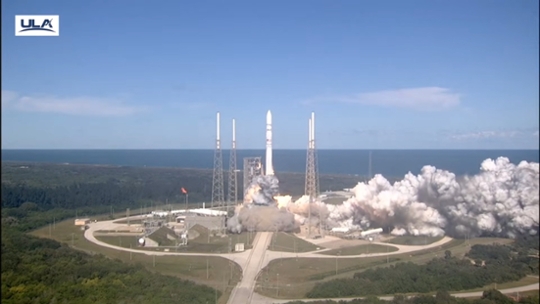
We are coming off of quite a thrilling past few days. on Friday, SpaceX launched its Starship megarocket on Flight 15, a test flight that saw the vehicle reach orbit and return to Earth where the company actually caught the craft using their signature "chopsticks" technique. What an unbelievable first that was. However, not all launches go to plan (and Flight 15 wasn't perfect either), and we saw United Launch Alliance's Vulcan Centaur rocket fail in a launch attempt that lost 40 satellites. And finally, a mission that has somehow muscled through every possible challenge, Voyager 1 is about to reach one light-day from Earth later this week, a major milestone for the probe farthest from Earth.
Check out what's big in space:
|
|
|
|
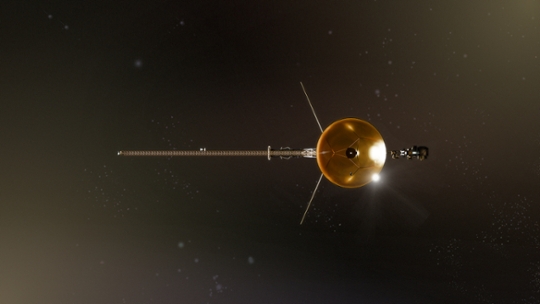
Voyager 1 is celebrating a big milestone as it approaches its 50th birthday: reaching one light-day away from Earth.
|
|
|

|
SpaceX just made spaceflight history, catching the upper stage of its Starship megarocket when it returned to Earth. But Starship still has some pretty big boxes left to check.
|
|
|
United Launch Alliance's Vulcan Centaur rocket suffered an anomaly during its launch today (Nov. 15), resulting in the loss of 40 Amazon internet satellites.
|
|
|
|
The red planet Mars will shine a little over 1 degree from Jupiter on the night of Nov. 15-16.
|
|
|
60 years ago, the Leonid meteor shower unleashed one of the most spectacular meteor storms in recorded history. As the 2026 peak approaches, here's what skywatchers can expect.
|
|
|
|
"T CrB *will* erupt sometime soon. Everyone is very confident on this."
|
|
|
 |
| (Future) |
The holiday shopping season is almost here and if you're looking for the perfect gift for your space cadet at home, we've got the best deals to look out for here.
|
|
|
|
Sufferin' succotash! The Monstars and Tune Squad interplanetary slam arrived 30 years ago, and it's still a clinic in interplanetary conflict resolution.
|
|
|
That's it for our space update today.
Did you watch SpaceX's Starship launch on Friday, or did you watch it return to Earth over the weekend? If you saw it launch, you probably noticed that the first planned return of the mission's rocket booster did not go to plan and after diverting the booster from being caught by the chopsticks, it actually explode prior to splashing down in the water. Since the booster wasn't caught, we can't call this flight a successful "double catch," but it did manage to successfully fully return Starship from orbit, a first not just for Starship but for any orbital vehicle. And it was pretty wild watching them carefully catch this absolutely massive spacecraft that had just been in orbit.
As we unwind from all of the Starship excitement, we are barreling right into another major event: this week, we will see NASA's Voyager 1 spacecraft reach one light-day away from Earth. This is the distance that one light particle travels in 24 hours and it is beyond the farthest we have ever gone in space. Over a decade since Voyager 1 left the heliosphere, or protective bubble around the planets in our solar system, and almost 50 years since it launched, this probe and its twin Voyager 2 are still exploring. To follow closely along and stay up to date with all things space, you can now get Space.com right in the palm of your hand with our new app available now on iOS and Android.
Ad astra, per aspera
Chelsea Gohd
Content Manager, Space.com
|
|
|
| Stay up-to-date on all things space science, news, and entertainment by subscribing to our newsletters. |
|

|
|
|
|
|
|
When you purchase through links in our content, we may earn an affiliate commission.
Future US LLC © |
| Full 7th Floor, 130 West 42nd Street, New York, NY, 10036 |
|
|
|