Plus, we dive into a haystack and come out with a life lesson. ͏ ͏ ͏ ͏ ͏ ͏ ͏ ͏ ͏ ͏ ͏ ͏ ͏ ͏ ͏ ͏ ͏ ͏ ͏ ͏ ͏ ͏ ͏ ͏ ͏ ͏ ͏ ͏ ͏ ͏ ͏ ͏ ͏ ͏ ͏ ͏ ͏ ͏ ͏ ͏ ͏ ͏ ͏ ͏ ͏ ͏ ͏ ͏ ͏ ͏ ͏ ͏ ͏ ͏ ͏ ͏ ͏ ͏ ͏ ͏ ͏ ͏ ͏ ͏ ͏ ͏ ͏ ͏ ͏ ͏ ͏ ͏ ͏ ͏ ͏ ͏ ͏ ͏ ͏ ͏ ͏ ͏ ͏ ͏ ͏ ͏ ͏ ͏ ͏ ͏ ͏ ͏ ͏ ͏ ͏ ͏ ͏ ͏ ͏ ͏ ͏ ͏ ͏ ͏ ͏ ͏ ͏ ͏ ͏ ͏ ͏ ͏ ͏ ͏ ͏ ͏ ͏ ͏ ͏ ͏ ͏ ͏ ͏ ͏ ͏ ͏ ͏ ͏ ͏ ͏ ͏ ͏ ͏ ͏ ͏ ͏ ͏ ͏ ͏ ͏ ͏ ͏ ͏ ͏ ͏ ͏ ͏ ͏ ͏ ͏
November 9, 2026—NASA announces a new lunar rover. Plus we dig into the science of solid state transformers. And SciAm launches a new series answering reader questions.
—Andrea Gawrylewski,
Chief Newsletter Editor
|
|
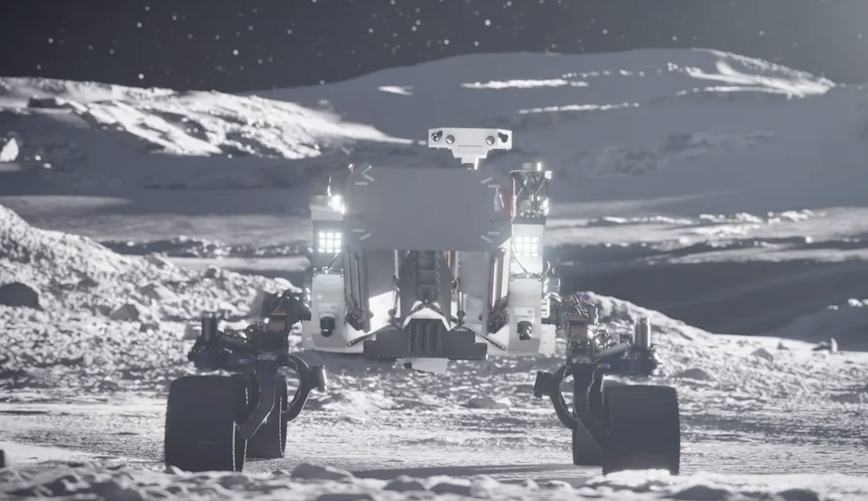
An artist's rendering of PROMISE. NASA
|
|
A Needle in a Haystack
We at Scientific American are soundly in the camp that believes there is no such thing as a stupid question. So in the spirit of open inquiry we thought we’d apply some journalistic thinking to some of the more obvious questions in life. And we’d like to hear from you! Submit your question here, about anything, and perhaps we’ll try to answer it in an upcoming article.
First up: Finding a needle in a haystack is an idiom describing a task that is nigh impossible. But exactly how hard is it, really, to find a needle in a haystack? We asked Jeffrey Rosenthal, a statistics professor at the University of Toronto. His short answer? Very, very hard.
The method: The principles of such a search lie in an area of math called probabilities. To apply those principles to the haystack challenge, the first step is to figure out the numbers behind the problem. Let’s assume the haystack is approximately three feet wide, three feet long and eight feet high, or about 125,000 cubic inches in size (for reference, the interior of a Honda Civic is around 171,000 cubic inches). The best way to start would be to break the search down into smaller chunks. Rosenthal estimates that you could look through one cubic inch per second.
The time: The one-inch-at-a-time method works out to about 35 hours straight of looking through small clumps of hay for a needle. Fortunately, each individual clump has a one-in-125,000 chance of containing said needle. There’s always the chance that you might find it in the very first clump. Or you could be sifting through tiny bundles of hay for almost a day and a half, assuming you don’t sleep, eat or carry on with anything else in life. It’s not an impossible task, but it is one you might say “hay-ll no” to.
|
|
Solid State Transformers
Transformers on the power grid trade voltage for current at a fixed ratio. For a century, that was enough to satisfy a slowly growing demand for energy. But AI data centers have scrambled that math. Some data centers are now being built on a gigawatt scale—roughly the power demand of a small city. A new electrical architecture is needed to keep up, and the answer might be solid state transformers (SST) which are more efficient and can handle more voltage. The concept of an SST has been around since the ‘60s, but only recently are applicable versions coming together.
How they work: In a typical transformer, current passes between coils wrapped around magnetized steel cores, stepping voltage up for transmission and back down where it meets the customer. But it doesn’t offer control the way an SST does. SSTs send grid current through silicon carbide transistors that switch at high frequency, preserving the essential electrical isolation between the grid and everything downstream. At the other end of the power transmission another bank of electronics reassembles the power as alternating current (AC) or direct current (DC) at the needed voltage. Because the switching happens thousands of times a second, the device can hold voltage steady, absorb a disturbance or operate in reverse, pushing power backward from batteries toward the grid. This collapses the number of machines needed to manage a mix of AC and DC loads into a smaller space.
Why this matters: AI data centers aren’t the only reason power demand is soaring. EV chargers, and air conditioners are modern tech increasing electricity demand. The flexibility of SSTs could allow much more electricity to pass through data centers while using less power and materials like copper—decreasing pressure on our infrastructure and environment. —Emma Gometz, Newsletter Editor
|
|
|
|
|
-
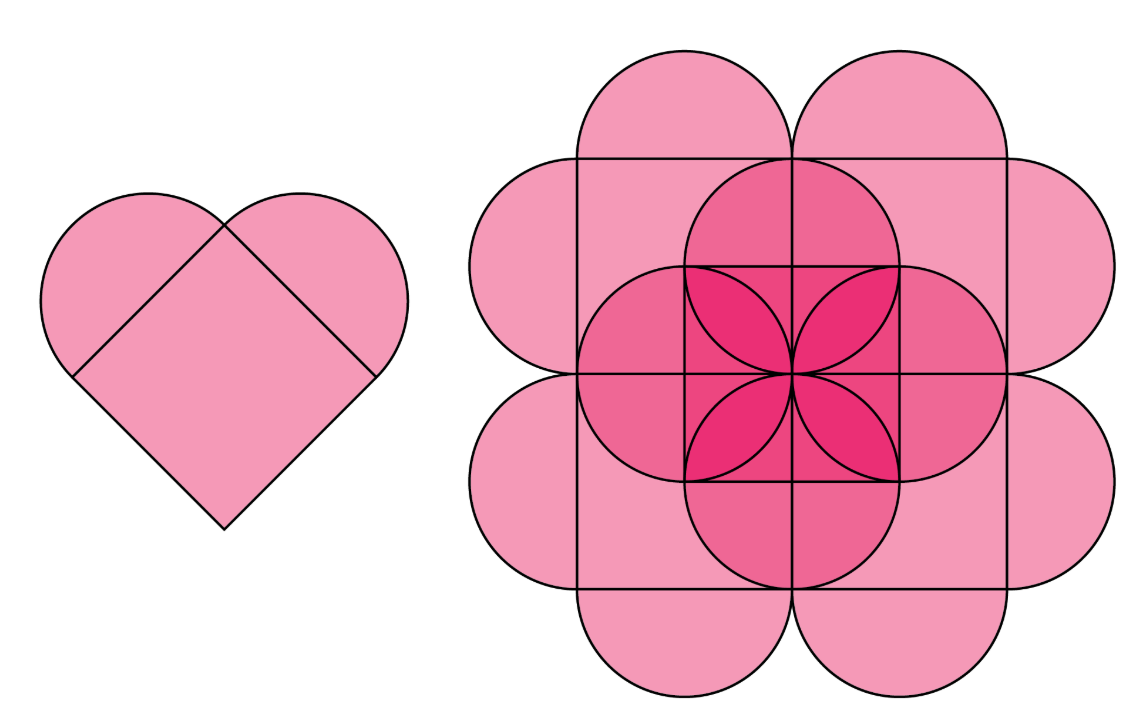
The heart consists of a square with two semicircles attached to it. How many of these hearts are contained within the flower shown to the right? The colors and sizes of the hearts do not matter. —Heinrich Hemme
The solution to this puzzle will appear at the bottom of tomorrow's edition of Proof Positive, our weekly math newsletter. Sign up here to get Proof Positive in your inbox.
|
|
-
A devastating account of an 11-day-old baby who couldn’t stop bleeding. It took hours for doctors to administer a crucial vitamin K shot. | ProPublica
-
After President Trump’s policies affected every part of her work, this top astrophysicist decided to move her work to the Netherlands. | The New York Times ($)
-
Researchers at Stanford University are launching a new large-scale brain imaging project to create a digital twin of the human brain. | The Transmitter
|
|
Tiny investment, enormous universe: subscribe to Scientific American for 90 days for just $1 and help keep this newsletter going.
|
|
In the mid-1700s, physicians and scientists noticed that some people seemed immune to smallpox. Upon investigation, doctors discovered that milkmaids and other farmworkers who had been exposed to cowpox rarely contracted the deadlier disease. Decades later, the English physician Edward Jenner asked a deceptively simple question: Could deliberately exposing someone to cowpox protect them against smallpox? In 1796, he tested the idea, laying the groundwork for vaccination and eventually the eradication of smallpox. One small observation, that most people might never notice or follow through on, can lead to dramatic advancement. No observations are too small. I hope you enjoy our new series No Dumb Questions where we'll explore some of life's weirdest (and perhaps most overlooked) questions. Submit your questions here.
|
|
—Andrea Gawrylewski,
Chief Newsletter Editor
|
|
|
|
|
Subscribe to this and all of our newsletters here.
|
|
Scientific American
1000 N West Street, Suite 1200
|
|
|
|
|