Plus, why any computer can run this 90s videogame ͏ ͏ ͏ ͏ ͏ ͏ ͏ ͏ ͏ ͏ ͏ ͏ ͏ ͏ ͏ ͏ ͏ ͏ ͏ ͏ ͏ ͏ ͏ ͏ ͏ ͏ ͏ ͏ ͏ ͏ ͏ ͏ ͏ ͏ ͏ ͏ ͏ ͏ ͏ ͏ ͏ ͏ ͏ ͏ ͏ ͏ ͏ ͏ ͏ ͏ ͏ ͏ ͏ ͏ ͏ ͏ ͏ ͏ ͏ ͏ ͏ ͏ ͏ ͏ ͏ ͏ ͏ ͏ ͏ ͏ ͏ ͏ ͏ ͏ ͏ ͏ ͏ ͏ ͏ ͏ ͏ ͏ ͏ ͏ ͏ ͏ ͏ ͏ ͏ ͏ ͏ ͏ ͏ ͏ ͏ ͏ ͏ ͏ ͏ ͏ ͏ ͏ ͏ ͏ ͏ ͏ ͏ ͏ ͏ ͏ ͏ ͏ ͏ ͏ ͏ ͏ ͏ ͏ ͏ ͏ ͏ ͏ ͏ ͏ ͏ ͏ ͏ ͏ ͏ ͏ ͏ ͏ ͏ ͏ ͏ ͏ ͏ ͏ ͏ ͏ ͏ ͏ ͏ ͏ ͏ ͏ ͏ ͏ ͏ ͏
November 16, 2026—This year’s El Niño is pushing the Amazon to the brink of collapse. Plus, Voyager 1 is almost one “light-day” away and why basically any computer can run the videogame Doom.
—Emma Gometz,
Newsletter Editor
|
|
The Amazon rainforest covered by smoke from burning for cattle pasture and farming. Marcio I. Sa/Shutterstock
|
|
-
This year’s historically powerful El Niño is causing drought and fires in the Amazon. Is the forest at its tipping point? | 5 min read
-
If you’re on the East Coast, you can see the Leonids meteor shower peak tonight. | 2 min read
-
Symmetries between matter and antimatter may have been broken in the first seconds of time. | 4 min read
-
Why some people have aphantasia—the inability to conjure mental images—is largely a mystery. But it can affect decision making. | 4 min read
-
Hormone therapy may help improve cognition after menopause, depending on genetic factors related to Alzheimer’s. | 2 min read
-
A landmark study found that BMI accurately predicts clinical obesity in only about 22 to 31 percent of patients. There's a better way to diagnose the condition. | 3 min read
-
Dipping in a cold plunge after working out might actually be worse than doing nothing at all. | 4 min read
|
|
It Runs Doom
If you’ve been reading Today in Science recently, you’ll remember that we just published an article about how the Internet got fruit fly neurons to “play” the 1993 videogame Doom. That wasn’t a random choice: it’s part of a meme that’s based on Doom’s elegant engineering. The game’s clever rendering technique made it run quickly and feel lifelike, and its portable code makes it easy for basically any computer to run. That includes ATMs, toasters, and even a pregnancy test.
How it works: To make the game run fast on a 90s personal computer (one running MS-DOS, to be specific), the developers used a technique that pre-sorts shapes in the game, kind of like a shortcut to rendering scenes quickly. This technique stores partially sorted polygons when rendering a frame, avoiding what would normally be repeated sorting that slows things down. Also, the game is coded in C, which is readable to basically any computer. The only thing a coder would need to change to make it run on another device is the inputs (what buttons you’re pressing) and the output (the screen and audio).
What the experts say: Doom’s speed gave gamers a lifelike experience while playing, and its portability allowed them to easily tinker with its source code and bring new versions of it to life (they’re called Doom “mods”). “Anybody can sit down and get [Doom] within, I think, the first five minutes,” says Rae Kelly, an artist and Doom modder. “It’s as shallow as a puddle and as deep as an ocean.”
By the way, you just got a first preview of this week’s edition of my newsletter, Cultured. If you like reading about how science and culture intersect, you’ll love Cultured! Sign up here.
|
|
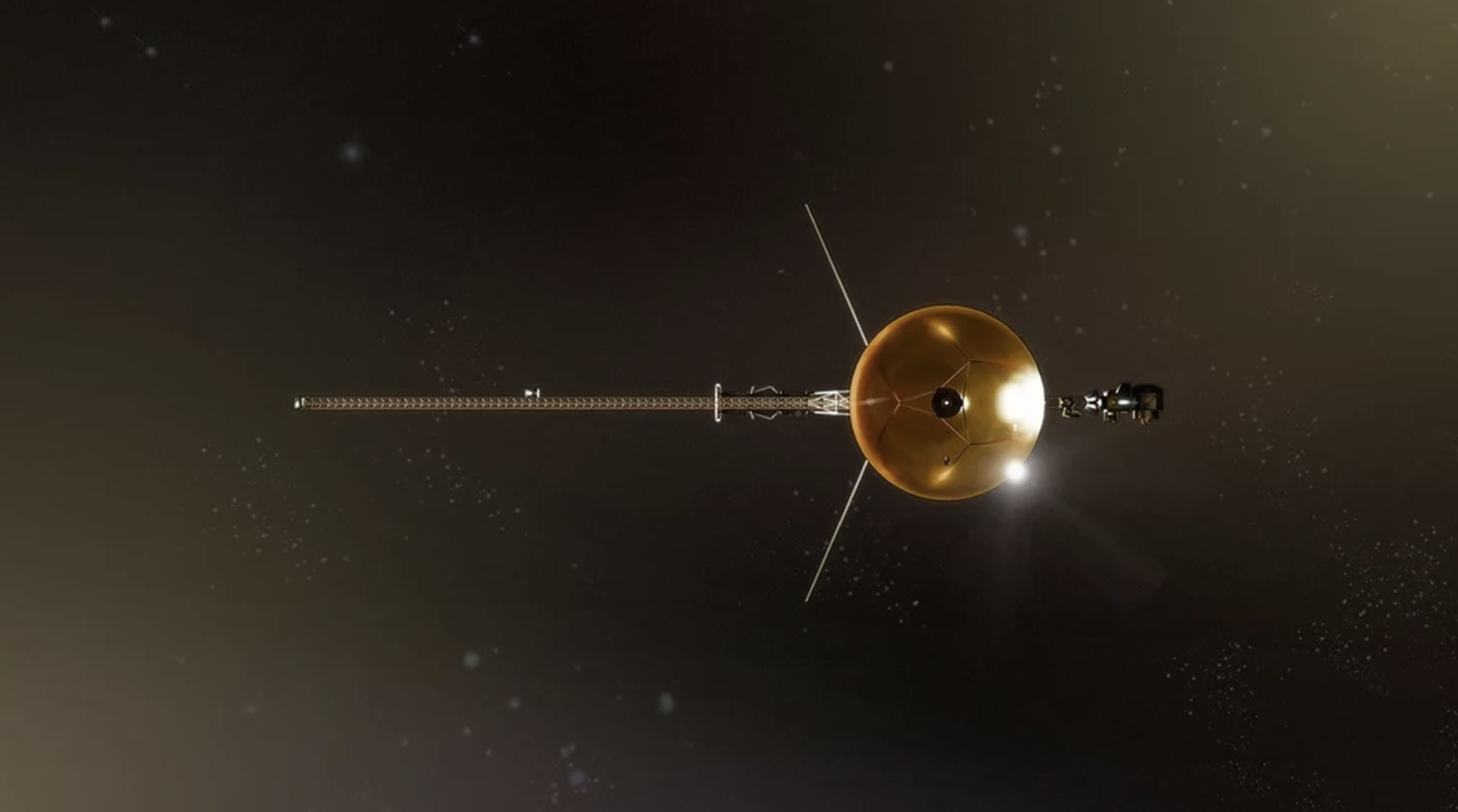
An artist’s concept depicting a Voyager spacecraft. NASA/JPL-Caltech
|
|
Voyager 1's “Light-Day”
In two days, NASA’s Voyager 1 probe will be 26 billion kilometers, or one “light-day,” away from Earth. It was launched in September 1977, and in those 49 years both Voyager probes 1 and 2 have traveled far and transmitted back photos and other data about space. They’ve provided the first close-ups of Jupiter, Saturn, Neptune and Uranus and discovered several moons. This milestone marks the farthest an active spacecraft has ever been from Earth.
Why this is important: The fact that this spacecraft still works at all is a testament to the extraordinary planning behind its creation and the efforts of the personnel keeping it alive. Both Voyagers carry a copy of the Golden Record, a shorthand primer on humanity’s science and culture, created by a multidisciplinary team as a cosmic handshake for whatever intelligent life might encounter it. Voyager 1 still sends data back to Earth daily.
What the experts say: “I am thankful for the care and creativity of past team members in keeping the spacecraft thriving,” says Bhavana Gupta, who has been a Voyager power analyst for the past year. “Not many people have the chance to work on a spacecraft that launched decades before they were born.”
|
|
|
|
|
Heptominoes are flat tiles composed of seven identical squares. There are 108 distinct heptominoes; this image shows two of them. Using the three red heptominoes, form a shape that is congruent to a second shape formed from the three green heptominoes. You may flip each piece over—turning its front side to the back—but the pieces must not overlap. —Heinrich Hemme
The solution to this puzzle will appear at the bottom of tomorrow's edition of Proof Positive, our weekly math newsletter. Sign up here to get Proof Positive in your inbox.
|
|
-
Could everything be broken? Grounded jets, Microsoft outage, AI chaos make some wonder | AP News
-
Roadkill, Meat Cereal and Raw Chicken: Inside the World of ‘Dark Nutrition’ | The New York Times ($)
-
Terrible translations on Wikipedia and via AI are sending obscure languages into a “doom spiral.” | MIT Technology Review ($)
|
|
Tiny investment, enormous universe: subscribe to Scientific American for 90 days for just $1 and help keep this newsletter going.
|
|
Last week, I got way, way, way in too deep reporting the Doom story above. I’m not much of a gamer myself, but I’m deeply fascinated by the culture of it—especially when the Internet makes something greater than the sum of its parts. Doom became an online sensation before the web was really mainstream because its file structure made it easy to adjust maps and characters in the game. It sparked so much creativity from its fans, and still inspires artwork today. And none of that would have been possible without its co-creators being supportive of the open source movement, which allows coding beginners and experts alike to play (and fall in love?) with the engines of incredible projects like Doom. These are the times when I love the Internet: when it’s a place to share art we’re proud of and learn from one another. Plus, it challenged me to go down rabbit holes learning coding terminology I never would have otherwise heard in a million years.
|
|
As you can tell, I live for stories like this. If you do, too, sign up for Cultured and join the art-science nerd community with me. Please send any other cool ideas, comments or feedback on this newsletter to: newsletters@sciam.com.
—Emma Gometz,
Newsletter Editor
|
|
|
|
|
Subscribe to this and all of our newsletters here.
|
|
Scientific American
1000 N West Street, Suite 1200
|
|
|
|
|