Scientists experimented with what would happen to the undies and the soil around them ͏ ͏ ͏ ͏ ͏ ͏ ͏ ͏ ͏ ͏ ͏ ͏ ͏ ͏ ͏ ͏ ͏ ͏ ͏ ͏ ͏ ͏ ͏ ͏ ͏ ͏ ͏ ͏ ͏ ͏ ͏ ͏ ͏ ͏ ͏ ͏ ͏ ͏ ͏ ͏ ͏ ͏ ͏ ͏ ͏ ͏ ͏ ͏ ͏ ͏ ͏ ͏ ͏ ͏ ͏ ͏ ͏ ͏ ͏ ͏ ͏ ͏ ͏ ͏ ͏ ͏ ͏ ͏ ͏ ͏ ͏ ͏ ͏ ͏ ͏ ͏ ͏ ͏ ͏ ͏ ͏ ͏ ͏ ͏ ͏ ͏ ͏ ͏ ͏ ͏ ͏ ͏ ͏ ͏ ͏ ͏ ͏ ͏ ͏ ͏ ͏ ͏ ͏ ͏ ͏ ͏ ͏ ͏ ͏ ͏ ͏ ͏ ͏ ͏ ͏ ͏ ͏ ͏ ͏ ͏ ͏ ͏ ͏ ͏ ͏ ͏ ͏ ͏ ͏ ͏ ͏ ͏ ͏ ͏ ͏ ͏ ͏ ͏ ͏ ͏ ͏ ͏ ͏ ͏ ͏ ͏ ͏ ͏ ͏ ͏
September 4, 2026—Summer is winding down, but the ticks aren't. Plus, humans' sense of smell is evolving, and the Ig Nobels recognize science's most absurd projects.
—Andrea Gawrylewski,
Chief Newsletter Editor
|
|
From left: Ig Nobel Soil Science Prize winners Marcel van der Heijden, Franz Bender, Atlant Bieri and Pia Viviani on stage during the award ceremony for the Ig Nobel Prizes in Zurich on September 3, 2026. Fabrice COFFRIN /AFP via Getty Images
|
|
The nutritional value of cockroach milk. The aerodynamics of nose blowing. This is what happens when you bury underwear for 1,000 years. These are some winners of this year's Ig Nobel prizes (for silliest science). | 2 min read
The newfound star S301 orbits the Milky Way’s supermassive black hole so closely that its view of the heavens gets twisted. | 5 min read
Yesterday the Missouri Supreme Court voted unanimously to block a new congressional district map that has been supported by President Donald Trump. Here's the geometry of how gerrymandering works. | 8 min read
The Pentagon is pausing the rollout of controversial guidelines for a policy that requires testosterone testing for service members aged 30 and older. There's no evidence for widespread screening, experts say. | 2 min read
A lone engineer managed to factor one of the so-called RSA numbers—unwieldy numerical strings created by multiplying two huge, secret prime numbers. Was this record-breaking encryption crack a fluke or signs of a trend? | 4 min read
Looking for one more summer read? We sat down with author Sarah G. Pierce to discuss her new novel For Human Use which explores dating apps, loneliness and human connection through a story about a corpse-matching algorithm (eww). | 16 min podcast
|
|
Smell Evolution
Humans' sense of smell, and how we use smell to interact with the world, has been changing for the past few millennia. Plus, changes to the way we live and our environment have further altered it. In a recent study, scientists analyzed genomes from 50 Indigenous hunter-gatherer people from the Malay Peninsula and compared them with two other Indigenous groups that conduct farming and agriculture. The results suggest that the Malay Peninsula hunter-gatherers have preserved a more complete set of smell-receptor genes than the other groups studied.
Why this is interesting: In most populations around the world, many smell receptor genes have accumulated mutations over time that have left about 60 percent of them nonfunctional. But the hunter-gatherers showed significantly fewer mutations. The intact gene variants they carry are linked to sensing earthy, floral and fruity smells—cues often tied to food and other vital resources. According to the researchers, smell has an enduring importance in the Malay Peninsula hunter-gatherers’ culture, and their language has a strikingly rich vocabulary for odors.
What the experts say: Hunter-gatherer populations, long underrepresented in genomic research, have allowed the survival of genetic signatures tied to ancient history and have also led to new adaptations. “Such living populations can be invaluable for understanding the deep history of human genetic diversity,” says Lian Deng, a geneticist at the School of Life Sciences at China’s Fudan University. —Emma Gometz, Newsletter Editor
|
|
Tick Plight
Summer is winding down for many people, but we’re still in tick season. What to do if you (or a loved one) discovers a tick attached to your body? Here’s a step-by-step guide. In the meantime, keep ticks off by following tips found here.
Tick bite? Here's what to do:
Remove the tick as soon as you discover it. Don’t wait to go to a health care provider, the CDC advises. The longer a tick is attached, the more time it has to transmit bacteria and other pathogens that cause disease. Infected ticks generally need to be attached for more than 24 hours to transmit Lyme disease, but they may transmit Powassan virus in as little as 15 minutes. The sooner you get the tick off your body, the better. Use tweezers to pluck the bug straight off your skin (don’t crush it) and put it in a clear, sealable plastic bag for identification and possible lab analysis.
Identify the tick: Tick species differ in size, colors and markings, but individuals of the same species can look different depending on what their life stage and sex are and how engorged they are from a blood meal (ugh). Click through to see our primer on identifying ticks and their anatomy (and your doctor might be able to help too).
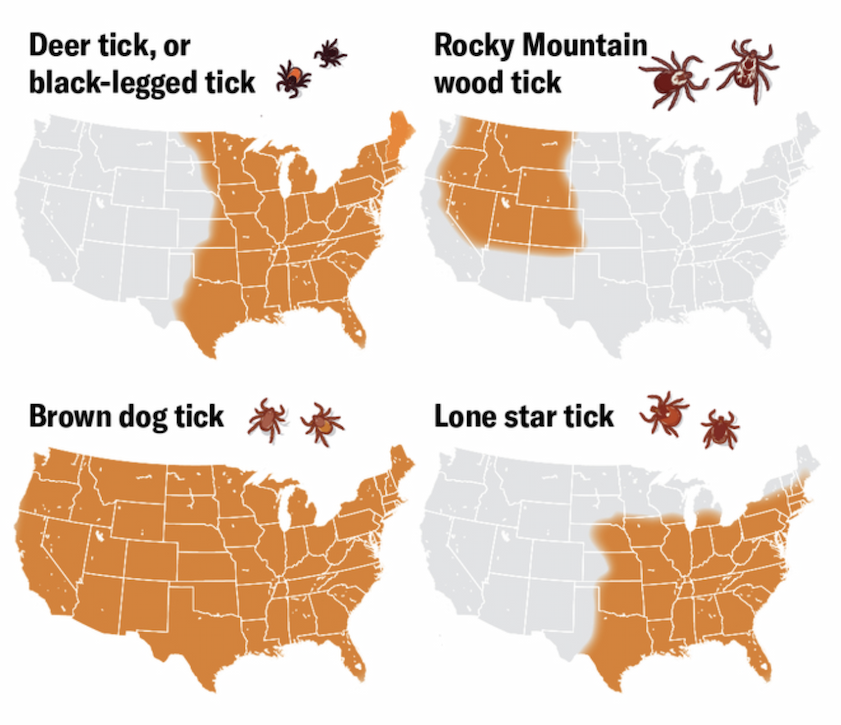
Knowing which ticks are most prevalent in your area can help you decide whether you should get your tick tested by a lab for diseases or should start treatment right away. For example, if you were bitten by a black-legged tick in an area where Lyme is common and your tick was attached for 36 hours or more, your doctor may recommend a single prophylactic dose of the antibiotic doxycycline to kill bacteria before they multiply.
These maps show the approximate distributions of four tick species that transmit disease to humans in the U.S.
|
|
Jen Christiansen (maps), Diogo Guerra (tick illustrations); Sources: Centers for Disease Control and Prevention; Pacific Southwest Regional Center of Excellence in Vector-Borne Diseases (references)
|
|
Test your tick: Even if you do take a prophylactic dose of antibiotics, a lab analysis of your tick can yield information about other pathogens that the tick might have passed along when it bit you, such as the microscopic Babesia parasites that cause the blood disease babesiosis, which can co-occur with Lyme disease.
Watch for symptoms: The standard advice following a tick bite is to wait and watch for fever, rash or flulike illness over the next 30 days and see a doctor right away if any symptoms appear. Many tick-borne diseases have similar symptoms, particularly in the early stages of infection. Blood tests can differentiate but may take a while. Knowing which species of tick bit you and where you might have picked it up can help your doctor make a timely diagnosis.
What the experts say: “If you live in an area with tick-borne diseases, and most people in the United States do, you should educate yourself about the times of year and the kinds of habitats that put you at risk,” says Ecologist Felicia Keesing.
|
|
|
|
|
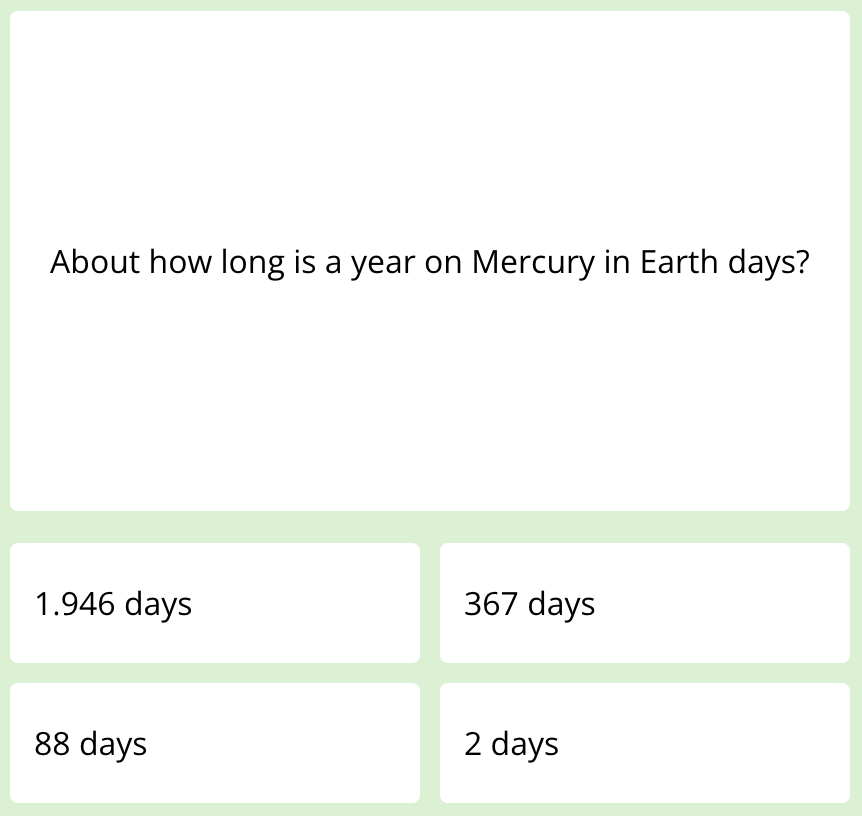
How closely did you read Scientific American this week? Test your knowledge with today's science quiz.
|
|
|
MOST POPULAR STORIES OF THE WEEK
|
|
Why your ability to cope with stress changes with time | 5 min read
Have we finally found dark matter? | 5 min read
Could GLP-1 weight-loss drugs help you live longer? | 3 min read
|
|
The Ig Nobels are more than just a consolation prize. They are for laughs, yes, but they're also for honoring the spontaneity factor of science. Fun can often inspire groundbreaking discovery. Consider the work of University of Manchester physicists Andre Geim and Konstantin Novoselov. The two had a tradition of doing informal “Friday evening experiments”—small investigations that weren't necessarily connected to their main research. One Friday, they started playing around with graphite and ordinary adhesive tape. They repeatedly peeled layers off a piece of graphite, eventually isolating sheets just one atom thick: graphene. This work won the 2010 Nobel Prize in Physics.
|
|
I hope you leave room for some fun in your long weekend plans. Send any questions or comments to me at: newsletters@sciam.com. I'll be back Tuesday!
Andrea Gawrylewski,
Chief Newsletter Editor
|
|
|
|
|
Subscribe to this and all of our newsletters here.
|
|
Scientific American
1000 N West Street, Suite 1200
|
|
|
|
|