|
| Created for ceo.studentlike.spuniv@blogger.com | Web Version |
|
|
|

Happy Wednesday, space fans! We're halfway there.
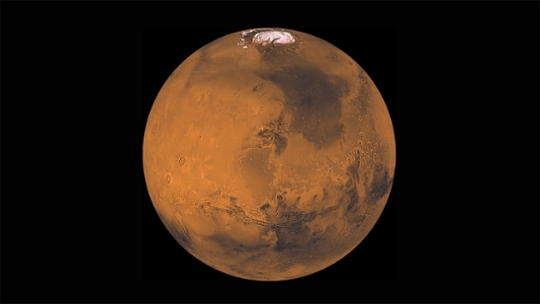
It's another day here on planet Earth and as always we have some exciting space news to share with you. First up, China is making major progress on the nation's Mars sample-return mission which aims to launch in 2028 to collect Martian material that will be returned by 2031. After the budget was cut for NASA's sample-return mission with the Perseverance rover, it looks like China might beat the U.S. in returning the first Mars samples back to Earth. In private spaceflight news, the company Stoke Space has raised a whopping $1 billion to fund its fully reusable rockets which the company thinks might launch as soon as 2027. And in strange science news, new research suggests that Venus might have "eaten" its own moon.
Check out what's big in space below:
|
|
|

|
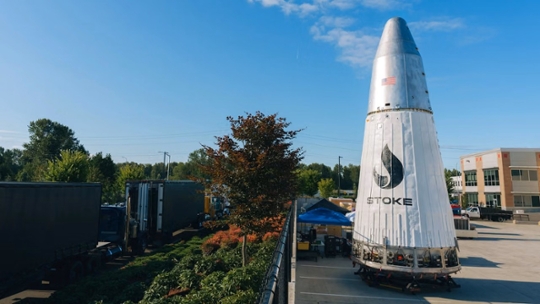
Stoke Space announced a $1 billion round of funding to support development of its fully reusable Nova rockets, including the newly revealed Nova Block 2, which will be capable of delivering 15-ton payloads to low Earth orbit.
|
|
|
|
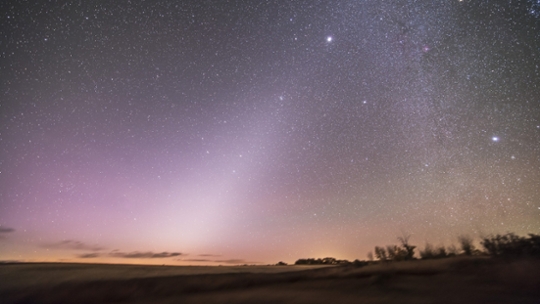
A ghostly "false dawn" is about to light up the predawn sky — if you know where to look.
|
|
|
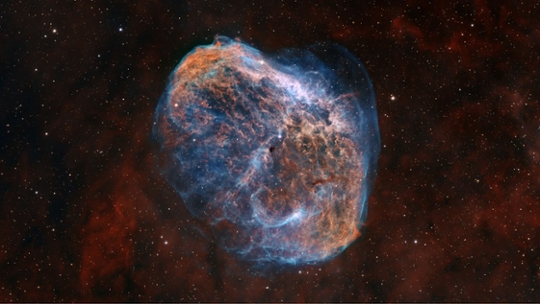
Astrophotographer Kevin Boardman spent more than 16 hours capturing the intricate filaments of the Crescent Nebula.
|
|
|
|
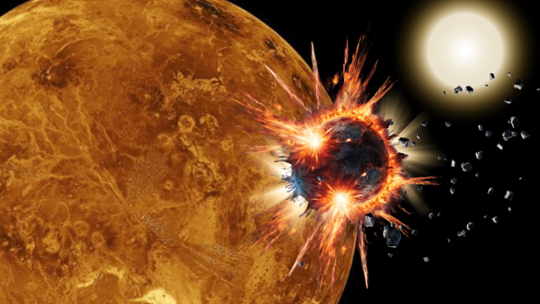
Scientists may finally know why Venus, Earth's twin, lacks a moon, finding that the hottest planet in the solar system may have consumed its own natural satellite.
|
|
|
A photon from the biggest cosmic explosion since the Big Bang, the gamma-ray burst nicknamed "the BOAT," should not have reached Earth, according to Einstein. Now scientists may know how it did.
|
|
|
|
Anak Krakatau erupted, and satellites were watching.
|
|
|
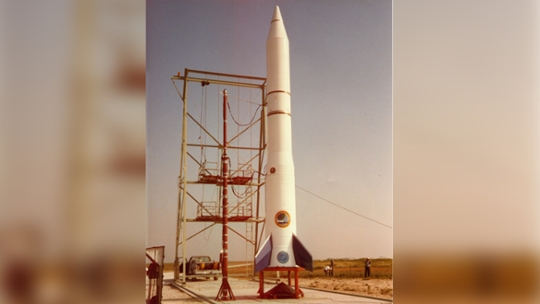
On Sept. 9, 1982, the first private rocket, Conestoga 1, launched into space from a Texas cattle ranch. Here's why it mattered.
|
|
|
|
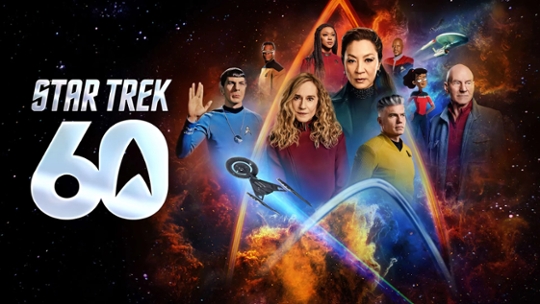
As Gene Roddenberry's baby enters its seventh decade, we give 'Trek' a 60th birthday health check.
|
|
|
That's it for our space update today!
We are still in the midst of celebrating 60 years of Star Trek. From Kirk to Picard and so much more, there's a Trek for everyone these days. While real space exploration is starting to look more and more like Star Trek every day, it's so wonderful to look back on these decades of Trek and how they've inspired some of the incredible, real advancements in technology and science. Many of the same people who were once kids falling in love with Trek for the first time 60 years ago are now leaders in space.
Looking forward to later this week, we will revisit the recently formed White House UAP council, analyze China's rocket landings, dive into the new world map and so much more. And mark your calendars, because in just over a week we will be celebrating International Observe the Moon Night, one of Space.com's favorite holidays that reminds us that it's always a great time to look up and admire our natural satellite. To follow closely along and stay up to date with all things space, you can now get Space.com right in the palm of your hand with our new app available now on iOS and Android.
Ad astra, per aspera
Chelsea Gohd
Content Manager, Space.com
|
|
|
| Stay up-to-date on all things space science, news, and entertainment by subscribing to our newsletters. |
|
 |
|
|
|
|
|
When you purchase through links in our content, we may earn an affiliate commission.
Future US LLC © |
| Full 7th Floor, 130 West 42nd Street, New York, NY, 10036 |
|
|
|
|