Plus, exclusive interview with AI reverse-engineering developer ͏ ͏ ͏ ͏ ͏ ͏ ͏ ͏ ͏ ͏ ͏ ͏ ͏ ͏ ͏ ͏ ͏ ͏ ͏ ͏ ͏ ͏ ͏ ͏ ͏ ͏ ͏ ͏ ͏ ͏ ͏ ͏ ͏ ͏ ͏ ͏ ͏ ͏ ͏ ͏ ͏ ͏ ͏ ͏ ͏ ͏ ͏ ͏ ͏ ͏ ͏ ͏ ͏ ͏ ͏ ͏ ͏ ͏ ͏ ͏ ͏ ͏ ͏ ͏ ͏ ͏ ͏ ͏ ͏ ͏ ͏ ͏ ͏ ͏ ͏ ͏ ͏ ͏ ͏ ͏ ͏ ͏ ͏ ͏ ͏ ͏ ͏ ͏ ͏ ͏ ͏ ͏ ͏ ͏ ͏ ͏ ͏ ͏ ͏ ͏ ͏ ͏ ͏ ͏ ͏ ͏ ͏ ͏ ͏ ͏ ͏ ͏ ͏ ͏ ͏ ͏ ͏ ͏ ͏ ͏ ͏ ͏ ͏ ͏ ͏ ͏ ͏ ͏ ͏ ͏ ͏ ͏ ͏ ͏ ͏ ͏ ͏ ͏ ͏ ͏ ͏ ͏ ͏ ͏ ͏ ͏ ͏ ͏ ͏ ͏
October 30, 2026—Why we find vampires so fascinating, how to sleep like a caveman and the scariest object in the universe.
—Robin Lloyd, Contributing Editor
|
|
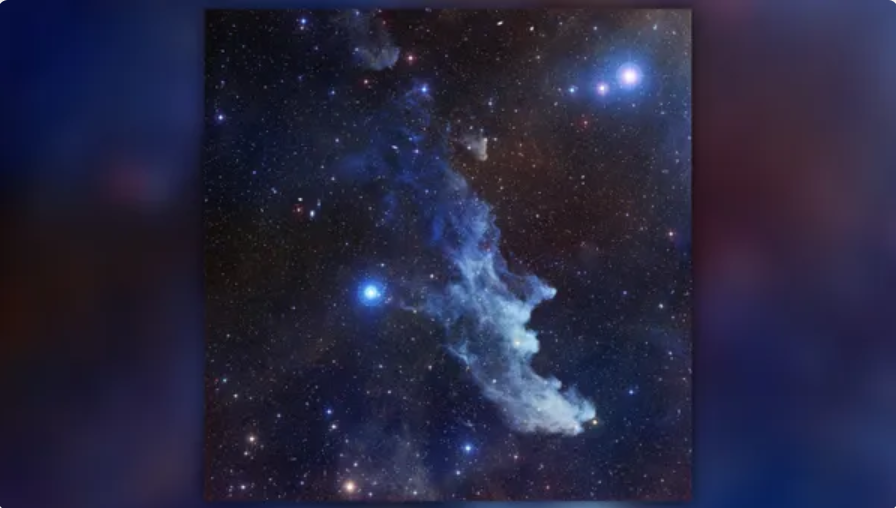
The Witch Head Nebula may resemble the twisted visage of a spooky crone, but it’s actually a reflection nebula associated with the star Rigel, visible near the image’s center. NASA/STScI Digitized Sky Survey/Noel Carboni
|
|
In light of Halloween season, astronomer Phil Plait assesses the scariest objects in the universe, including Wolf-Rayet stars, magnetars and merging supermassive black holes. | 6 min read
The psychology behind our undying fascination with vampires reveals societies’ changing fears over time and our understanding of human nature. | 20 min podcast
In an exclusive, we talk with the developer of one of a growing number of AI tools that can take apart software that isn’t meant to be reverse-engineered. | 5 min read
This October is on track to be the hottest ever recorded. Global projections suggest this month will be 1.76 degrees Celsius higher than preindustrial averages. | 2 min read
“Paleo lighting” can re-calibrate your brain’s clock after daylight savings. As the clocks fall back this weekend, learn about the opportunity to sleep like a caveman. | 4 min read
|
|
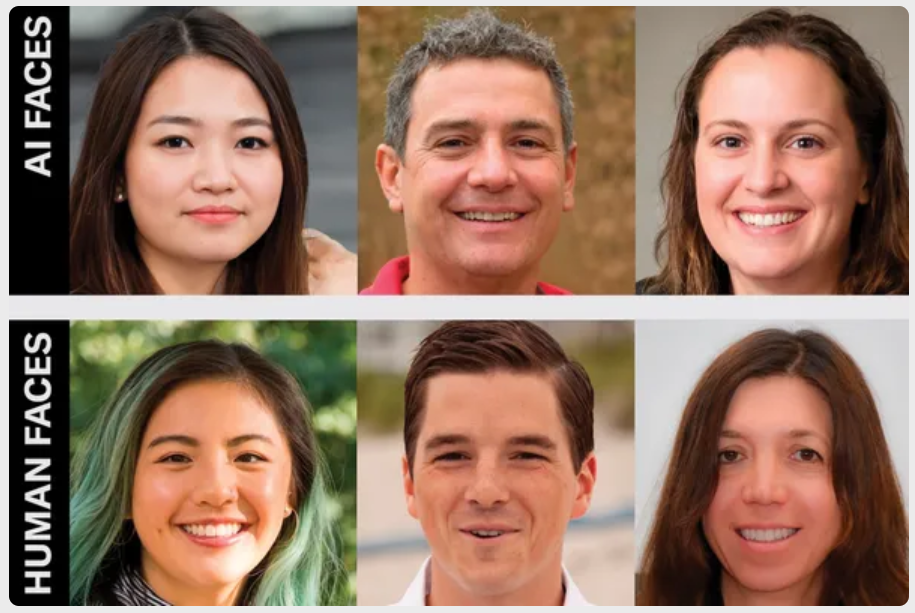
The top three AI-generated faces are balanced, generic and conventional—traits recognizable with training that distinguish them from the bottom three human faces. StyleGan3 (AI faces); Flickr (human faces)
|
|
AI Face Spotter
AI is getting so good at generating images that even the most observant among us can struggle to distinguish a real photo of a person’s face from an AI-made one. A recent study suggests you can train yourself to spot fakes better. Rather than focusing on flaws and artifacts in an AI-generated image, researchers taught participants to recognize six broader patterns. “Compared with real faces, AI-generated faces tend to be more symmetrical, proportional and attractive—while also being less expressive, less distinctive and significantly less memorable,” writes Sam Macdonald, an assistant professor of mathematics at Augustana University. Using this technique, the participants’ guessing accuracy almost doubled.
Why this is interesting: When you prompt AI to generate a photo of a face, it draws from millions of photos in its trove of data. It then creates the new face based on mathematical patterns that the stored faces have in common, to yield a “typical human face,” kind of like a statistical average of faces. One global, rather than specific, “tell” that AI created an image: faces that overall seem a little too banal, balanced, bland or generic.
What the experts say: “It is particularly interesting that the global-impressions-of-faces training approach used in the current study resulted in such substantial improvements,” says Sophie Nightingale, a senior lecturer in psychology at Lancaster University in England.
|
|
Misinformation Dance
Bees regulate the intensity of their complex figure-eight-like “waggle dances” based on how certain they are of the information they intend to communicate to hive mates. In a recent behavioral ecology experiment, bees with better information about a specialized sugar-solution feeder’s location performed more waggle dance circuits compared with other bees with less certain information.
What the experts say: “For me, the big takeaway is that bees are not little robots,” says James C. Nieh, a behavioral ecologist at the University of California, San Diego, who was not involved in the study. “They’re getting information from their environment, and that [information] also includes how successful they are in communicating to their nest mates.”
—Emma Gometz, Newsletter Editor
|
|
|
|
|
|
TRAVEL WITH SCIENTIFIC AMERICAN
|
|
Discover the Wonder: The Monarch Butterfly Migration
Take an extraordinary trip to the Mexican mountains to witness the annual monarch butterfly migration. Hike into oyamel fir forests and see them transformed into living tapestries with Chief Newsletter Editor Andrea Gawrylewski as your guide. Last chance, TWO seats left!
|
|
|
|
|
|
MOST POPULAR STORIES OF THE WEEK
|
|
Mathematicians find an infinite number of Ramanujan equations. | 7 min read
Dueling proofs from OpenAI and Anthropic astound scientists. | 5 min read
OpenAI just scooped mathematicians’ work on another million-dollar problem. | 6 min read
|
|
Tiny investment, enormous universe: subscribe to Scientific American for 90 days for just $1 and help keep this newsletter going.
|
|
The masks and ghosts of Halloween decor can serve as a fun reminder that things are not always as they appear. Reasonable questions about what is assumed to be real, given or obvious can yield enlightening insights about ourselves and the physical world. But you know that or you likely wouldn’t be reading Scientific American. Thanks as always for being part of our universe. Now get back to perfecting that clever costume!
|
|
Please send your thoughts, comments or feedback on this newsletter to: newsletters@sciam.com. Andrea will be back on Monday!
—Robin Lloyd, Contributing Editor
|
|
|
|
|
Subscribe to this and all of our newsletters here.
|
|
Scientific American
1000 N West Street, Suite 1200
|
|
|
|
|