Also, mathematicians find an infinite number of Ramanujan equations ͏ ͏ ͏ ͏ ͏ ͏ ͏ ͏ ͏ ͏ ͏ ͏ ͏ ͏ ͏ ͏ ͏ ͏ ͏ ͏ ͏ ͏ ͏ ͏ ͏ ͏ ͏ ͏ ͏ ͏ ͏ ͏ ͏ ͏ ͏ ͏ ͏ ͏ ͏ ͏ ͏ ͏ ͏ ͏ ͏ ͏ ͏ ͏ ͏ ͏ ͏ ͏ ͏ ͏ ͏ ͏ ͏ ͏ ͏ ͏ ͏ ͏ ͏ ͏ ͏ ͏ ͏ ͏ ͏ ͏ ͏ ͏ ͏ ͏ ͏ ͏ ͏ ͏ ͏ ͏ ͏ ͏ ͏ ͏ ͏ ͏ ͏ ͏ ͏ ͏ ͏ ͏ ͏ ͏ ͏ ͏ ͏ ͏ ͏ ͏ ͏ ͏ ͏ ͏ ͏ ͏ ͏ ͏ ͏ ͏ ͏ ͏ ͏ ͏ ͏ ͏ ͏ ͏ ͏ ͏ ͏ ͏ ͏ ͏ ͏ ͏ ͏ ͏ ͏ ͏ ͏ ͏ ͏ ͏ ͏ ͏ ͏ ͏ ͏ ͏ ͏ ͏ ͏ ͏ ͏ ͏ ͏ ͏ ͏ ͏
October 29, 2026—A green light for six unproven peptides, a source of psilocybin “oneness” and a key advance for ultra-accurate nuclear clocks.
—Robin Lloyd, Contributing Editor
|
|
crystal light/Shutterstock
|
|
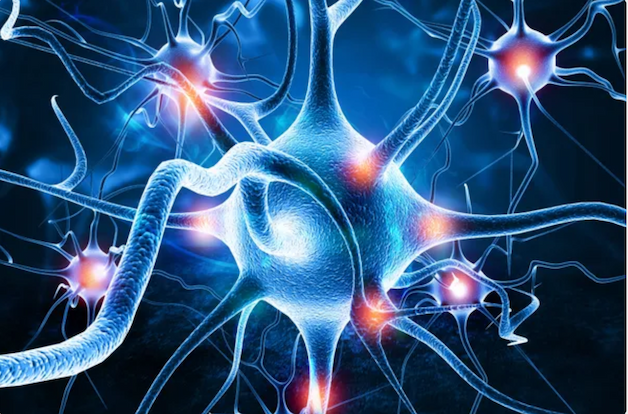
Scientists can rewire living brains in mammals using synapse proteins that selectively connect to an engineered partner channel. The tool could lead to a new approach for mental health treatments. | 5 min read
RFK, Jr., loosens restrictions for six popular peptides, bypassing the FDA. Under the new policy, some licensed pharmacists can now dispense combinations of the unproven substances. | 2 min read
A team of mathematicians has found an infinite number of Ramanujan equations by proving the correspondence of two such formulas with a trefoil knot in a certain space. | 7 min read
Five things you need to know about the Trump administration’s rollback of methane regulations. The gas is a major driver of climate change. | 5 min read
Can religion survive the existence of aliens? Finding alien life could shake some people to the core, but different faiths take very distinct approaches to the existence of extraterrestrial life. | 6 min read
Blasted off Mars by a giant impact long ago, the meteorite Teghaza 001 eventually fell to Earth in the Sahara Desert. Now it’s revealing previously hidden chapters of Mars’ deep past. | 4 min read
|
|
akinbostanci/Getty Images
|
|
Crystal Clear
An incredibly precise timekeeper—a nuclear clock—works by measuring how energy in the nucleus flips a single neutron between quantum states. In a new study, physicists report embedding thorium-229 isotopes, which have an exceptionally low nuclear transition energy, in a crystal grown by the team to hold the ultra-accurate nuclear clock. A key to the achievement: the scientists mapped the four places where atoms can sit inside the crystal lattice for optimal measurement of the quantum flips.
|
|
Why this matters: Today’s atomic clocks, which work by measuring jumps in electrons' energy, could run for 13 billion years and lose less than one second of accuracy. However, they also require “an entire laboratory’s worth of vacuum chambers and shielding to prevent interference from stray electric or magnetic fields,” reports freelance writer Jacek Krywko. With nuclear clocks, the atom itself as well as the crystal it's embedded in could better shield the timekeeper.
What the experts say: “The data in this paper are something we’ve all wanted to see for some time,” says Eric Hudson, a physicist at the University of California, Los Angeles. “This is a very important result for the research on the solid-state nuclear clock,” adds Ekkehard Peik, head of the time and frequency department at the National Metrology Institute in Germany. Neither Hudson nor Peik was involved in the study.
|
|
Psilocybin "Oneness"
People who use psilocybin (an active ingredient in magic mushrooms) often report feeling as if the boundary between them and the rest of the world has dissolved—producing a sense of “oneness” with the universe. A new study of 62 healthy, adult first-timers tripping on psilocybin while in an MRI machine has probed the brain’s role in this phenomenon. “Brain systems responsible for processing sensory input from the outside world became less connected with the rest of the brain, whereas [regions] responsible for higher-level processing became more connected,” writes Scientific American’s Allison Parshall.
|
|
Why this is interesting: The researchers found a “hidden order” in the chaos of tripping-brain data via the functional MRIs. People who reported less profound experiences while tripping had widely variable brain activity. But for those who felt a strong sense of oneness, key dimensions of their brain activity tended to look the same across the group, forming distinct patterns.
What the experts say: The findings suggest that the division we typically perceive between ourselves and the world is actively managed by the brain, says the study’s lead author Devon Stoliker, a computational neuroscientist at Monash University in Melbourne, Australia. “Rather than psychedelics simply creating an illusion that the self and the world are one,” he says, “they may temporarily reduce the brain processes that normally maintain this separation.”
—Emma Gometz, Newsletter Editor
|
|
|
|
|
|
SPONSORED CONTENT BY TRAVERE THERAPEUTICS
|
|
Rethinking Rare Kidney Disease Treatment
|
|
What connects IgA nephropathy and focal segmental glomerulosclerosis? A closer look at shared pathways is changing how researchers think about rare kidney disease.
|
|
|
|
|
If you’ve read this far, your brain probably wants a subscription. Help support this newsletter and get unlimited access to Scientific American: 90 days for just $1.
|
|
—Robin Lloyd, Contributing Editor
|
|
|
|
|
Subscribe to this and all of our newsletters here.
|
|
Scientific American
1000 N West Street, Suite 1200
|
|
|
|
|