Plus what the mRNA cancer vaccine data actually show ͏ ͏ ͏ ͏ ͏ ͏ ͏ ͏ ͏ ͏ ͏ ͏ ͏ ͏ ͏ ͏ ͏ ͏ ͏ ͏ ͏ ͏ ͏ ͏ ͏ ͏ ͏ ͏ ͏ ͏ ͏ ͏ ͏ ͏ ͏ ͏ ͏ ͏ ͏ ͏ ͏ ͏ ͏ ͏ ͏ ͏ ͏ ͏ ͏ ͏ ͏ ͏ ͏ ͏ ͏ ͏ ͏ ͏ ͏ ͏ ͏ ͏ ͏ ͏ ͏ ͏ ͏ ͏ ͏ ͏ ͏ ͏ ͏ ͏ ͏ ͏ ͏ ͏ ͏ ͏ ͏ ͏ ͏ ͏ ͏ ͏ ͏ ͏ ͏ ͏ ͏ ͏ ͏ ͏ ͏ ͏ ͏ ͏ ͏ ͏ ͏ ͏ ͏ ͏ ͏ ͏ ͏ ͏ ͏ ͏ ͏ ͏ ͏ ͏ ͏ ͏ ͏ ͏ ͏ ͏ ͏ ͏ ͏ ͏ ͏ ͏ ͏ ͏ ͏ ͏ ͏ ͏ ͏ ͏ ͏ ͏ ͏ ͏ ͏ ͏ ͏ ͏ ͏ ͏ ͏ ͏ ͏ ͏ ͏ ͏
October 23, 2026—A mission to learn how Mars got its “lumpy potato” moons, mRNA cancer vaccine data and a way to engineer a meat protein from lettuce.
—Robin Lloyd, Contributing Editor
|
|
No, that’s not a pockmarked old yam adrift in space. It’s Phobos, a mysterious Martian moon. NASA/JPL-Caltech/University of Arizona
|
|
Japan’s newly launched MMX mission is about to find out how Mars got its moons, Phobos and Deimos. | 5 min read
Merck-Moderna's mRNA cancer vaccine helps prevent cancer recurrence and death, according to leaked data that spread Thursday on social media. | 3 min read
RFK Jr. promised to define “ultraprocessed” food, but the effort has turned out to be harder than expected. A clear definition could help Americans eat healthier, experts say. | 5 min read
Calley Means, a senior adviser to the Secretary of Health and Human Services, announced his resignation. His views on the COVID vaccine, raw milk and fluoride have been criticized by health care professionals. | 2 min read
Exposure therapy can teach us about taming our fears, and its lessons can be applied outside the clinic, experts say. | 3 min read
Here’s the inside story behind OpenAI’s solution to the million-dollar Navier-Stokes problem. The details of how it happened preview a chaotic future for math—and the world. | 10 min read
|
|
Lettuce Meat
Lettuce can be engineered to produce myoglobin, a protein found in meat, according to new research. Myoglobin and its better-known relative hemoglobin contain the compound heme, the red iron-containing pigment in blood. Heme that’s naturally occurring in soybeans is used to flavor the plant-based meat alternative made by Impossible Foods. But myoglobin is only found in animal tissue. So, using myoglobin-derived heme instead of heme from soybeans could yield vegetarian products that “not only look and bleed like red meat but smell more like it, too,” writes freelance science writer Lila Magbilang.
Why this matters: The researchers engineered the lettuce’s photosynthesizing chloroplasts—cell structures that turn sunlight into chemical energy—to produce myoglobin. Past attempts to make yeast and other non-animals produce myoglobin put the protein-production directions in the nucleus’s genome. Placing the directions in the chloroplasts yielded a higher amount of myoglobin—maybe even more than animals produce in their cells, the new research team found.
What the experts say: Farming plants for manufacturing heme might be an easier way to generate it than the current standard method, called yeast fermentation. But the latter requires a price-y sterile environment and industrial equipment. Also: “Row-crop protein production would likely be faster than fermentation-derived production,” says Adam Leman, a principal scientist at the Good Food Institute, who was not involved in the study.
—Emma Gometz, Newsletter Editor
|
|
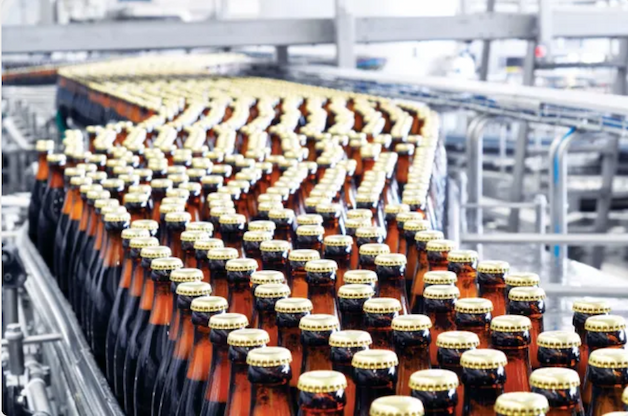
Beer moves down a brewery conveyor belt. industryview/Getty Images
|
|
Beer Benefits
The ashes of a beer-brewing waste product yield a biochar that researchers are testing as a new way to filter water, reports Scientific American news intern Mary Randolph. Heating up “spent malt rootlets,” which sprout from barley during the malting process, yields the porous biochar, which clings to bacteria. Combined with sand, the biochar removed around five times as much Escherichia coli from water than sand alone did.
Why this matters: The grain leftover from beer-making often is diverted to feed animals. The new finding could give the global, growing brewery industry a new way to repurpose its by-products. Beer-making by-products someday also could help yield sunscreen, electricity and more, other research suggests.
What the experts say: Innovations in repurposing beer-making by-products are key to sustainability, says Alcina Johnson Sudagar, an independent chemist. “It’s important to continue [innovating] because the waste produced will keep increasing, and you would need different applications. You cannot just send it to one place and say that we are done with it.”
|
|
|
|
|
|
MOST POPULAR STORIES OF THE WEEK
|
|
Super Typhoon Champi sets the record for strongest storm of 2026 | 2 min read
The brain doesn’t process emotion the way we thought | 2 min read
Why we probably live in a multiverse | 15 min read
|
|
Tiny investment, enormous universe: subscribe to Scientific American for 90 days for just $1 and help keep this newsletter going.
|
|
An opportunity to see the original Winnie-the-Pooh and some of his stuffed animal friends was the highlight of my recent visit to the New York Public Library’s flagship building in Manhattan. Turns out that Britain wants custody of Pooh, who turned 100 on Wednesday. The tug-of-war hearkens to the ownership battles over the Elgin Marbles removed from the Parthenon, in Athens. Scientific American’s newsletter editor Emma Gometz wrote last month about a theoretical optical illusion at the Parthenon that has been said to make the structure appear straighter. Let us know if you think Emma should tackle the latest plight of Pooh.
|
|
Please send your favorite museum story or any other thoughts, comments or feedback on this newsletter to: newsletters@sciam.com. Have a great weekend.
—Robin Lloyd, Contributing Editor
|
|
|
|
|
Subscribe to this and all of our newsletters here.
|
|
Scientific American
1000 N West Street, Suite 1200
|
|
|
|
|