OpenAI just released a formal proof validating "quantum chromodynamics" describing the universe ͏ ͏ ͏ ͏ ͏ ͏ ͏ ͏ ͏ ͏ ͏ ͏ ͏ ͏ ͏ ͏ ͏ ͏ ͏ ͏ ͏ ͏ ͏ ͏ ͏ ͏ ͏ ͏ ͏ ͏ ͏ ͏ ͏ ͏ ͏ ͏ ͏ ͏ ͏ ͏ ͏ ͏ ͏ ͏ ͏ ͏ ͏ ͏ ͏ ͏ ͏ ͏ ͏ ͏ ͏ ͏ ͏ ͏ ͏ ͏ ͏ ͏ ͏ ͏ ͏ ͏ ͏ ͏ ͏ ͏ ͏ ͏ ͏ ͏ ͏ ͏ ͏ ͏ ͏ ͏ ͏ ͏ ͏ ͏ ͏ ͏ ͏ ͏ ͏ ͏ ͏ ͏ ͏ ͏ ͏ ͏ ͏ ͏ ͏ ͏ ͏ ͏ ͏ ͏ ͏ ͏ ͏ ͏ ͏ ͏ ͏ ͏ ͏ ͏ ͏ ͏ ͏ ͏ ͏ ͏ ͏ ͏ ͏ ͏ ͏ ͏ ͏ ͏ ͏ ͏ ͏ ͏ ͏ ͏ ͏ ͏ ͏ ͏ ͏ ͏ ͏ ͏ ͏ ͏ ͏ ͏ ͏ ͏ ͏ ͏
October 27, 2026—Could we boost the ocean's carbon-removal power in order to fight climate change? Plus, OpenAI just scooped mathematicians’ work on another million-dollar problem. And after just four months, the CDC's deputy director has resigned.
—Andrea Gawrylewski,
Chief Newsletter Editor
|
|
OpenAI just released a formal proof validating the "quantum chromodynamics" that underpin physicists’ best, most successful description of the universe. It's a solution to yet another million-dollar math problem that mathematicians have been hunting for decades. | 6 min read
The proof is part of a set of three massive mathematical proofs dropped by OpenAI yesterday that touch on math, physics and computer science. Experts are stunned. | 5 min read
The Trump-appointed CDC deputy director Jennifer Shuford, a well-respected infectious disease researcher, has resigned after just four months in the role. She cited a desire to spend more time with her family. | 1 min read
A lesser-known form of depression called circadian depression may be caused by disrupted sleep-wake cycles, and it could be more likely to cause severe symptoms than other forms of the condition. | 3 min read
The Pentagon put out the seventh tranche of UFO records released since May. Unlike previous releases, there are no videos or images included. Instead the latest trove is an assortment of memos and reports of encounters with possible unidentified anomalous phenomena. | 2 min read
A question posed by the 16th-century pirate Sir Walter Raleigh about cannonballs inadvertently led to a puzzle that mathematicians have been trying to solve for centuries. | 5 min read
The death of a worker earlier this month at a Russian plague lab was alarming, but the disease is extremely unlikely to become a worldwide problem like it has in the past. Here's why. | 4 min read
In documents filed with the Securities and Exchange Commission ahead of Anthropic’s expected initial public offering, the AI company warned users—including scientists—that advanced models may be delayed because of cybersecurity and safety threats. | 2 min read
|
|
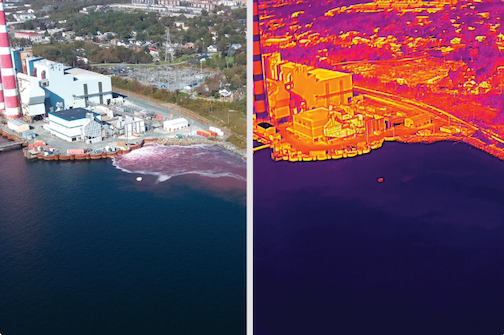
At a power station on Halifax Harbor, researchers use pink rhodamine dye to trace the path of alkalinity-treated water. A thermal view reveals temperature differences in the harbor. Ocean Alk-Align Project
|
|
Boosted Absorption
For the world to reach its climate goals, experts will have to figure out how to pull billions of metric tons of CO2 from the atmosphere annually by mid-century, according to the United Nations. The ocean already absorbs nearly a third of humanity’s emissions, making it an enticing place to try to remove more. A small industry of private companies is hoping to do just that. So far, facilities engineering more CO2 absorption by ocean water (using fans, heat and chemicals) have removed only a few thousand tons of carbon dioxide, and at very high cost.
How it works: Less than 1 percent of the inorganic carbon in seawater exists as dissolved CO₂; most is held in bicarbonate and carbonate ions. One company called Planetary funnels an alkaline slurry into the waters of Halifax Harbor in Nova Scotia. That mixture shifts even more carbon into those stable forms, lowering the concentration of CO₂ at the surface. The imbalance allows more CO₂ from the air to dissolve into the water, where much of it can remain for millennia as bicarbonate.
The catch: The field of marine carbon dioxide removal, or mCDR, faces numerous challenges. First is the cost. One start-up called Equatic runs seawater through an onshore device to remove CO2 from the atmosphere before re-releasing the water back to sea. They estimate that it takes about 2.5 megawatt-hours per ton of CO₂ removed. At that rate, removing one billion tons a year would consume almost 8 percent of all the electricity produced worldwide. A second hurdle is measuring the impact of the methods. For Planetary, attributing any change in surface carbon dioxide levels to their alkaline slurry (as opposed to an influx of low-CO2 water from a nearby river, for example) is a challenge because of water currents and tides. For many of these companies, the business model depends on selling carbon credits, each meant to represent one metric ton of CO₂ removed from the atmosphere. When the removal cannot be measured directly, the credibility of each credit rests on a hypothetical model used to calculate it—not real data.
The ecological impact: In North Carolina, the U.S. Fish and Wildlife Service warned that an olivine-sand trial by carbon-removal company Vesta could smother organisms on the seafloor, and the project was sharply scaled back. Countries that oversee international rules against dumping at sea identified technology that enhances ocean alkalinity as requiring priority scrutiny, warning that these approaches could cause widespread or lasting harm and urging that projects outside legitimate scientific research be deferred.
Join the discussion: Do you support adding chemicals to the ocean in order to absorb more CO2 from the atmosphere? Why or why not? Share your thoughts here.
|
|
|
|
|
|
TRAVEL WITH SCIENTIFIC AMERICAN
|
|
Explore Earth’s Eruptive History: Volcanoes of Italy
Travel with us to Southern Italy for a journey through Pompeii, the Aeolian Islands and Sicily. Explore ancient ruins, witness active volcanic landscapes and meet leading researchers studying these geological giants with expert guide Andrea Thompson, senior editor for Earth and environment. Spaces limited, book today!
|
|
|
|
|
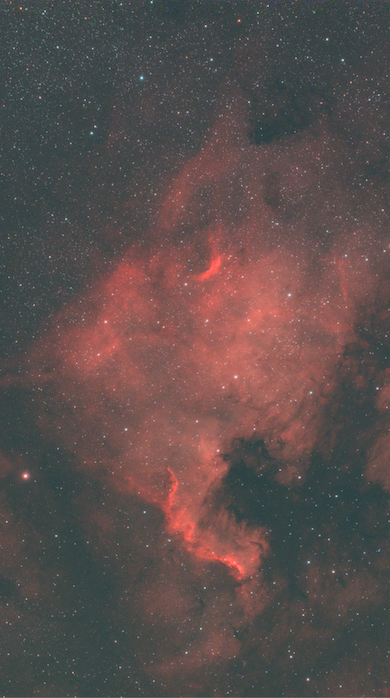
Reader Robert Schauner sent in this stunning image of the North American nebula he captured from a park in Lakewood, Ohio, called Solstice Steps. He used the SeeStar S30 Pro Smart Telescope to capture 107 subframes with 60-second exposure. Then he stacked those images using special software tools, while also adjusting the background and star brightness.
Do you have a beautiful nature photo you'd like to share with our science-loving community? Submit it to newsletters@sciam.com for a chance to be featured in an upcoming newsletter.
|
|
Can you reassemble this image of our August 1978 cover? The image shows 10 varieties of tomato plants. Most cultivars are grown by home gardeners, but a few became major commercial food crops thanks to genetic modification and production technologies. Also in this issue: How a centrifuge separates the isotopes of uranium, how stellar winds affect the universe, and whether temperatures can descend below absolute zero. Unlimited subscribers can download the full issue here.
|
|
Every subscription helps fund the science reporting and stories behind this newsletter. Start your Scientific American subscription: 90 days for just $1.
|
|
Scientific American has written about a few fascinating projects that aim to remove carbon from the atmosphere—from alkalizing sea water to sucking CO2 right out of the air and storing it underground to spreading crushed stones on fields. None of these technologies (at present) would meaningfully change the outcome of our current pace of global warming. Some critics even argue that carbon removal projects distract politicians, investors and hopeful ordinary people (like me) from the true solution to climate change: eliminating fossil fuel use and cutting emissions way down. Rather than bailing water out of a quickly sinking boat, we need to plug the leaking hole.
|
|
—Andrea Gawrylewski,
Chief Newsletter Editor
|
|
|
|
|
Subscribe to this and all of our newsletters here.
|
|
Scientific American
1000 N West Street, Suite 1200
|
|
|
|
|