|
|
 
Happy Wednesday, space fans.
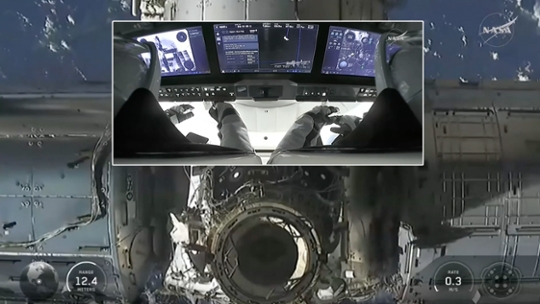
Today started off with a lot of excitement as the four astronauts aboard the Crew-12 mission have once again buckled into the Crew Dragon capsule and have undocked from the International Space Station, beginning their journey home after spending 10 months in space. The crew will be splashing down tomorrow, so stay tuned! Over in astronomy, scientists have discovered the most distant supermassive black hole-powered blazar of all time, a relic from the early universe. But what exactly is this strange blazar? Read all about it here. And don't forget to check the visibility predictions because there might be some incredible northern lights visible in the coming days following a massive storm on the sun. The geomagnetic storm is thought to be strong enough for northern lights to dip as far as New York.
Check out what's big in space below:
|
|
|
|
NOAA has issued a G2 geomagnetic storm watch for Oct. 9 as the CME races toward Earth, potentially boosting the northern lights as low as Idaho and New York.
|
|
|

|
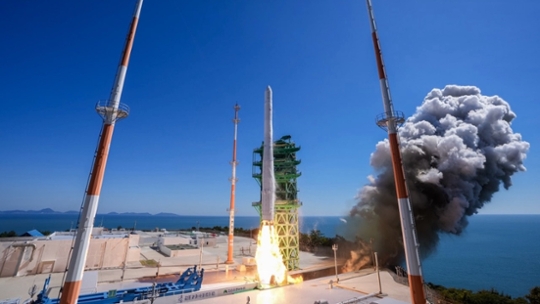
South Korea launched its first mission of 2026 on Tuesday night (Oct. 6), carrying 15 satellites to orbit atop a Nuri rocket.
|
|
|
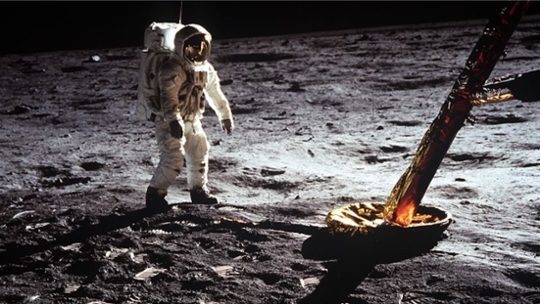
As lunar traffic increases, controlled crash landings of moon orbiters and rocket stages are becoming an attractive end-of-mission disposal strategy. And that's a problem.
|
|
|
|
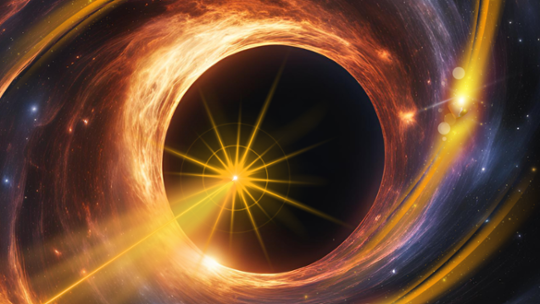
Astronomers have discovered the most distant and earliest blazar, an erupting supermassive black hole aiming its plasma jets directly at Earth.
|
|
|
|
The nebula NGC 7129, as seen in a brand new image from the James Webb Space Telescope.
|
|
|
|
$60 off in Amazon's Prime Big Deal Days sale, our expert thinks this super-portable Dwarflab Dwarf Mini smart telescope "Makes capturing the deep sky and the solar system almost effortless".
|
|
|
|
The first trailer has launched for Netflix’s hard-boiled futuristic thriller, and we’re totally on board!
|
|
|
And that's it for our space update today.
If you watched today's undocking, you'll definitely want to mark your calendar so you don't miss tomorrow's splashdown. Crew-12 has spent 10 long months living and working aboard the space station and tomorrow, the four astronauts will splash back down on Earth. While we've seen many astronauts fly to space and return, the astronauts will still have to hurtle through extreme temperatures in out atmosphere and crash-land into the ocean. Every successful return comes with a sigh of relief.
Speaking of astronauts, coming up soon we will be sharing insights from the science conducted during the Artemis II mission earlier this year. Not only did the Artemis II crew complete a successful lunar flyby and return, but they collected an incredible amount of scientific data that we can't wait to dive into and share with you. What a perfect addition to World Space Week! To follow closely along and stay up to date with all things space, you can now get Space.com right in the palm of your hand with our new app available now on iOS and Android.
Ad astra, per aspera
Chelsea Gohd
Content Manager, Space.com
|
|
|
| Stay up-to-date on all things space science, news, and entertainment by subscribing to our newsletters. |
|
 |
|
|
|
|
|
When you purchase through links in our content, we may earn an affiliate commission.
Future US LLC © |
| Full 7th Floor, 130 West 42nd Street, New York, NY, 10036 |
|
|
|