The most energetic objects in the universe are called gamma ray bursts, but scientists don't quite know how they work ͏ ͏ ͏ ͏ ͏ ͏ ͏ ͏ ͏ ͏ ͏ ͏ ͏ ͏ ͏ ͏ ͏ ͏ ͏ ͏ ͏ ͏ ͏ ͏ ͏ ͏ ͏ ͏ ͏ ͏ ͏ ͏ ͏ ͏ ͏ ͏ ͏ ͏ ͏ ͏ ͏ ͏ ͏ ͏ ͏ ͏ ͏ ͏ ͏ ͏ ͏ ͏ ͏ ͏ ͏ ͏ ͏ ͏ ͏ ͏ ͏ ͏ ͏ ͏ ͏ ͏ ͏ ͏ ͏ ͏ ͏ ͏ ͏ ͏ ͏ ͏ ͏ ͏ ͏ ͏ ͏ ͏ ͏ ͏ ͏ ͏ ͏ ͏ ͏ ͏ ͏ ͏ ͏ ͏ ͏ ͏ ͏ ͏ ͏ ͏ ͏ ͏ ͏ ͏ ͏ ͏ ͏ ͏ ͏ ͏ ͏ ͏ ͏ ͏ ͏ ͏ ͏ ͏ ͏ ͏ ͏ ͏ ͏ ͏ ͏ ͏ ͏ ͏ ͏ ͏ ͏ ͏ ͏ ͏ ͏ ͏ ͏ ͏ ͏ ͏ ͏ ͏ ͏ ͏ ͏ ͏ ͏ ͏ ͏ ͏
October 28, 2026—The most energetic objects in the universe, a stunning analysis of brain injury in football players, and a new dwarf planet candidate in our solar system.
—Andrea Gawrylewski,
Chief Newsletter Editor
|
|
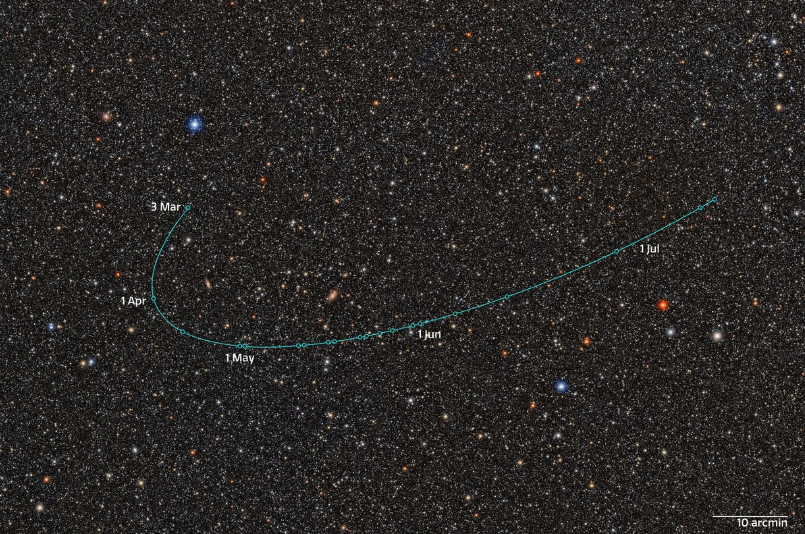
The orbital pathway of newly discovered dwarf planet candidate 2026 ED138 (ED138), as observed by NSF–DOE Vera C. Rubin Observatory. NSF-DOE Vera C. Rubin Observatory/NOIRLab/SLAC/AURA; Acknowledgement: M. Jurić/UW/D. de Martin/M. Zamani/NSF NOIRLab (image processing)
|
|
Extreme Cosmic Explosions
Every so often, astronomers spot cataclysmic explosions from the far reaches of the universe. These so-called gamma-ray bursts, or GRBs, spray intense radiation and beams of energy at close to the speed of light. You might think that supernovas, the violent deaths of massive stars, would be the biggest explosions in the cosmos, but GRBs make those look like firecrackers. GRBs typically emit energy equal to something like a million trillion trillion times the energy of the Hiroshima bomb. Scientists have detected thousands of GRBs, and yet, they remain a mystery.
How it works: Astronomers don’t have a definitive answer to what GRBs are, exactly. For decades scientists classified the phenomena into two camps—either short-duration GRBs, which lasted for no more than two seconds, and long-duration GRBs, which could endure for tens of seconds. The majority of GRBs are long-duration and are associated with collapsing supermassive stars, whereas short-duration GRBs are linked to crashes between two neutron stars. Both events are thought to generate black holes, at least most of the time. And they shoot out unfathomably powerful jets of hot plasma in concentrated beams at the speed of light. Even when GRBs last just a few milliseconds, they are, in those moments, the most energetic things in the universe.
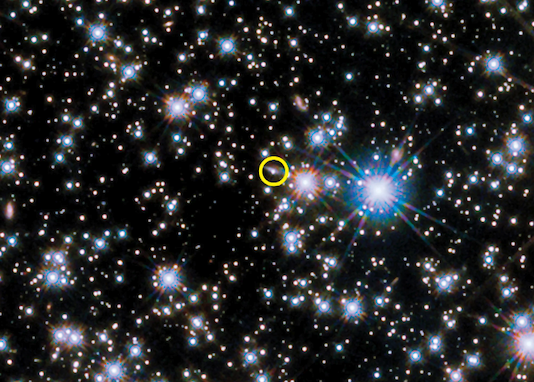
The exceptions: But examples of GRBs keep popping off that don’t fit these two categories. GRB 211211A—detected by NASA’s Fermi space telescope and the Swift observatory in a galaxy 1.1 billion light-years away—lasted for 50 seconds. This event was a classic long-duration GRB caused by a supernova, right? Wrong. When astronomers looked closer, they saw no evidence for a supernova or collapsing supermassive star. Even now nobody can confidently explain what happened. It looked like two neutron stars collided and produced a rather long GRB. But how could two tiny neutron stars provide enough mass to fuel a 50-second-long pair of plasma jets? Another GRB, by far the brightest one ever observed, did not appear to make any of the expected heavy elements. And then a seven-hour-long GRB was recorded. And that one seemed to pulse—to dim, then reignite—three times.
|
|
The Brightest of All Time (BOAT) gamma-ray burst, which erupted in October 2022, is circled in this image from the Hubble Space Telescope. NASA, ESA, CSA, STScI, A. Levan/Radboud University Nijmegen; Image processing: Gladys Kober]
|
|
What the experts say: “We know that our classification scheme has been wrong for 30 years,” says Brendan O’Connor, an astrophysicist at the University of Maryland, College Park, “or simplified.” Not to mention, “the physics involved is extremely exotic,” says Charlie Kilpatrick, an astrophysicist at Northwestern University. Certain GRBs produce some of the heaviest elements in the periodic table, including gold. And their extreme, alien physics may help scientists elucidate how the first generation of stars and the first galaxies came to be.
|
|
|
|
|
Inside Social Media Addiction: Join Us Live
|
|
Why is social media so hard to put down? Join Scientific American associate editor Allison Parshall and neuroscientist Eva Telzer on November 5 for a virtual discussion exploring the science behind social media addiction and how to build healthier relationships with technology.
|
|
|
|
|
In Switzerland, an alternative-medicine guru is accused of killing patients. | The New Yorker ($)
AI agents are trying to be real journalists. | WIRED
The BBC series Blue Planet III kept some blurry shots in the final version as proof that AI didn't generate the footage. | The Guardian
|
|
This newsletter is powered by caffeine, existential curiosity and subscribers to Scientific American. Join us: 90 days for just $1.
|
|
The Vera C. Rubin Observatory has already started fulfilling the promise of its remarkable capabilities. Yes, a new dwarf planet candidate in our solar system is super exciting, but to put it in perspective, Rubin will likely identify millions of new objects in our solar system, including 90 percent of all large asteroids that fly past Earth and thousands of tiny worlds far beyond Neptune’s orbit. On February 24, the first night of public access to data from the scope, the observatory's complex data-processing system created and distributed some 800,000 alerts to astronomers, sending out notifications for swooping asteroids, exploding stars, flaring supermassive black holes and other transient celestial events.
|
|
—Andrea Gawrylewski,
Chief Newsletter Editor
|
|
|
|
|
Subscribe to this and all of our newsletters here.
|
|
Scientific American
1000 N West Street, Suite 1200
|
|
|
|
|