The answer may surprise you ͏ ͏ ͏ ͏ ͏ ͏ ͏ ͏ ͏ ͏ ͏ ͏ ͏ ͏ ͏ ͏ ͏ ͏ ͏ ͏ ͏ ͏ ͏ ͏ ͏ ͏ ͏ ͏ ͏ ͏ ͏ ͏ ͏ ͏ ͏ ͏ ͏ ͏ ͏ ͏ ͏ ͏ ͏ ͏ ͏ ͏ ͏ ͏ ͏ ͏ ͏ ͏ ͏ ͏ ͏ ͏ ͏ ͏ ͏ ͏ ͏ ͏ ͏ ͏ ͏ ͏ ͏ ͏ ͏ ͏ ͏ ͏ ͏ ͏ ͏ ͏ ͏ ͏ ͏ ͏ ͏ ͏ ͏ ͏ ͏ ͏ ͏ ͏ ͏ ͏ ͏ ͏ ͏ ͏ ͏ ͏ ͏ ͏ ͏ ͏ ͏ ͏ ͏ ͏ ͏ ͏ ͏ ͏ ͏ ͏ ͏ ͏ ͏ ͏ ͏ ͏ ͏ ͏ ͏ ͏ ͏ ͏ ͏ ͏ ͏ ͏ ͏ ͏ ͏ ͏ ͏ ͏ ͏ ͏ ͏ ͏ ͏ ͏ ͏ ͏ ͏ ͏ ͏ ͏ ͏ ͏ ͏ ͏ ͏ ͏
October 16, 2026—Do birds love to fly? Plus, the seven planetary health "boundaries" we've crossed, and how to make your spooky decorations more environmentally friendly.
—Andrea Gawrylewski,
Chief Newsletter Editor
|
|
Nazarii_Neshcherenskyi/Shutterstock
|
|
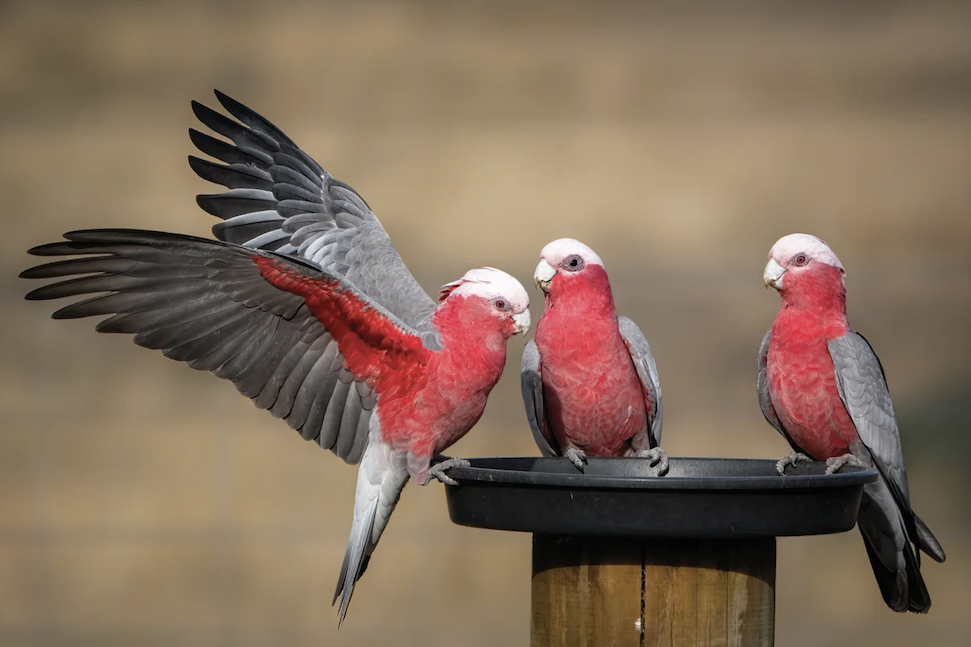
Galah Cockatoos. Tracielouise/Getty Images
|
|
Flight Lovers
Fish gotta swim and birds gotta fly. But do birds actually like it? For several months each year the pink-and-gray Galah Cockatoos at Avifauna Bird Park in the Netherlands are free to leave their aviaries every day and fly free. And they all did, without fail, for each 20-minute period offered, according to a new study. Plus, after their flight sessions, the Galahs foraged, and scratched and raised their crests more—behaviors the researchers interpreted as signs of “positive excitement resulting from free flight.”
Why this matters: For these birds, flight appears to be “an ethological need”: a behavior they’re naturally driven to perform. The results are part of a broader shift in animal-welfare science away from simply preventing suffering and toward designing environments that let animals express the natural behaviors that seem to make them feel good.
What the experts say: Does wanting to fly and liking the experience mean the birds feel happy? Animal-cognition scientists are usually hesitant to ascribe feelings or desires based on animals’ behavior, but researchers have become increasingly open to attributing such conscious experiences to animals when the data support it. If birds are capable of conscious experience, says Michael Mendl, an animal behavior researcher at the University of Bristol in England, who was not involved in the study, “the findings would indeed suggest that the birds enjoyed flying.”
|
|
|
|
|
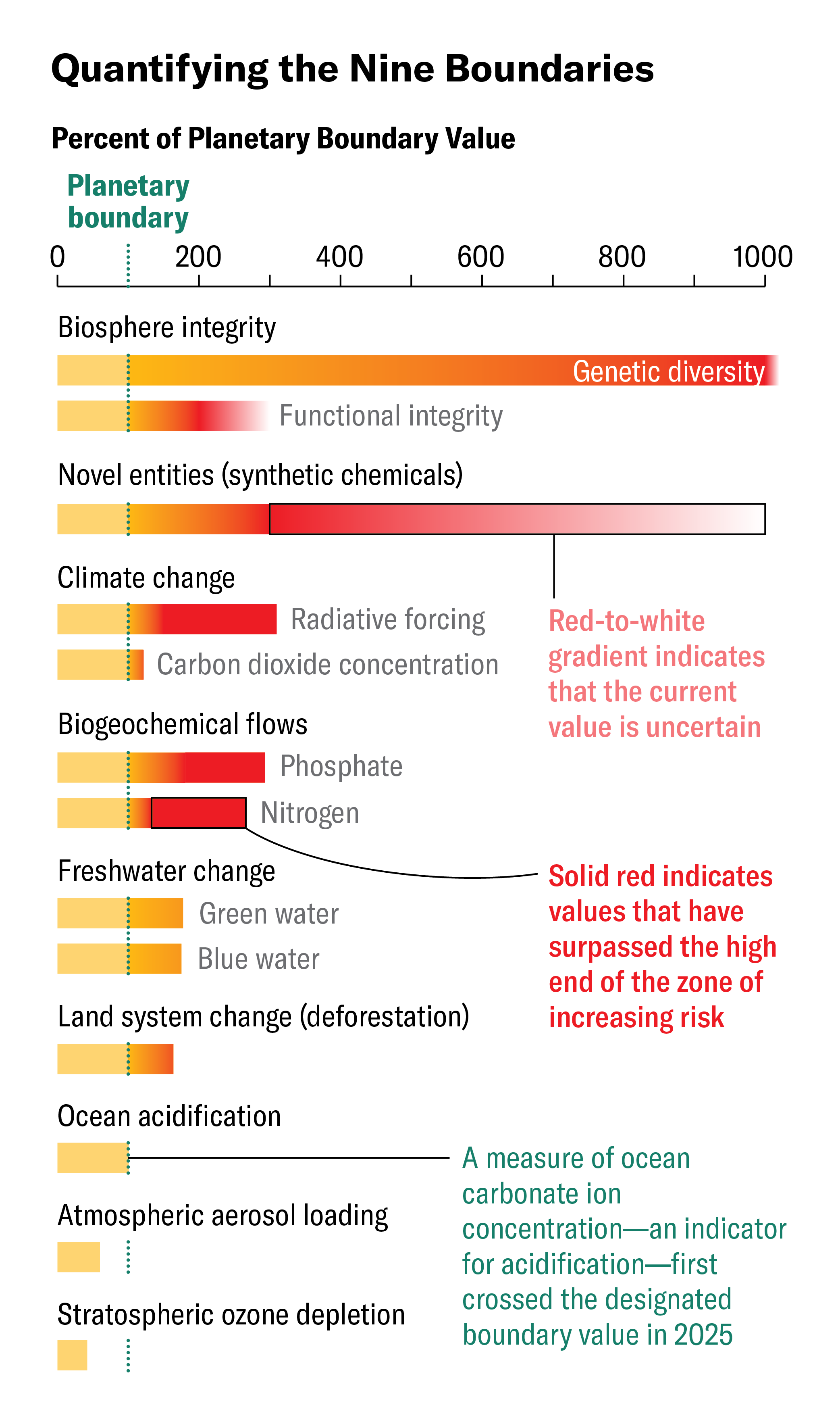
A report released last month showed that we have crossed seven of the nine chemical and physical “boundaries” we need to stay within to keep the planet habitable. Those seven breached levels are at their worst recorded values since scientists first conceived of them in 2009. Each measure is compared against a preindustrial baseline, or the period before humans began burning fossil fuels in earnest—roughly the mid-19th century. Beyond each boundary is a “zone of increasing risk,” in which the odds of moving away from those preindustrial conditions rise.
|
|
Amanda Montañez; Source: Planetary Health Check 2026. Planetary Boundaries Science Lab, Potsdam Institute for Climate Impact Research, 2026 (data)
|
|
|
MOST POPULAR STORIES OF THE WEEK
|
|
OpenAI’s blockbuster math proof isn’t what you think it is | 3 min read
A unique shape, a 3D einstein tile, has been discovered | 5 min read
Feverish after a vaccine? The reason could be your gut microbiome | 2 min read
|
|
Tiny investment, enormous universe: subscribe to Scientific American for 90 days for just $1 and help keep this newsletter going.
|
|
I can understand why researchers would avoid ascribing animal behaviors to particular emotions—in fact, I support this commitment to neutrality (an important part of observational science!). At the same time, you cannot convince a pet owner that their animal does not feel joy, sadness, playfulness or love. Research has found that a pet owner can “read” a response into an animal companion’s behavior regardless of the animal’s intentions. Yet those projections serve a purpose too—they reveal our own social needs and desires.
|
|
Please send your favorite pet behavior story, and any other thoughts, comments or feedback on this newsletter to: newsletters@sciam.com. Have a great weekend.
—Andrea Gawrylewski,
Chief Newsletter Editor
|
|
|
|
|
Subscribe to this and all of our newsletters here.
|
|
Scientific American
1000 N West Street, Suite 1200
|
|
|
|
|