|
| Created for ceo.studentlike.spuniv@blogger.com | Web Version |
|
|
|

Happy Tuesday, space fans!
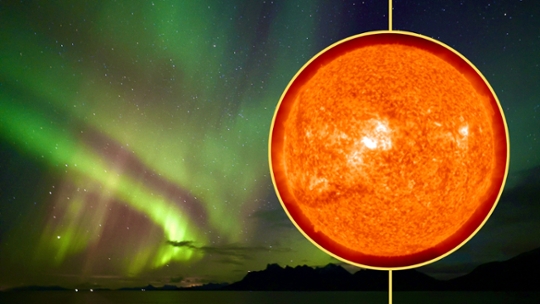
World Space Week is starting out with a bang, as a coronal mass ejection has erupted, and the particles from this stellar explosion are now headed for Earth and could create some incredible auroras above our planet. And speaking of explosive, researchers using data from the James Webb Space Telescope are investigating what happens when planets collide out in the cosmos. And going from the macroscopic cosmic explosions to the microscopic, the study of neutrinos, or "ghost particles," has now won the Nobel Prize in physics.
Check out what's big in space below:
|
|
|
|
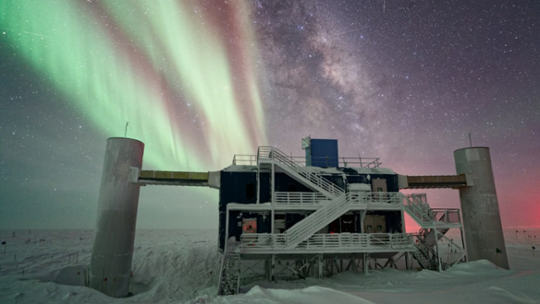
The 2026 Nobel Prize in Physics has been awarded to Francis Halzen for the detection of "ghost particle" neutrinos from the depths of space by the IceCube observatory at the South Pole.
|
|
|

|
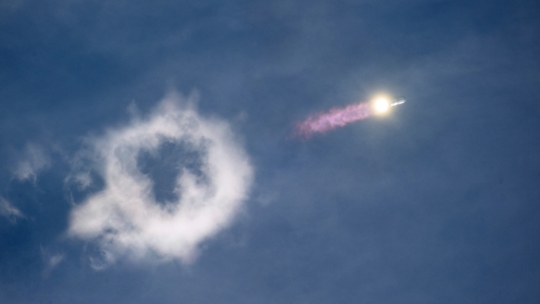
World Space Week 2026 explores how reusable rockets, new launch vehicles and commercial spaceflight are transforming access to space.
|
|
|
|
2027 isn't an isolated freak eclipse. It's the latest appearance of the extraordinary Saros 136 dynasty that produces some of the longest total solar eclipses of our era.
|
|
|
|
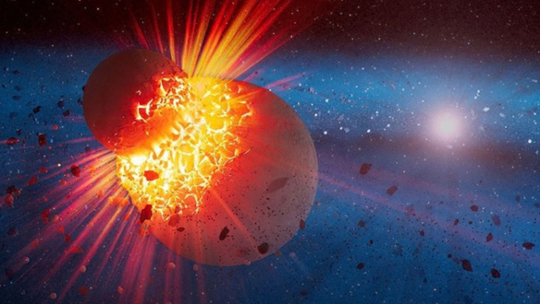
Using the James Webb Space Telescope, astronomers are investigating turbulent planetary systems in which worlds violently collide.
|
|
|
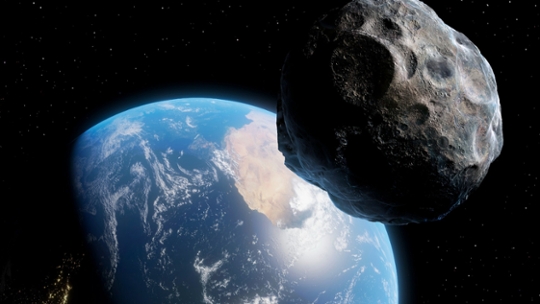
Ames crater under Oklahoma has been shown to be nearly 100 million years younger than thought, and is now dated at 370 million years old.
|
|
|
|
Amazon Prime Big Deal Days are here and to help you make the most of these offers, we've rounded up the biggest and best deals on skywatching gear, tech, Lego and more.
|
|
|
|
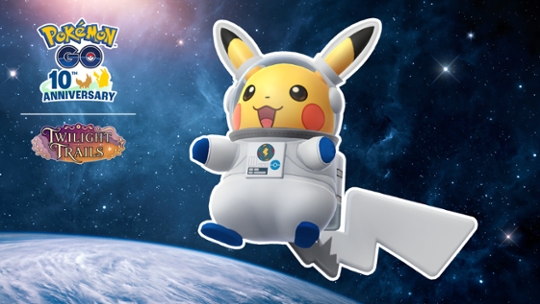
Fly (or surf) over to participating science and space museums across Europe to catch the space suit-wearing version of this iconic Pokémon.
|
|
|
And that's it for our space update today.
We hope that you are enjoying World Space Week so far. With this morning's news about the Nobel Prize in physics going to researchers exploring the strange world of subatomic "ghost particles," this is quite an exciting week in space. And things could get even more interesting as we see how these stellar explosions affect our atmosphere and whether or not they lead to incredible, colorful shows in the night sky. Fingers crossed for auroras!
If you're not able to see auroras in the night sky, don't worry, there are still a ton of opportunities to enjoy the night sky this week. And, as always, no matter what event is or isn't happening in the night sky, it's always a good idea to look up. To follow closely along and stay up to date with all things space, you can now get Space.com right in the palm of your hand with our new app available now on iOS and Android.
Ad astra, per aspera
Chelsea Gohd
Content Manager, Space.com
|
|
|
| Stay up-to-date on all things space science, news, and entertainment by subscribing to our newsletters. |
|
 |
|
|
|
|
|
When you purchase through links in our content, we may earn an affiliate commission.
Future US LLC © |
| Full 7th Floor, 130 West 42nd Street, New York, NY, 10036 |
|
|
|
|