Insights into why weed makes one feel paranoid ͏ ͏ ͏ ͏ ͏ ͏ ͏ ͏ ͏ ͏ ͏ ͏ ͏ ͏ ͏ ͏ ͏ ͏ ͏ ͏ ͏ ͏ ͏ ͏ ͏ ͏ ͏ ͏ ͏ ͏ ͏ ͏ ͏ ͏ ͏ ͏ ͏ ͏ ͏ ͏ ͏ ͏ ͏ ͏ ͏ ͏ ͏ ͏ ͏ ͏ ͏ ͏ ͏ ͏ ͏ ͏ ͏ ͏ ͏ ͏ ͏ ͏ ͏ ͏ ͏ ͏ ͏ ͏ ͏ ͏ ͏ ͏ ͏ ͏ ͏ ͏ ͏ ͏ ͏ ͏ ͏ ͏ ͏ ͏ ͏ ͏ ͏ ͏ ͏ ͏ ͏ ͏ ͏ ͏ ͏ ͏ ͏ ͏ ͏ ͏ ͏ ͏ ͏ ͏ ͏ ͏ ͏ ͏ ͏ ͏ ͏ ͏ ͏ ͏ ͏ ͏ ͏ ͏ ͏ ͏ ͏ ͏ ͏ ͏ ͏ ͏ ͏ ͏ ͏ ͏ ͏ ͏ ͏ ͏ ͏ ͏ ͏ ͏ ͏ ͏ ͏ ͏ ͏ ͏ ͏ ͏ ͏ ͏ ͏ ͏
October 7, 2026—The oldest known land animal's secret, another shocking AI release of math results and the Nobel Prize in Chemistry honors ... chemistry.
—Robin Lloyd,
Contributing Editor
|
|
vanbeets/Getty Images; Scientific American
|
|
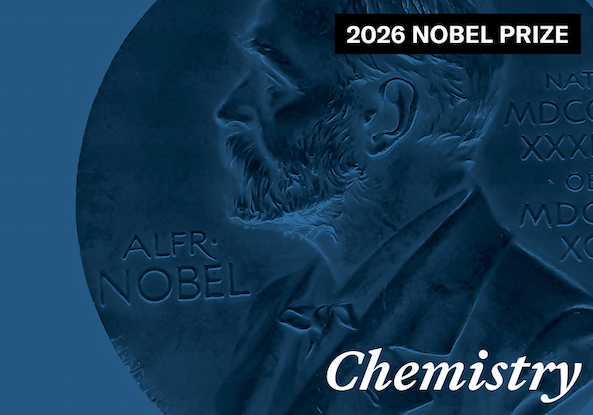
The 2026 Nobel Prize in Chemistry was awarded to Henri Kagan and Kenso Soai for their pioneering work in "mirror" chemistry. | 2 min read
The Atlantic hurricane season has been eerily quiet, but Tropical Storm Isaias could change that. It is expected to become a hurricane by Thursday. | 2 min read
OpenAI has unleashed hundreds more math results upon a field already in shock. The announcement comes a month after the company’s new LLM produced the biggest math breakthrough in two decades. | 3 min read
Anthropic and OpenAI accused Chinese AI developers of mining their models’ answers to train cheaper copycats. Here’s how distillation works and why it’s so hard to stop | 6 min read
The oldest known land animal is 194. How did Jonathan the tortoise get so ancient? The secret may be in keeping genes tidy. | 3 min read
Scientists might finally have figured out why weed makes one feel paranoid, following a study exploring what goes on in the brain when mice get high on marijuana. | 3 min read
|
|
Future Moon
The future of the moon, our natural satellite, will be determined by its gravitational relationship with Earth and the sun’s fiery progress toward stellar death, writes astronomer and science communicator Phil Plait. Due to our planet’s persistent gravitational tug on the moon and the moon’s resulting “subtle egg shape,” it’s now receding from us at a rate of about four centimeters per year. Over time that recession will allow Earth’s rotation to match the moon’s orbital period, Plait explains. The upshot: Our satellite eventually will appear from Earth in the same place in the sky. It will never rise or set.
What's next: Meanwhile the sun will burn even hotter and boil off Earth’s oceans in about a billion years, an outcome which will work to slow the moon’s recession. As the sun runs out of hydrogen fuel in six billion or seven billion years, it will swell to become a red giant that cooks the moon and Earth.
What the experts say: Eventually the red giant sun will lose about half its mass, yielding a white dwarf. “Over the eons the white dwarf sun’s tides may yet destabilize the moon’s orbit, pulling it free from Earth or possibly causing it to collide with our planet. Either way, at that point it will hardly matter to our broiled world,” Plait writes.
|
|
The following is a sneak peek at tomorrow's edition of Cultured, our brand spanking new weekly newsletter by a face familiar to Today in Science readers: Emma Gometz. Every week, Emma will be breaking down the science in pop culture—from movies and museums, to music and memes. I think you'll love it! Sign up here to get Cultured directly to your inbox.
|
|
Tom Cruise as Digger Rockwell in Warner Bros. Pictures’ "Digger." © 2026 Warner Bros. Ent. All Rights Reserved
|
|
I Liked Digger, OK?!
Warning: Spoilers ahead, proceed with caution.
The reviews for Tom Cruise’s latest movie, a climate parable called Digger, are not good. The New York Times said the movie “almost makes you sorry for everyone involved,” and the Boston Globe called it “the worst movie of Tom Cruise’s career.” Even science writers turned their noses up at Digger—one reporter from the climate publication Grist declared he “hated” it. Worse yet, none of these reviews even matter because no one is seeing this movie to begin with (so far, it's a total box office bomb).
I have a confession, and I’m not ashamed to say this. I liked Digger. As a matter of fact, I loved it. This whole week, I’ve been asking myself: Why didn’t anyone else?
Digger is a larger-than-life farce about a crazed oil baron named Digger Rockwell who is responsible for several climate disasters that result in hundreds of thousands of deaths. The characters are caricatures; the scenes are near-impossibly exaggerated tableaus of gun-toting, bible-carrying hypocrites with greyed flaking skin desperately clinging to their riches. Rockwell attempts to fix the mess, but it proves to be much harder than he thought.
In the year 2026, art that takes on the climate crisis has a fraught existence in our culture. Silent Spring, probably the most impactful book about pollution in recent memory, blends both fable and non-fiction in a stunning project that catalyzed the environmental movement in the 1960s. But today, similar stories like Don’t Look Up or The Day After Tomorrow are often critically panned and rejected by audiences. My theory? As the science becomes more clear and the human impacts more desperate, our stories have become more obvious, and therefore ... boring. Recent movies are as complex as a nursery rhyme— one action (human activity) and its singular consequence (a warming climate). The message of such oversimplified plots seems to be, “we’re all too stupid to get this right.”
One of my favorite books is author Amitav Ghosh’s The Great Derangement: Climate Change and the Unthinkable, about our inability to create good literature about global warming. It’s not that there are no more good climate stories to tell, but rather Ghosh says we’re seeing a catastrophic failure of imagination, one that hasn’t fully grasped the true scale and complexity of human-induced climate change.
But 30 minutes into Digger, a truly imaginative twist is revealed ...
|
|
|
|
|
How India saved its tigers—and lions and rhinos and elephants. | The Economist ($)
These taste testers have four legs and picky palates. | The New York Times
Restaurant workers face hidden dangers from gas stoves, including pollution and extreme heat. | Los Angeles Times
|
|
This newsletter is powered by caffeine, existential curiosity and subscribers to Scientific American. Join us: 90 days for just $1.
|
|
The moon’s wild biography, as explained by Phil Plait, reminded me of an end-times novel that is surprisingly upbeat and heartwarming. I don’t want to give away more, but I recommend a recently published English-language translation of Murder at the End of the World, by Akane Araki. The author was 23 years old when the novel initially was published in Japan.
|
|
—Robin Lloyd, Contributing Editor
|
|
|
|
|
Subscribe to this and all of our newsletters here.
|
|
Scientific American
1000 N West Street, Suite 1200
|
|
|
|
|