The birds don't follow the "law of effect" and choose chaos instead. ͏ ͏ ͏ ͏ ͏ ͏ ͏ ͏ ͏ ͏ ͏ ͏ ͏ ͏ ͏ ͏ ͏ ͏ ͏ ͏ ͏ ͏ ͏ ͏ ͏ ͏ ͏ ͏ ͏ ͏ ͏ ͏ ͏ ͏ ͏ ͏ ͏ ͏ ͏ ͏ ͏ ͏ ͏ ͏ ͏ ͏ ͏ ͏ ͏ ͏ ͏ ͏ ͏ ͏ ͏ ͏ ͏ ͏ ͏ ͏ ͏ ͏ ͏ ͏ ͏ ͏ ͏ ͏ ͏ ͏ ͏ ͏ ͏ ͏ ͏ ͏ ͏ ͏ ͏ ͏ ͏ ͏ ͏ ͏ ͏ ͏ ͏ ͏ ͏ ͏ ͏ ͏ ͏ ͏ ͏ ͏ ͏ ͏ ͏ ͏ ͏ ͏ ͏ ͏ ͏ ͏ ͏ ͏ ͏ ͏ ͏ ͏ ͏ ͏ ͏ ͏ ͏ ͏ ͏ ͏ ͏ ͏ ͏ ͏ ͏ ͏ ͏ ͏ ͏ ͏ ͏ ͏ ͏ ͏ ͏ ͏ ͏ ͏ ͏ ͏ ͏ ͏ ͏ ͏ ͏ ͏ ͏ ͏ ͏ ͏
September 3, 2026—First protein, now fiber. Why does everything have to turn into a fad? Plus, Emma Gometz faces nature's chaos-makers: pigeons. And scientists are baffled by a mysterious wave in Saturn's atmosphere.
—Andrea Gawrylewski,
Chief Newsletter Editor
|
|
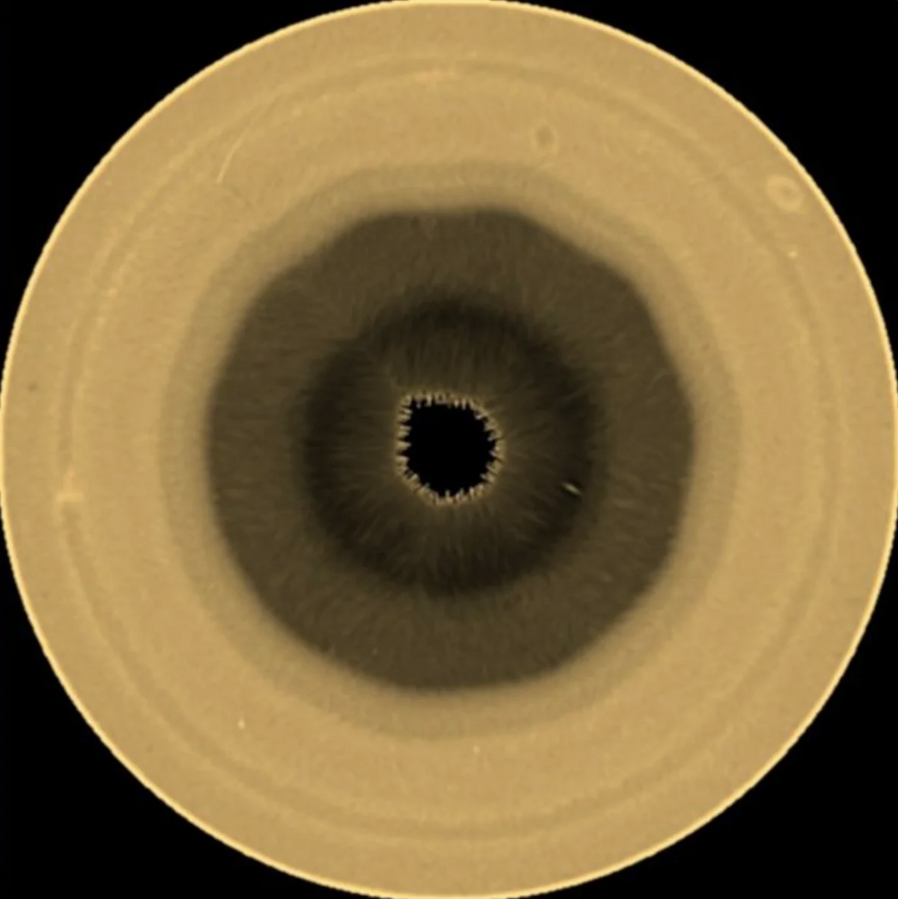
A polar projection of Saturn’s southern hemisphere at a red wavelength of 763 nanometers that was obtained by the Hubble Space Telescope on August 29, 2025. The "decagon" shape shows on the outer edge of the darker colored atmosphere. NASA/ESA/A. Sánchez-Lavega/Basque Country University (EHU)
|
|
Scientists observed a decagon-shaped wave in the atmosphere over Saturn's South Pole. And they don't know what to make of it. | 2 min read
New research in mice suggests psilocybin, an active ingredient in magic mushrooms, may protect against the painful nerve damage that can be a side effect of chemotherapy. | 3 min read
After an eight-year voyage in space, the BepiColombo spacecraft is finally nearing the planet Mercury. | 2 min read
The world is on track to exceed the Paris Agreement’s target of no more than 1.5 degrees Celsius (2.7 degrees Fahrenheit) of warming above preindustrial temperatures within the next few years, the United Nations admits in a new report. | 2 min read
|
|
Fiber to the Max
A few weeks ago, in response to the diet trend “protein maxxing,” I pitched what I think is the most important, yet oft overlooked, dietary compound: fiber. Well of course it turns out there are people out there who are going to the extreme on fiber. That's right, they’re “fiber maxxing.” Influencers and wellness personalities are aiming for 60 grams of protein a day (well beyond the USDA’s recommendation of between 25 and 38 grams a day). And they’re doing it by adding supplemental powders and additives like chicory root to their foods.
Why this matters: First of all, most people, especially in Western countries, in no way come close to their daily fiber goals. Fiber is crucial to gut health and is associated with lower disease rates. But, for someone under the spell of a wellness influencer, experts say that suddenly bombing your system with a lot of fiber is not necessarily a good idea. Each person has a unique microbiome in their gut and responds to fiber (and different sources of fiber) in their own way. For example, cheap and highly soluble fibers found in prebiotic sodas, bars and yogurts marketed as high fiber are rapidly fermentable, so they tend to cause gastrointestinal distress at around 20 grams a day. And depending on the bacterial profile of someone’s gut, certain types of fiber have different effects on metabolism and satiety. Even psyllium husk (which is widely available as a powder additive for food and drinks) works well for some people but can cause painful bloating and gas for others.
What the experts say: Any benefits of fiber are probably the result of a lifelong diet, not a passing fad. Try to increase your fiber intake gradually to about 35 grams a day, says Eric Martens, a microbiologist at the University of Michigan. He suggests doing this primarily with whole foods, rather than supplements and fortified foods. And stick with it. Over time, the gut adapts.
|
|
Birds on the Edge
As city birds, pigeons must adapt to a constantly changing environment. New research suggests the birds avoid stability in their decision-making, instead choosing to live “at the edge of chaos.” Researchers gave pigeons a treat if they pecked a set of multicolored buttons five times in a row, expecting the birds to learn to repeat that behavior over and over again for the reward. But the pigeons kept pecking in a variety of patterns.
Why this is interesting: When learning something new, people and animals alike tend to repeat behaviors that are rewarded. Not only will an animal do the rewarded behavior more often, but they’ll try non-rewarded behaviors less often. This is called the “law of effect” in psychology, first proposed in 1898. And pigeons don’t seem to follow it. The team theorizes that the birds’ devotion to variability might be an evolutionary advantage that helps them cope with new challenges in their environment.
What the experts say: Researchers thought the animals might converge on a single favorite pecking pattern, “but it never got to that point,” says the study’s co-author University of Iowa experimental psychologist Edward A. Wasserman. “You could argue the birds are just utterly resistant to locking into anything stable.”
What Emma says: My best friend is terrified of pigeons. By walking the streets of NYC with her and seeing the birds from her perspective, I noticed how chaotic these birds really are. You can try to shoo them away, but you NEVER know which direction they’ll fly—often it’ll be right toward you (to the horror of your friend). —Emma Gometz, Newsletter Editor
|
|
|
|
|
|
TRAVEL WITH SCIENTIFIC AMERICAN
|
|
A few spots are still available! This January, journey deep into Yellowstone National Park with your guide, Senior Editor Andrea Thompson, for a spectacular week-long exploration of snowy landscapes, steaming geysers and roaming wildlife.
|
|
|
|
|
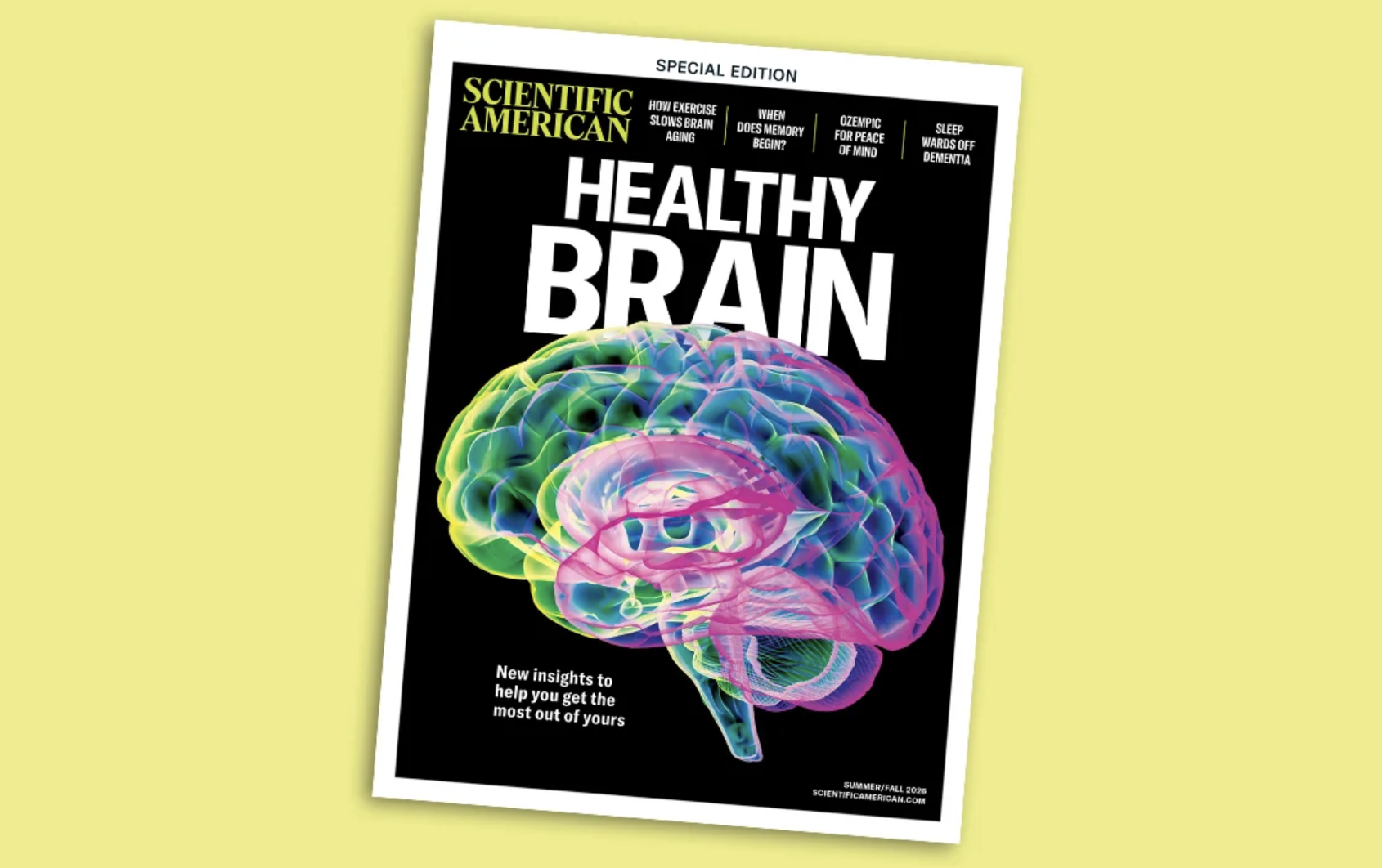
Our latest special issue is out on newsstands and available for download. This is a fun one, containing some fascinating reads on brain health, disease and how to get the most out of your noggin. Some highlights:
Physical exercise may slow cognitive aging. | 10 min read
Memories may remain intact in the brain, even if we feel we've "lost" them. | 6 min read
A neuroscientist explains how highly processed foods may be key to “food addiction.” | 8 min read
|
|
If you’ve read this far, your brain probably wants a subscription. Help support this newsletter and get unlimited access to Scientific American: 90 days for $1.
|
|
So what are your favorite high-fiber foods? I find that if you add one high-fiber option to each meal it's much easier to get close to 30 grams each day. For example:
1 cup frozen raspberries (9g!) in a homemade smoothie at breakfast;
1/2 avocado (5g) on a turkey sandwich on whole wheat bread (4g) at lunch; and 1 cup of green peas (7g) on your plate at dinner and you're already at 18 grams of fiber, not even counting other produce and whole grains you had throughout the day. In my humble opinion, the key is to add to your diet in healthy ways, not restrict or cut out.
|
|
Please send high-fiber ideas and any comments or feedback on this newsletter to: newsletters@sciam.com. See you tomorrow!
—Andrea Gawrylewski,
Chief Newsletter Editor
|
|
|
|
|
Subscribe to this and all of our newsletters here.
|
|
Scientific American
1000 N West Street, Suite 1200
|
|
|
|
|