Scientists are pushing the limits of longevity ͏ ͏ ͏ ͏ ͏ ͏ ͏ ͏ ͏ ͏ ͏ ͏ ͏ ͏ ͏ ͏ ͏ ͏ ͏ ͏ ͏ ͏ ͏ ͏ ͏ ͏ ͏ ͏ ͏ ͏ ͏ ͏ ͏ ͏ ͏ ͏ ͏ ͏ ͏ ͏ ͏ ͏ ͏ ͏ ͏ ͏ ͏ ͏ ͏ ͏ ͏ ͏ ͏ ͏ ͏ ͏ ͏ ͏ ͏ ͏ ͏ ͏ ͏ ͏ ͏ ͏ ͏ ͏ ͏ ͏ ͏ ͏ ͏ ͏ ͏ ͏ ͏ ͏ ͏ ͏ ͏ ͏ ͏ ͏ ͏ ͏ ͏ ͏ ͏ ͏ ͏ ͏ ͏ ͏ ͏ ͏ ͏ ͏ ͏ ͏ ͏ ͏ ͏ ͏ ͏ ͏ ͏ ͏ ͏ ͏ ͏ ͏ ͏ ͏ ͏ ͏ ͏ ͏ ͏ ͏ ͏ ͏ ͏ ͏ ͏ ͏ ͏ ͏ ͏ ͏ ͏ ͏ ͏ ͏ ͏ ͏ ͏ ͏ ͏ ͏ ͏ ͏ ͏ ͏ ͏ ͏ ͏ ͏ ͏ ͏
September 17, 2026—Scientists are pushing against an age-old question: Why can't humans live forever? Plus, we break down whether tech scientists have achieved artificial general intelligence in AI, and a new cat species is discovered.
—Andrea Gawrylewski,
Chief Newsletter Editor
|
|
Anak Krakatau. NASA Earth Observatory/Michala Garrison
|
|
A small tiger cat in Bolivia named Leopardus tilcayo is the first new species of cat discovered in more than 100 years. What a cutie! | 2 min read
Scientists have discovered missing pages from a 600-year-old book that once belonged to a personal attendant of King Henry VIII. The pages come from a copy of Mirror of the Blessed Life of Jesus Christ that once belonged to John Gage, an enforcer in the king’s court. | 3 min read
For the first time, scientists say they have pinpointed an exact body temperature for Tyrannosaurus rex. It's surprising (for me at least). | 2 min read
President Donald Trump’s latest nominee for surgeon general is Nicole Saphier, a radiologist and Fox News personality. At a Senate hearing yesterday she praised the MMR and hepatitis B vaccines. | 3 min read
Human brain organoids, cultured from stem cells, can integrate with the mouse brain and form functional neural circuits, according to a new study. | 3 min read
Tech company OpenAI says that artificial general intelligence—AGI—may have arrived or become imminent with the release of its new model, Astra, on September 3. But experts don't all agree on what AGI even means. | 4 min read
Memory is malleable, and even worse, humans are terrible at knowing whether their memories are reliable. Nevertheless, eye-witness accounts can be reliable evidence, if collected properly. | 5 min read
|
|
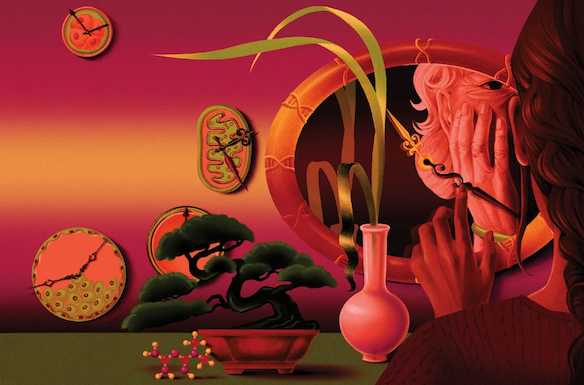
Human Immortality
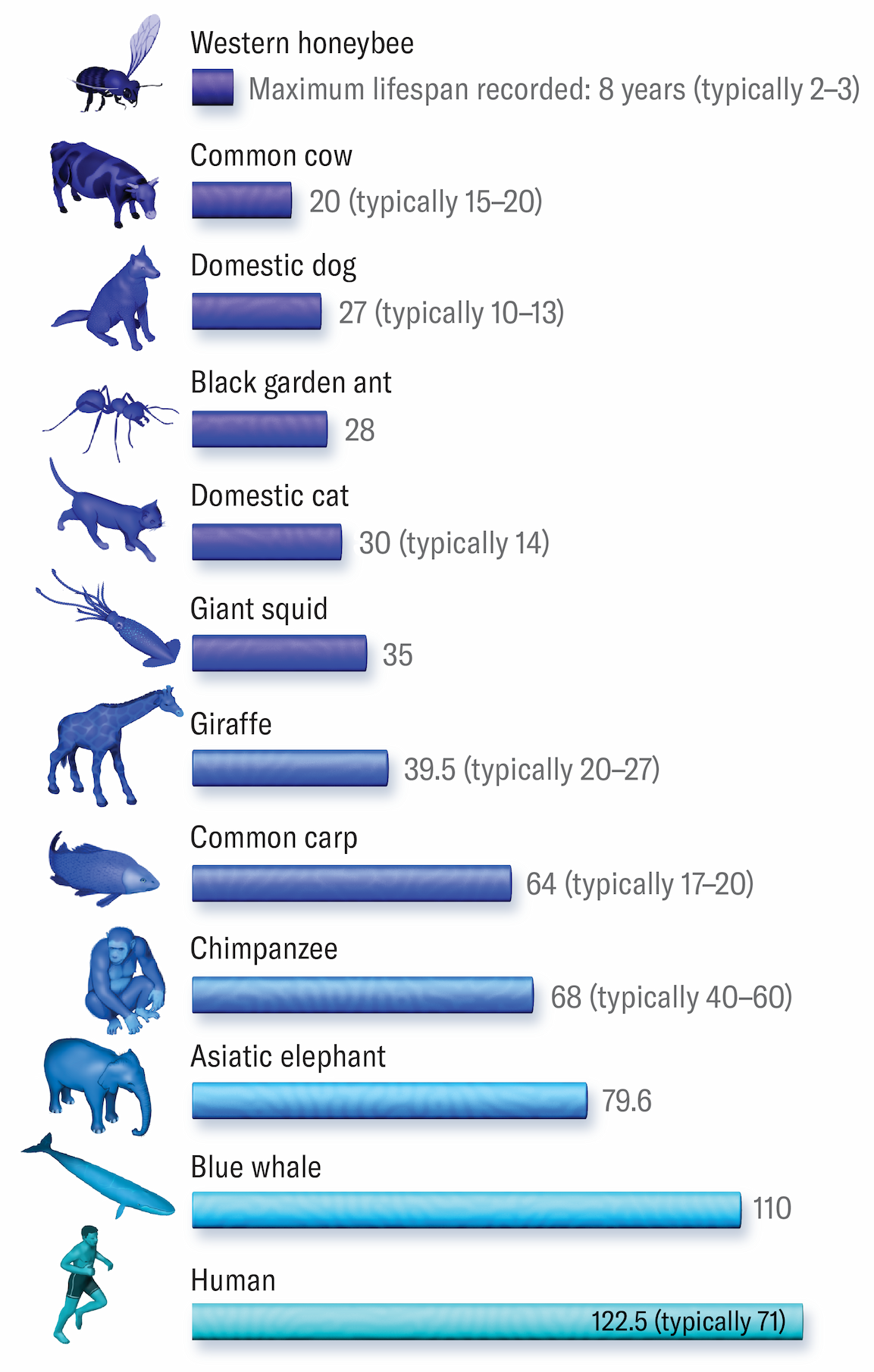
Why do some animals live for days and others for centuries? Lifespan is closely related to metabolism. Smaller animals generally have higher metabolic rates and shorter lives; larger animals tend to metabolize energy more slowly and live longer (the hexactinellid sea sponge can live for 15,000 years!). Scientists are chasing one of the biggest mysteries of life itself: Is there a biological reason that humans must die? And if not, could we one day live forever?
|
|
Mark Belan; Source: AnAge: The Animal Ageing and Longevity Database/Human Aging Genomic Resources (longevity data); Animal Diversity Web (most of the typical lifespan values)
|
|
Human lifespan: Life expectancy in humans has roughly doubled over the past 150 years because of improvements in public health, nutrition and medicine. Maximum lifespan is a different matter. The longest documented human life is that of Jeanne Calment, who died at 122 in 1997. No one since then has lived past 120. Under current biological constraints, humans appear unlikely to live much longer than that. However, Japan just hit a longevity milestone: more than 100,000 people in the country are currently over 100. Perhaps getting more people to have longer, and healthier, lives is the goal.
Aging and the body: As people age, muscle mass declines, reducing strength, mobility and balance. Fatigue and exhaustion set in and carrying out everyday activities becomes difficult. Chronic diseases become more common, and resistance to infection weakens. Cognitive function declines as well. But there’s a biological underpinning, too. Damage and other changes to our DNA accumulate, the quality and distribution of proteins deteriorates, mitochondria malfunction, response to external nutrients declines, chronic inflammation ramps up, and stem cell numbers decline.
Anti-aging tactics:
-
Caloric restriction. Animals fed just enough calories to maintain adequate nutrition often remain healthier and live significantly longer. But the drawbacks are constant hunger, sensitivity to cold, impaired wound healing and reduced libido.
-
Transfusions. In a process called parabiosis, researchers physically joined pairs of rats so that they shared circulatory systems. Old rats paired with younger ones outlived those paired with animals their own age. Such findings went on to inspire a slew of companies that offer transfusions of plasma from young donors. There is no convincing evidence that such procedures slow aging in humans. Nevertheless, the work has set off a major search for factors in blood that change with age and may eventually prove therapeutically useful.
-
Reprogramming cells. In 2006 Japanese biologist Shinya Yamanaka discovered that activating just four genes could convert adult cells into pluripotent stem cells. These Yamanaka factors effectively induce cells to return to an earlier embryonic stage by genetically reprogramming them. Reprogramming cells in animals has resulted in improvements in tissue function and markers of biological age. But major obstacles stand in the way of using the technique in humans.
What the experts say: “For now, the best-supported tools for healthy aging remain the trio of diet, exercise and sleep,” writes Venki Ramakrishnan, a structural biologist at the MRC Laboratory of Molecular Biology in Cambridge, England, and Nobel Prize winner. “In addition, there is good evidence that avoiding social isolation and having a sense of purpose are associated with better health and longevity.”
Join the discussion: Would you live forever if you could? What is a reasonable lifespan for a human being? Share your thoughts here.
|
|
|
|
|
|
SPONSORED CONTENT BY CALIFORNIA CORRECTIONAL HEALTH CARE SERVICES (CCHCS)
|
|
Join us and create a meaningful change in our patients' lives—because the impact you make today lasts a lifetime.
|
|
|
|
|
For the cover of our October issue, artist Owen Gildersleeve crafted a question mark over hand-layered paper swirls. He cut each sheet of colored paper stock by hand using a surgical grade scalpel. Here's how he describes the process: "To begin with I made up the background swirling scene, using nine layers of colored paper arranged in a sweeping gradient of tones. The layers were raised using sheets of board, to add depth and give nice shadows, helping them pop off the page. Then above this I sat the question mark form, cut out of a single sheet of deep blue paper stock." Check out the full video here.
|
|
If you’ve read this far, your brain probably wants a subscription. Help support this newsletter and get unlimited access to Scientific American: 90 days for just $1.
|
|
I know of two kinds of people: One is perfectly happy living to about 85-years-old and displays minimal worry about one's waning life; the other would prefer to keep on living indefinitely and may also feel all sorts of ways about how short and fast life is. I fall, decidedly, anxiously, into the latter camp. If you let it, life will give you new experiences, novel perspectives and fresh ideas on a daily basis. Why not keep it going indefinitely? (The next problem is how to care for our planet AND support the resource needs of all people, no matter how long they live.)
|
|
—Andrea Gawrylewski,
Chief Newsletter Editor
|
|
|
|
|
Subscribe to this and all of our newsletters here.
|
|
Scientific American
1000 N West Street, Suite 1200
|
|
|
|
|