Wednesday, December 1, 2021

Gel-Based Sensor Continuously Monitors Wounds for Infection

Trouble viewing? View in your browser.
View all Scientific American publications.
    
November 30, 2021

Dear Reader,

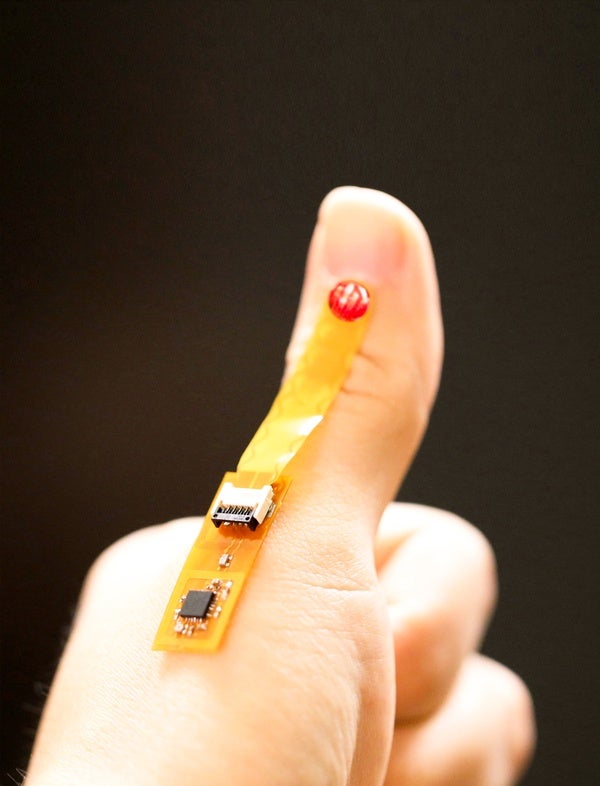
When bacteria enter an open wound, they can create an infection that literally threatens life and limb. To catch the problem as soon as possible, researchers have developed a wearable gel-based sensor that can send an infection warning to a nearby phone.

Sophie Bushwick, Associate Editor, Technology
@sophiebushwick

Biotech

Gel-Based Sensor Continuously Monitors Wounds for Infection

The device can sit beneath a bandage and send infection alerts directly to a smartphone

By Sophie Bushwick

Water

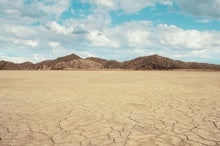
'Portable Oasis' Extracts Water from Dry Desert Air

An ultraporous humidity sponge could provide 300 gallons of fresh water a day

By Steven Ashley

Vaccines

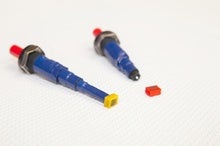
This Cheap Device Could Expand the World's Access to Vaccines

A new delivery method for certain vaccines could make the lifesaving treatments more effective and accessible

By Sam Jones

Renewable Energy

U.S. Looks to Extract Lithium for Batteries from Geothermal Waste

The global demand for the element could grow tenfold by 2030

By John Fialka,E&E News

Biotech

No Bones, No Scales, No Eyeballs: Appetite Grows for Lab-Grown Seafood

Cell-based fish taste the same as their wild and farmed counterparts. But will it ever make economic sense to produce this kind of protein?

By Emily Waltz,Nature Biotechnology

Climate Change

Northeast States Abandon Cap-and-Trade Plan for Cars

The demise of the program is the latest setback for carbon pricing in the U.S.

By Benjamin Storrow,E&E News

Sociology

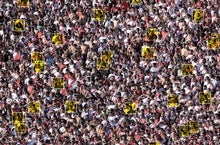
Your Boss Wants to Spy on Your Inner Feelings

Tech companies now use AI to analyze your feelings in job interviews and public spaces. But the software seems prone to racial, cultural and gender bias

By John McQuaid

Space Exploration

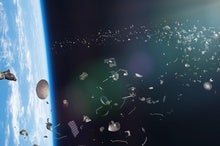
U.S. Officials Condemn Russian Anti-Satellite Test That Threatened Astronauts

"The test has so far generated over 1,500 pieces of trackable orbital debris," a State Department spokesperson said

By Chelsea Gohd,SPACE.com

Engineering

Top 10 Emerging Technologies for 2021

Innovations to help tackle societal challenges—especially climate change

FROM THE STORE

The Math of Everything

Galileo said that mathematics is the language of nature. This eBook examines math across disciplines, exploring how math is the backbone connecting the physical, social and economic worlds. From practical questions about the significance of p values and using math to fight gerrymandering to the top theoretical problems in the field, this collection looks at what math reveals about our universe.

Buy Now

QUOTE OF THE DAY

"This is a case when something genuinely interesting is going on, but both the scientists and some of the coverage of the developments are promoting it as far more than it actually is."

John Timmer, Ars Technica

ADVERTISEMENT

FROM THE ARCHIVE

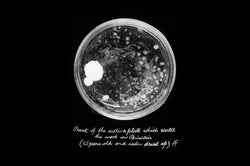
A Novel Way to Fight Drug-Resistant Bacteria

Host-directed therapy can boost a patient's immune response instead of relying only on antibiotics 

LATEST ISSUES

Questions?   Comments?

Send Us Your Feedback
Download the Scientific American App
Download on the App Store
Download on Google Play

To view this email as a web page, go here.

You received this email because you opted-in to receive email from Scientific American.

To ensure delivery please add news@email.scientificamerican.com to your address book.

Unsubscribe     Manage Email Preferences     Privacy Policy     Contact Us

Humans Are Doomed to Go Extinct

Trouble viewing? View in your browser.
View all Scientific American publications.
    
November 30, 2021

Evolution

Humans Are Doomed to Go Extinct

Habitat degradation, low genetic variation and declining fertility are setting Homo sapiens up for collapse 

By Henry Gee

Conservation

To Conserve More Species, Act while Their Numbers Are High

On Remembrance Day for Lost Species, mourn what's lost, but also be grateful for the species we still have

By Michelle Nijhuis

Reproduction

A Timeline of How Abortion Laws Could Affect Pregnancy Decisions

If the Supreme Court overturns Roe v. Wade in a Mississippi abortion case, numerous state laws will interfere with key biological and social decisions during pregnancy

By Sara Reardon

Neuroscience

How Brains Seamlessly Switch Between Languages

Bilingual people engage the same brain region that monolingual individuals use to put together words—even when combining different languages

By Daisy Yuhas

Genetics

Ranking the Risk of Heart Disease

By accounting for the additive effect of multiple genetic variants, researchers can develop a system that improves their ability to identify the most vulnerable

By Michael Eisenstein

Medicine

How a Child's Heart Health Could Be Decided before Birth

Lifestyle is a major contributor to heart disease in adults, but risk factors such as genetics and parental lifestyle can also have an effect

By Bianca Nogrady

Arts

What We Lose as Snowfall Disappears, the Science behind Aesop's Fables, and Other New Books

Recommendations from the editors of Scientific American

By Amy Brady

Basic Chemistry

Tiny Vibrating Bubbles Could Make Mining More Sustainable

An updated bubbling process allows for more efficient mineral separation

By Tess Joosse
FROM THE STORE

Existence and Other Questions: Selected Works of John Horgan

Does free will exist? Is the Schrödinger Equation True? How does matter make a mind? In his Scientific American column, John Horgan takes a scientific approach to exploring mysteries such as these, and in this eBook, we collect some of his most thought-provoking work on consciousness, quantum mechanics, the science of psychedelic drugs and more.

Buy Now

ADVERTISEMENT

FROM THE ARCHIVE

We Are the Aliens

On a geologic timescale, the emergence of the human "dataome" is like a sudden invasion by extraterrestrials or an asteroid impact that precipitates a mass extinction

LATEST ISSUES

Questions?   Comments?

Send Us Your Feedback
Download the Scientific American App
Download on the App Store
Download on Google Play

To view this email as a web page, go here.

You received this email because you opted-in to receive email from Scientific American.

To ensure delivery please add news@email.scientificamerican.com to your address book.

Unsubscribe     Manage Email Preferences     Privacy Policy     Contact Us

Scientist Pankaj

How to spot AI faces as tech improves

Plus, exclusive interview with AI reverse-engineering developer ͏  ͏  ͏  ͏  ͏  ͏  ͏  ͏  ͏  ͏  ͏  ͏  ͏  ͏  ͏  ͏  ͏  ͏  ͏  ͏  ͏  ͏  ͏  ͏  ͏ ...