Tuesday, February 1, 2022

North Korean missile test captures photos of Earth from space

Created for ceo.studentlike.spuniv@blogger.com |  Web Version
January 31, 2022
CONNECT WITH SPACE.COM FacebookTwitterInstagramYoutube
Space.com
Something amazing every day.SIGN UP ⋅   WEBSITE
 
The Launchpad
SpaceX double vision: These photos show two Falcon 9 rockets on their pads for back-to-back launches
(SpaceX)
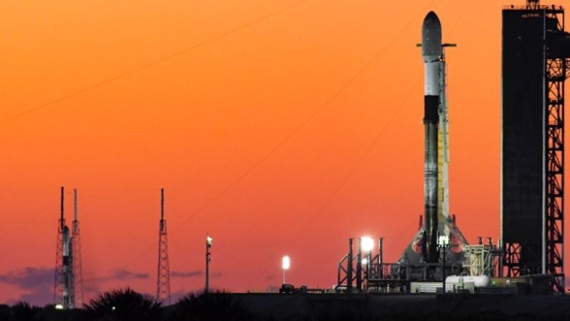
If a recent SpaceX rocket photo has you seeing double, you're not alone. A Twitter post Monday (Jan. 31) shows two Falcon 9 rockets on their pads at NASA's Kennedy Space Center (KSC) and the nearby Cape Canaveral Space Force Station, ahead of their respective launches.
Full Story: Space (1/31) 
LinkedIn Twitter Facebook Email
Watch SpaceX launch an Earth-watching radar satellite for Italy tonight!
(SpaceX)
SpaceX is now expected to launch an Italian Earth-observation satellite no earlier than today (Jan. 31), two days later than planned due to bad weather, and you'll be able to watch it live here when it lifts off. A two-stage SpaceX Falcon 9 rocket topped with the Cosmo-SkyMed Second Generation FM2 (CSG-2) satellite is scheduled to lift off from Florida's Cape Canaveral Space Force Station at 6:11 p.m. EST (2311 GMT).
Full Story: Space (1/27) 
LinkedIn Twitter Facebook Email
Spaceflight
North Korean missile test captures photos of Earth from space
(Jong-Hyun Kim/Anadolu Agency via Getty Images)
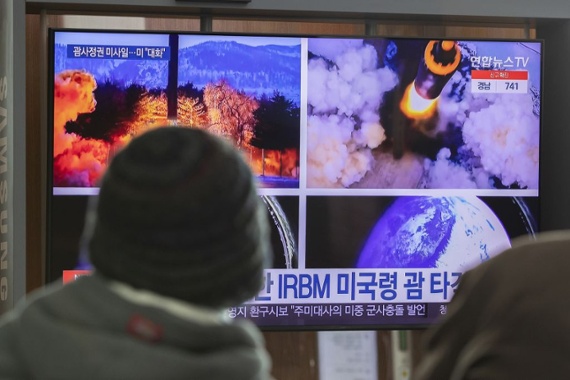
North Korea has launched yet another missile, in what appears to be the nation's biggest such test in more than four years. North Korea conducted a test launch of its Hwasong 12 intermediate-range ballistic missile on Sunday (Jan. 30), continuing a very busy January for the rogue nation. And the vehicle managed to snap some photos while it was aloft, according to North Korean officials.
Full Story: Space (1/31) 
LinkedIn Twitter Facebook Email
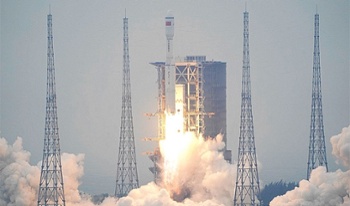
China prepares its Long March 8 rocket for second mission
(CASC)
A Long March 8 rocket has arrived at the coastal Wenchang spaceport for the second mission of what is planned to be China's first reusable launch vehicle. The Long March 8 will launch in late February or early March and will be carrying 22 satellites for Chinese commercial space companies, including optical and radar Earth observation satellites.
Full Story: Space (1/31) 
LinkedIn Twitter Facebook Email
How NASA's James Webb Space Telescope will get ready for its first cosmic observations
(NASA GSFC/CIL/Adriana Manrique Gutierrez)

With NASA's newest space observatory exactly on schedule in its commissioning phase, the science team outlined their plan to make the most of this $10 billion opportunity.


Full Story: Space (1/30) 
LinkedIn Twitter Facebook Email
Science & Astronomy
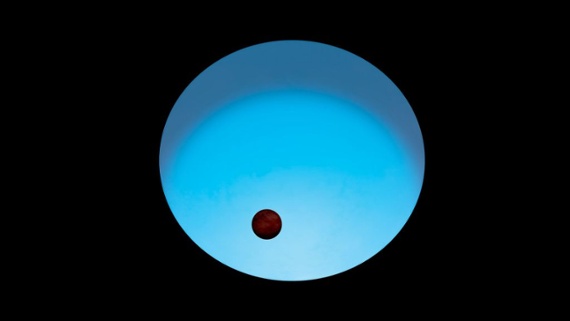
Bizarre alien planet has layered atmosphere of vaporized metals
(ESA)
Scientists have spotted the first evidence of an alien world with an atmosphere that's layered like Earth's — although perhaps a little too toasty for human tastes. The planet, dubbed WASP-189b, isn't a new discovery. Scientists already knew that the world, which lies about 322 light-years from Earth, is a gas giant that orbits its star 20 times closer than Earth does the sun, making it a sweltering world. And in a new study of the exoplanet, scientists found the first hint that such a body sports a complex atmosphere like our own.
Full Story: Space (1/31) 
LinkedIn Twitter Facebook Email
Ancient solar storm smashed Earth at the wrong part of the sun's cycle — and scientists are concerned
(NASA)
An extremely powerful solar storm pummeled our planet 9,200 years ago, leaving permanent scars on the ice buried deep below Greenland and Antarctica. A new study of those ancient ice samples has found that this previously unknown storm is one of the strongest outbursts of solar weather ever detected and would have crippled modern communications systems if it had hit Earth today.
Full Story: Space (1/31) 
LinkedIn Twitter Facebook Email
The James Webb Space Telescope, launched on Dec. 25, 2021, is expected to revolutionize the field of exoplanetary science.
Full Story: Space (1/31) 
LinkedIn Twitter Facebook Email
Skywatching
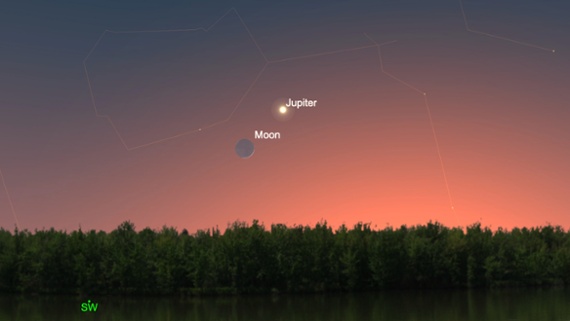
February new moon 2022: The moon swings by Jupiter while winter constellations shine
(Skysafari)
The new moon occurs Tuesday (Feb. 1), at 12:46 a.m. EST (0546 GMT), a day before the moon makes a close approach to the planet Jupiter in the night sky.
Full Story: Space (1/31) 
LinkedIn Twitter Facebook Email
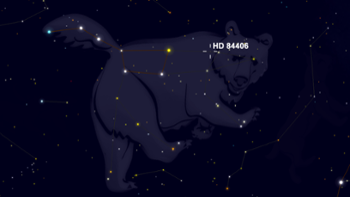
The James Webb Space Telescope's 1st target star is in the Big Dipper. Here's where to see it.
(Skysafari)
The James Webb Space Telescope is setting its eyes towards the Big Dipper. Although the spacecraft is still months away from beginning its official scientific observations, one particularly bright star named HD 84406 will soon be the object of JWST's attention.
Full Story: Space (1/29) 
LinkedIn Twitter Facebook Email
Entertainment
New trailer for 'Halo' TV series reveals more from Master Chief, plus a premiere date
(Microsoft)
The latest trailer for the live-action "Halo" TV show coming from Paramount Plus dropped during Sunday's AFC Championship Game and not only did we get to see Spartans in action, but we also saw Cortana for the first time outside of the game, a teaser of some back story to Master Chief Petty Officer John-117 and the all-important premiere date — Thursday, March 24, 2022.
Full Story: Space (1/31) 
LinkedIn Twitter Facebook Email
New 'Aliens Artbook' celebrates the 35th anniversary of James Cameron's iconic sci-fi sequel
(Titan Books)
Director James Cameron had some legendary shoes to fill when he took on the daunting task of filming a sequel to Ridley Scott’s 1979 masterpiece "Alien." But in 1986, Cameron rose to the occasion and crafted a cinematic juggernaut in "Aliens" that stands as one of the best follow-ups in Hollywood history and launched an entire franchise.
Full Story: Space (1/30) 
LinkedIn Twitter Facebook Email
The greatest spaceships of science fiction
(IMDB/CBS)
What are the greatest spaceships of science fiction? So many discussions of ships in science fiction movies and tv fall into the same tired debates. Who goes faster, the Star Wars's Millennium Falcon or Star Trek's the USS Enterprise? How big of a planet would the Death Star blow up — and how much would that ship cost, anyway? This  article takes things a step further.
Full Story: Space (1/31) 
LinkedIn Twitter Facebook Email
 
Sign Up  |    Update Profile  |    Unsubscribe
Privacy Policy  |    Cookies Policy  |    Terms and Conditions
CONTACT US: FEEDBACK  |    ADVERTISE
Future US LLC © 1100 13th St. NW, Suite 1000, Washington, DC 20005

How to Destroy 'Forever Chemicals'

Sponsored by AstraZeneca
    
January 31, 2022

Pollution

How to Destroy 'Forever Chemicals'

Health-damaging PFASs are nearly impossible to break down—but a new hot-water technique can destroy them

By Lars Fischer

Psychology

Most of Us Combine Personality Traits from Different Genders

New research underscores that almost everyone’s personality blends “more often seen in men” and “more-often-seen in women” characteristics

By Spencer Greenberg,Holly Muir

Fossil Fuels

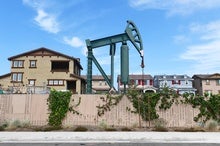
Los Angeles Bans New Oil Wells, Will Phase Out Existing Ones

The city council voted unanimously to end drilling in the city for public health reasons

By Anne C. Mulkern,E&E News

Sponsor Content Provided by AstraZeneca

2022 Cancer Community Awards – Nominations Deadline Extended

The deadline to submit nominations for the fourth annual Cancer Community Awards has been extended to 5pm ET, February 4th. Winners in five categories receive $50,000 to donate to a non-profit serving the cancer community. Learn more.

Medicine

How Many COVID Vaccine Boosters Will We Need?

Endless boosting might not be a practical or sustainable strategy, scientists say

By Clare Watson,Nature magazine

Plants

Thousands of Tree Species Remain Unknown to Science

New research suggests there are 14 percent more tree species out there than previously believed

By Stephanie Pappas

Conservation

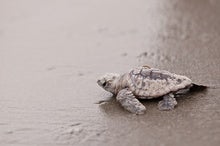
Restoring Sea Turtles' Numbers Also Restored Their Ecosystem

Turtle eggs feed the dunes in which they are laid and serve as a reminder of how humans conservation efforts reap positive effects

By Gabe Andrews

Defense

Russian Cyberattacks against the U.S. Could Focus on Disinformation

Direct system invasions are possible, but efforts to sow confusion and division are more likely

By Justin Pelletier,The Conversation US

Neuroscience

Lego Robot with an Organic 'Brain' Learns to Navigate a Maze

The neuromorphic computing device solved the puzzle by working like an animal brain would

By Saugat Bolakhe

Ecology

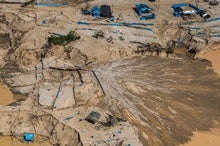
Gold Mining Is Poisoning Amazon Forests with Mercury

Mitigation strategies typically do not include forests, but my team’s research suggests they should

By Jacqueline Gerson

Astronomy

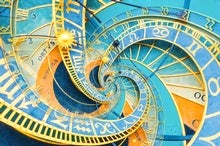
How Measuring Time Shaped History

From Neolithic constructions to atomic clocks, how humans measure time reveals what we value most

By Clara Moskowitz
FROM THE STORE

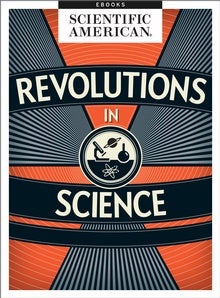
Revolutions in Science


Normally science proceeds in incremental steps, but sometimes a discovery is so profound that it causes a paradigm shift. This eBook is a collection of articles about those kinds of advances, including revolutionary discoveries about the origin of life, theories of learning, formation of the solar system and more.

*Editor's Note: Revolutions in Science was originally published as a Collector’s Edition. The eBook adaptation contains all of the articles, but some of the artwork has been removed to optimize viewing on mobile devices.


Buy Now

ADVERTISEMENT

FROM THE ARCHIVE

Forever Chemicals Are Widespread in U.S. Drinking Water

Experts hope that with the incoming Biden administration, the federal government will finally regulate a class of chemicals known as PFASs

QUOTE OF THE DAY

"Some argue that the persistence of PFAS is so great that [they should be phased] out of production as they are not part of a sustainable world."

Jamie DeWitt, associate professor of pharmacology and toxicology at East Carolina University's Brody School of Medicine

LATEST ISSUES

Questions?   Comments?

Send Us Your Feedback
Download the Scientific American App
Download on the App Store
Download on Google Play

To view this email as a web page, go here.

You received this email because you opted-in to receive email from Scientific American.

To ensure delivery please add news@email.scientificamerican.com to your address book.

Unsubscribe     Manage Email Preferences     Privacy Policy     Contact Us

Must Watch: Screening of JPL and the Space Age’s ‘Explorer 1’

Tune in for a screening of the Explorer 1 story on January 31, 2022 at 4 p.m. PST and discover how JPL's rocketry programs prior t 


SPECIAL EVENT
JPL and the Space Age: Explorer 1
Tune in for a screening of the Explorer 1 story on January 31, 2022 at 4 p.m. PST and discover how JPL’s rocketry programs prior to the creation of NASA led to a vital role in launching America’s first satellite.
› Learn more


Scientist Pankaj

Dolphin scares fish and eats their puke

Plus, how hidden math prevents texting gibberish ͏  ͏  ͏  ͏  ͏  ͏  ͏  ͏  ͏  ͏  ͏  ͏  ͏  ͏  ͏  ͏  ͏  ͏  ͏  ͏  ͏  ͏  ͏  ͏  ͏  ͏  ͏  ͏  ͏  ͏ ...