Scientists watched hours of competitions among sheep-herding dogs ͏ ͏ ͏ ͏ ͏ ͏ ͏ ͏ ͏ ͏ ͏ ͏ ͏ ͏ ͏ ͏ ͏ ͏ ͏ ͏ ͏ ͏ ͏ ͏ ͏ ͏ ͏ ͏ ͏ ͏ ͏ ͏ ͏ ͏ ͏ ͏ ͏ ͏ ͏ ͏ ͏ ͏ ͏ ͏ ͏ ͏ ͏ ͏ ͏ ͏ ͏ ͏ ͏ ͏ ͏ ͏ ͏ ͏ ͏ ͏ ͏ ͏ ͏ ͏ ͏ ͏ ͏ ͏ ͏ ͏ ͏ ͏ ͏ ͏ ͏ ͏ ͏ ͏ ͏ ͏ ͏ ͏ ͏ ͏ ͏ ͏ ͏ ͏ ͏ ͏ ͏ ͏ ͏ ͏ ͏ ͏ ͏ ͏ ͏ ͏ ͏ ͏ ͏ ͏ ͏ ͏ ͏ ͏ ͏ ͏ ͏ ͏ ͏ ͏ ͏ ͏ ͏ ͏ ͏ ͏ ͏ ͏ ͏ ͏ ͏ ͏ ͏ ͏ ͏ ͏ ͏ ͏ ͏ ͏ ͏ ͏ ͏ ͏ ͏ ͏ ͏ ͏ ͏ ͏ ͏ ͏ ͏ ͏ ͏ ͏
June 11, 2026—Ants that navigate by the moon, swarm science derived from "sheepdog YouTube" and hope for human problem-solving in a surfing mathematician’s proof.
—Robin Lloyd, Contributing Editor
|
|
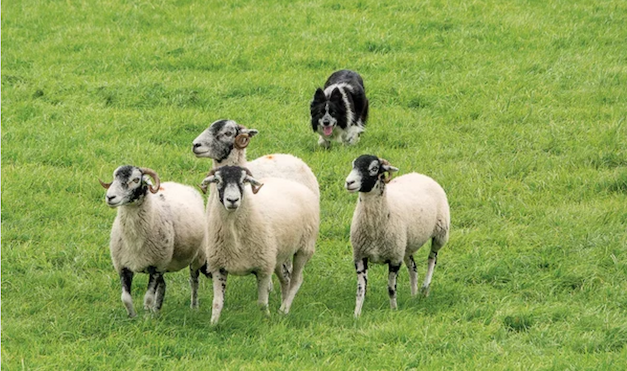
Sheepdog trials put trained dogs to work herding small groups of sheep. jacquesvandinteren/Getty Images
|
|
A key insight into how to control chaotic swarms came from scientists who watched hours of "sheepdog YouTube"—competitions where trained dogs shepherd unpredictable sheep. | 2 min read
A surfing mathematician’s recent proof may give humans the edge over AI for solving the problem of how fluids swirl, one of the seven so-called Millennium Problems. Each yields a $1-million prize if solved. | 8 min read
Starting today, the 2026 World Cup is bringing the heat. Whether you’re a spectator, player or worker, here's how to keep cool as extreme heat poses risks of dehydration, heat stroke and even death. | 5 min read
Sports or no sports, El Niño is here and could tip Earth to a new record hot year. Scientists have been expecting the weather pattern to set in for quite a while. Now it’s official. | 4 min read
Eight years after a report of gene-edited babies shocked the world, a U.S. team has reported editing embryos not meant for pregnancies using a more precise technique. “The cat’s out of the bag,” a researcher says. | 5 min read
China’s Tianwen-2 spacecraft just arrived at Kamo‘oalewa, a mysterious "quasi-moon" of Earth. The mission would bring China’s first asteroid samples back to Earth in 2027. | 5 min read
-
Cats help you only when there’s something in it for them, per new research that surprises no one. Dogs and toddlers spontaneously aid struggling humans—whereas cats wait until they stand to benefit. | 2 min read
|
|
This newsletter is powered by caffeine, existential curiosity and subscribers to Scientific American. Join us: 90 days for just $1 and help keep this newsletter going.
|
|
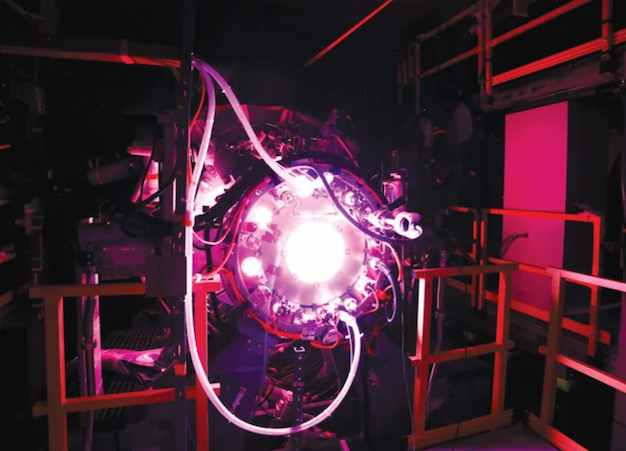
Polaris, Helion's seventh-generation prototype, glows pink during recent testing with deuterium-tritium fuel, signaling that a thermonuclear reaction is underway. Helion
|
|
The Fusion Wager
A machine touted to become the world’s first fusion power plant could deliver electricity to the power grid, as well as 50 megawatts to Microsoft data centers, by 2029, reports Alex Pasternack. To achieve fusion on Earth, rather than in stars, light nuclei must be heated to become plasma that’s kept stable and hot long enough for sufficient reactions to occur. Materials and fueling pose hard physics problems for the private endeavor, a company called Helion Energy, which takes its funding from backers including OpenAI CEO Sam Altman.
Why this matters: Data centers constantly require staggering amounts of electricity. Fusion start-ups, if they overcome engineering challenges, could provide a path to firm, carbon-free power.
What the experts say: Helion publishes minimal peer-reviewed data about the core performance of its plasma. Troy Carter, director of the Fusion Energy Division at Oak Ridge National Laboratory says that without more data, “it is hard to fully assess where they’re headed."
|
|
Nocturnal Navigation
A species of bull ants uses an innate lunar compass to navigate at night as they travel from nests to food sources and back again, according to new research covered by K.R. Callaway, an editorial intern at Scientific American. Bull ants compensate for the orbiting moon’s highly variable arc across the sky to aid them in after-dark navigation, the new study concludes.
How they did it: The researchers captured bull ants en route to their usual food sources and then held them for several hours in darkened boxes devoid of environmental time cues. Upon releasing the insects, if the moon had moved significantly, the ants changed course, suggesting that they’d used the moon’s position as their main cue.
What the experts say: “This is just a little bonkers. They need to compensate for the trajectory of the moon. I mean, I don’t know how to do that,” says Rodolfo da Silva Probst, an entomologist at the University of California, Davis, who was not involved in the study.
|
|
|
|
|
|
SPONSORED CONTENT BY THE MIT PRESS
|
|
|
|
A darkly funny, devastating takedown of the longevity industry
|
|
"Saul Justin Newman has a deliciously wicked wit and an addictively original writing style, which serve him (and readers!) well in taking bullshit science to the mat."
—Mary Roach, author of Replaceable You and Stiff
|
|
|
|
|
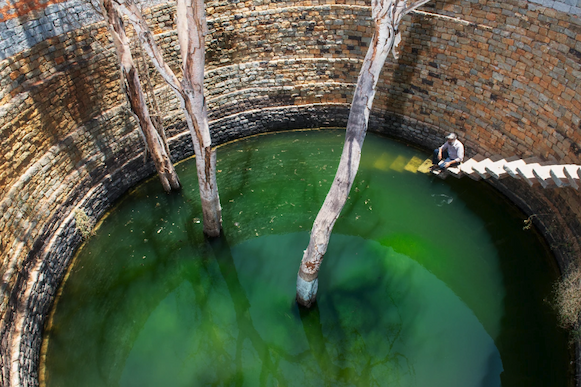
Civil engineer Vishwanath Srikantaiah works with local communities to revive historic wells, which were once in danger of being filled with concrete and built over. “In this photo, I’m visiting a once-abandoned well, known as the Three Trees Well, north of Bengaluru, India,” he says. The work of local people “has been rewarded by the well reconnecting with the below-ground aquifer and bringing water to the community again… this is a success story, and we need more of those.” Nature | 3 min read
|
|
Navigation is a crucial problem to be solved by many organisms, bull ants and humans alike. On a biking vacation last week in Québec, I was fortunate to be guided by verbal cues emanating from a GPS-enabled app on my smartphone. As the entomologist above suggests, it’d be literally loony for most of us to try navigating by tracking the moon, let alone the sun.
|
|
—Robin Lloyd, Contributing Editor
P.S. If this newsletter sparked your curiosity today, consider forwarding it to a friend!
|
|
|
|
|
Subscribe to this and all of our newsletters here.
|
|
|
|
|