Plus squirrels that ate like ‘zombies of the Pleistocene’ ͏ ͏ ͏ ͏ ͏ ͏ ͏ ͏ ͏ ͏ ͏ ͏ ͏ ͏ ͏ ͏ ͏ ͏ ͏ ͏ ͏ ͏ ͏ ͏ ͏ ͏ ͏ ͏ ͏ ͏ ͏ ͏ ͏ ͏ ͏ ͏ ͏ ͏ ͏ ͏ ͏ ͏ ͏ ͏ ͏ ͏ ͏ ͏ ͏ ͏ ͏ ͏ ͏ ͏ ͏ ͏ ͏ ͏ ͏ ͏ ͏ ͏ ͏ ͏ ͏ ͏ ͏ ͏ ͏ ͏ ͏ ͏ ͏ ͏ ͏ ͏ ͏ ͏ ͏ ͏ ͏ ͏ ͏ ͏ ͏ ͏ ͏ ͏ ͏ ͏ ͏ ͏ ͏ ͏ ͏ ͏ ͏ ͏ ͏ ͏ ͏ ͏ ͏ ͏ ͏ ͏ ͏ ͏ ͏ ͏ ͏ ͏ ͏ ͏ ͏ ͏ ͏ ͏ ͏ ͏ ͏ ͏ ͏ ͏ ͏ ͏ ͏ ͏ ͏ ͏ ͏ ͏ ͏ ͏ ͏ ͏ ͏ ͏ ͏ ͏ ͏ ͏ ͏ ͏ ͏ ͏ ͏ ͏ ͏ ͏
June 15, 2026—A cell-rejuvenation therapy is given to its first human study participant, squirrels that feasted like "zombies of the Pleistocene," and a theory that could resolve the paradoxes of quantum mechanics.
—Robin Lloyd, Contributing Editor
|
|
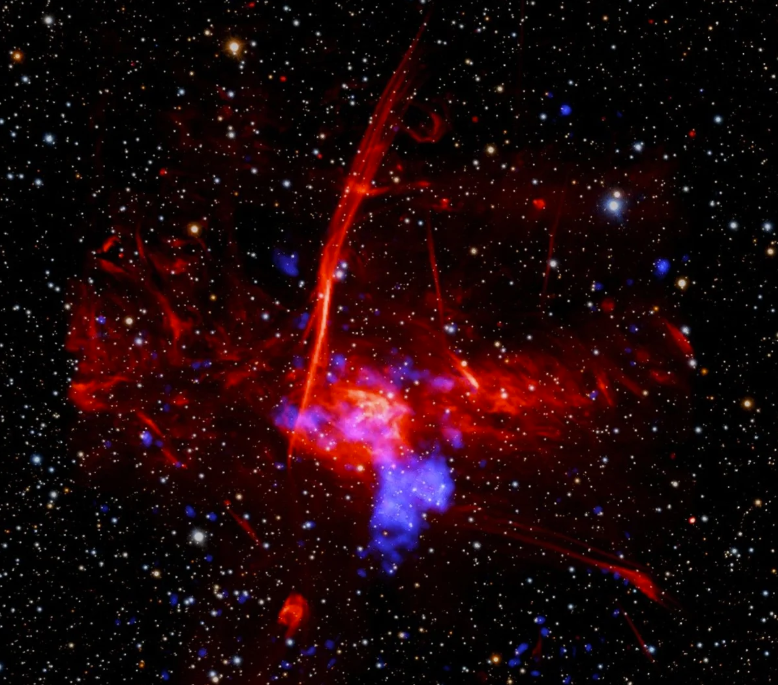
X-rays from Chandra and XMM-Newton, radio data from the MeerKAT telescope in South Africa and an optical image from the Pan-STARRS telescopes in Hawaii. NASA
|
|
A newly spotted, possible massive supernova remnant in the middle of the Milky Way would be one of the closest to the supermassive black hole at the center of our galaxy, if confirmed. | 2 min read
A highly anticipated gene therapy, designed to reprogram aged cells to behave as if they were young again, has been given to its first study trial participant. | 3 min read
Russia seeks the extradition of prominent mathematician Mikhail Verbitsky, who was detained at an Armenian airport last Thursday on charges of inciting terrorism. | 1 min read
As Ebola rages, Moderna and other pharma companies are racing to develop an mRNA vaccine for the rare Bundibugyo virus species driving the current outbreak. | 6 min read
A new account of “deep carbon” stored in permafrost, which releases its carbon into the atmosphere as it melts, suggests that previously overlooked frozen soils that lie beyond a depth of three meters could supercharge global warming. | 3 min read
A study finding that even one drink a day raises a person’s risk of premature death was deliberately sidelined by the Trump administration, a former official alleges. | 6 min read
NASA’s X-59 research aircraft, an experimental quiet supersonic plane, passed another critical milestone, reaching its target speed and altitude for the first time on Friday. | 2 min read
Ancient ground squirrels feasted on carcasses like “zombies of the Pleistocene,” as revealed by fossils harboring the remains of mammoths, bison and big cats. | 3 min read
|
|
This newsletter is made possible by subscribers to Scientific American. Join today to support independent science journalism and get full access to every story: 90 days for just $1.
|
|
Particle Pilots
The long-standing, baffling paradoxes of quantum mechanics might have been resolved 100 years ago with a framework developed by a French physicist and Nobel laureate, according to a new book. In Beyond the Quantum: A Quest for the Origin and Hidden Meaning of Quantum Mechanics, physicist Antony Valentini argues that Louis de Broglie’s pilot wave theory posits that attendant waves guide particles, which “are always in one position and one position only,” writes freelance journalist Tim Folger. The pilot wave creates the impression of multi-position particles.
The paradoxes: When unobserved, single particles exist in multiple places at once, according to quantum mechanics. And pairs of atoms can be entangled even across vast distances, such that the activity of one immediately affects that of the other, a phenomenon that Einstein called “spooky action at a distance.”
What the experts say: “Word of de Broglie’s thesis spread, although hardly anyone actually read it. Einstein did. It was Einstein who really alerted people that de Broglie had done something very important. He encouraged Schrödinger to read it—and he read it. Most other people, it seems, never read de Broglie’s thesis,” Valentini tells Folger.
|
|
Emily Blunt in Disclosure Day, directed by Steven Spielberg. Niko Tavernise © Universal Studios. All Rights Reserved.
|
|
Disclosure Day: Real Talk
E.T. and Close Encounters of the Third Kind director Steven Spielberg has been captivated with aliens for decades now—but he could update his references. His newest film, Disclosure Day, deals with a government coverup of aliens linked to the Roswell incident of 1947. Scientists from the Search for Extraterrestrial Intelligence (SETI) Institute say that UFO secrecy narratives like this are harmful for public science literacy. Plus, if researchers ever were to discover aliens for real, you would definitely find out.
The background: In 1989, the first postdetection protocols were adopted by the International Academy of Astronautics (IAA) to outline what researchers should do if they were to find a credible signal from intelligent alien life. If confirmed, the news should be shared “promptly, openly, and widely through scientific channels and public media,” per those protocols. Last week, SETI released revised postdetection protocols, which added further guidelines with a wider pool of scientists and institutions in mind. The update also acknowledges the need for protections against possible harassment of scientists on social media. The updated procedures continue to stress the importance of transparency and verification to this field of research.
What the experts say: The film seems to imply that the existence of aliens would, by default, be kept a secret by those who found them. But the problem would not be that we’d be able to keep it to ourselves,” says Michael Garrett, an astronomer at the University of Manchester in England and a co-author of the 2026 protocols. “The problem would be that it’d leak out long before it was verified.”
—Emma Gometz, newsletter editor
|
|
|
|
|
What if it all came out? Your digital self is vulnerable. |New York magazine
WHO director-general is profoundly concerned after visit to Ebola outbreak area. | STAT
Millions of women are left out of menopause’s moment. | The New York Times
|
|
A ticker-tape parade to celebrate the New York Knicks' NBA championship is set for Thursday in Manhattan's "Canyon of Heroes." The names of Samuel Morse and Thomas Edison are rightly associated with the invention of and advances in telegraphy. However, four years before Edison patented the two-wheeled stock ticker, Edward H. Calahan invented a single-wheel ticker, a telegraphic device that printed stock prices in Morse Code on paper tape, according to cultureNow and Grokipedia. (Yes, sources do not all agree on how to spell this inventor's last name, nor on his middle initial.)
We always love to hear from you. Please reach out with any thoughts, ideas or feedback related to this newsletter at newsletters@sciam.com.
|
|
—Robin Lloyd, Contributing Editor
|
|
|
|
|
Subscribe to this and all of our newsletters here.
|
|
|
|
|