Viruses change the microenvironment where tumors grow ͏ ͏ ͏ ͏ ͏ ͏ ͏ ͏ ͏ ͏ ͏ ͏ ͏ ͏ ͏ ͏ ͏ ͏ ͏ ͏ ͏ ͏ ͏ ͏ ͏ ͏ ͏ ͏ ͏ ͏ ͏ ͏ ͏ ͏ ͏ ͏ ͏ ͏ ͏ ͏ ͏ ͏ ͏ ͏ ͏ ͏ ͏ ͏ ͏ ͏ ͏ ͏ ͏ ͏ ͏ ͏ ͏ ͏ ͏ ͏ ͏ ͏ ͏ ͏ ͏ ͏ ͏ ͏ ͏ ͏ ͏ ͏ ͏ ͏ ͏ ͏ ͏ ͏ ͏ ͏ ͏ ͏ ͏ ͏ ͏ ͏ ͏ ͏ ͏ ͏ ͏ ͏ ͏ ͏ ͏ ͏ ͏ ͏ ͏ ͏ ͏ ͏ ͏ ͏ ͏ ͏ ͏ ͏ ͏ ͏ ͏ ͏ ͏ ͏ ͏ ͏ ͏ ͏ ͏ ͏ ͏ ͏ ͏ ͏ ͏ ͏ ͏ ͏ ͏ ͏ ͏ ͏ ͏ ͏ ͏ ͏ ͏ ͏ ͏ ͏ ͏ ͏ ͏ ͏ ͏ ͏ ͏ ͏ ͏ ͏
June 19, 2026—A strange shift in perspective occurs when viewing the Earth from space or from deep underwater. Plus, research on how viruses may encourage tumor growth, and remnants of a binary star system.
—Andrea Gawrylewski
Chief Newsletter Editor
|
|
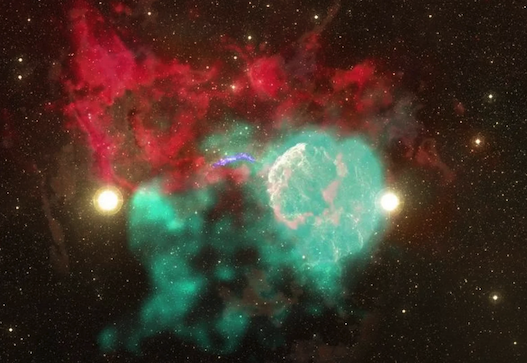
This composite of radio, infrared, optical and ultraviolet data shows the region around IC 443, a famous supernova remnant also known as the Jellyfish Nebula. NASA Goddard Space Flight Center/M. Michailidis et al. 2026; DSS (optical); MWSIP/ESA/Planck (radio); NASA/WISE/JPL-Caltech/UCLA (infrared); NASA/Swift (ultraviolet); SRG/eROSITA (x-ray)
|
|
We Should Be Both
As a child, physicist and writer Alan Lightman possessed a voracious curiosity about the natural world. That drive propelled him to devise rudimentary rockets, discover the laws of a swinging pendulum, build his own incubators and more, all as a very young person. “I was curious about the world. I wanted to understand why things were what they were,” he writes in our latest issue, which explores the state of American science. Meanwhile, he read poetry and wrote short stories. He also composed his own poetry, probing questions of morality and unrequited young love.
Why this matters: “I think many young people have a natural interest in the arts and humanities as well as in the sciences, but we are often pushed in one direction or the other by our friends, our parents and our teachers,” Lightman says. “We should resist those early pressures to be a ‘scientific type,’ always rational and deliberate, or an ‘artistic type,’ always intuitive and spontaneous. We can be both. And we should be both.”
“Science tells us about the physical world. The arts and humanities tell us how to live in that world, the world of people. Science has given us automobiles, antibiotics, computers. The humanities have given us values and guidance on how to live our lives. Now more than ever, when much of the world, including the U.S., has lost its moral compass, leading to a dog-eat-dog mentality, we need science combined with literature, philosophy, history and art. We need to discover not only the physical world but also our own humanity."
|
|
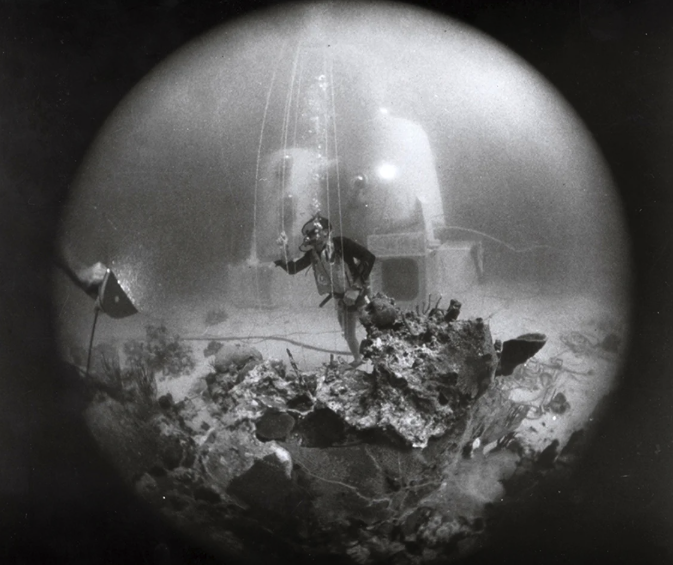
An underwater habitat in the U.S. Virgin Islands was first placed in 1969. NOAA Central Library Historical Fisheries Collection
|
|
The Underview Effect
What aquanauts feel: When marine biologist Mark Patterson stepped outside of his underwater lab at night, he was surrounded by bioluminescent plankton shining like stars. “That’s when I felt, ‘Wow, this is the coolest thing maybe I’m ever going to do: live underwater,’” he says. The study performed a series of interviews with Patterson and other divers and found evidence of a perspective shift coming from an intense sense of awe and connection to humanity and the planet. The authors suggested that the amount of time aquanauts spend living on the ocean floor (days, sometimes weeks) might be part of why this occurs, but each aquanaut experienced the effect differently.
What the experts say: You don’t have to go all the way to space to find awe in the natural world, says lead study author Kristen Kilgallen, a psychology Ph.D. candidate at Northeastern. It can come simply from trying something new that disrupts everyday routines. “You can find exploration rewarding in and of itself, regardless of what you find,” she says. “That’s what keeps you engaged with the world.” —Emma Gometz, newsletter editor
|
|
|
|
|
|
YOUNG AMERICAN SCIENTISTS
|
|
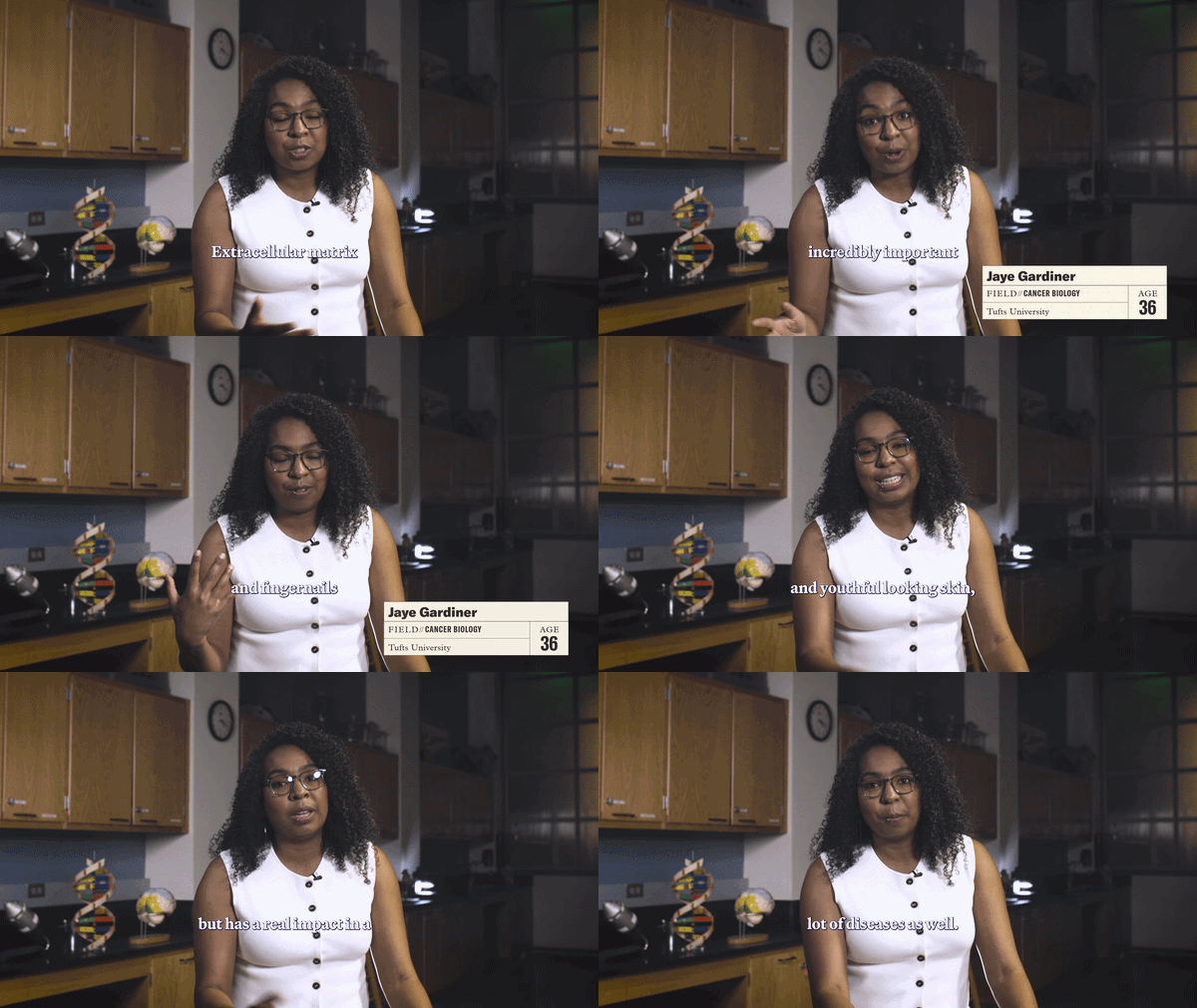
Jaye Gardiner is an assistant professor of biology at Tufts University, where her lab puts a unique spin on cancer research. The team explores whether consistent exposure to a routine virus such as the one that causes the common cold somehow changes the body’s extracellular matrix to make it more conducive to cancer growth. The extracellular matrix is made up of molecules that can make fibers and create networks and support for the body’s tissues. “I want to take the ideas and kind of run with the nonconventional connection between virology and cancer biology,” Gardiner says. Read more here and watch an interview with Gardiner about her work.
|
|
|
MOST POPULAR STORIES OF THE WEEK
|
|
-
World-first: therapy to make cells young again given to a person | 3 min read
-
America’s compact between science and politics is broken | 14 min read
-
Russia seeks mathematician’s extradition | 1 min read
|
|
Every Friday in summer we're recommending a great, freshly-published science read. Tell us what you're reading, or if you try any of our recommendations!
|
|
Salt Lakes: An Unnatural History
By Caroline Tracey. Norton, April 3, 2026.
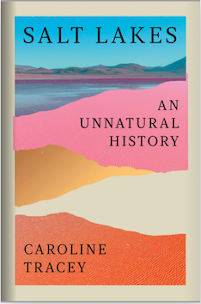 Salt Lakes by nature writer Caroline Tracey is a great fit for summer reading. The book follows her journeys exploring salt lakes—important, imperiled and very strange ecosystems—in the U.S. and beyond. Utah’s famous Great Salt Lake, where a partnership of environmentalists and Mormons are rallying to sustain a delicate ecosystem, launches Tracey’s story of learning to love these seemingly unimpressive places. Other locales featured include the dying Aral Sea, California’s artificial Salton Sea, and even Mexico City’s Lake Texcoco. Tracey pairs her evocative nature writing with an exploration of her own queer identity, putting a unique human spin on these landscapes. —Meghan Bartels, senior reporter Salt Lakes by nature writer Caroline Tracey is a great fit for summer reading. The book follows her journeys exploring salt lakes—important, imperiled and very strange ecosystems—in the U.S. and beyond. Utah’s famous Great Salt Lake, where a partnership of environmentalists and Mormons are rallying to sustain a delicate ecosystem, launches Tracey’s story of learning to love these seemingly unimpressive places. Other locales featured include the dying Aral Sea, California’s artificial Salton Sea, and even Mexico City’s Lake Texcoco. Tracey pairs her evocative nature writing with an exploration of her own queer identity, putting a unique human spin on these landscapes. —Meghan Bartels, senior reporter
|
|
|
|
As a child, I remember discovering mica on the rocks on a gravel pathway behind our house; picking violets and pressing them between book pages; and watching a clutch of birds chirp furiously for their mother from a hole in a tree. Children are innately fascinated by the natural world, and that curiosity is the wellspring for scientific exploration and reading about science. How did the natural world fascinate you as a kid? I'd love to hear about it.
Thanks for reading Today in Science! I hope you can get out into nature this weekend. And send any other questions or feedback on this newsletter to newsletters@sciam.com.
—Andrea Gawrylewski, Chief Newsletter Editor
|
|
|
|
|
Subscribe to this and all of our newsletters here.
|
|
|
|
|