Plus, the alien stories our editors keep coming back to ͏ ͏ ͏ ͏ ͏ ͏ ͏ ͏ ͏ ͏ ͏ ͏ ͏ ͏ ͏ ͏ ͏ ͏ ͏ ͏ ͏ ͏ ͏ ͏ ͏ ͏ ͏ ͏ ͏ ͏ ͏ ͏ ͏ ͏ ͏ ͏ ͏ ͏ ͏ ͏ ͏ ͏ ͏ ͏ ͏ ͏ ͏ ͏ ͏ ͏ ͏ ͏ ͏ ͏ ͏ ͏ ͏ ͏ ͏ ͏ ͏ ͏ ͏ ͏ ͏ ͏ ͏ ͏ ͏ ͏ ͏ ͏ ͏ ͏ ͏ ͏ ͏ ͏ ͏ ͏ ͏ ͏ ͏ ͏ ͏ ͏ ͏ ͏ ͏ ͏ ͏ ͏ ͏ ͏ ͏ ͏ ͏ ͏ ͏ ͏ ͏ ͏ ͏ ͏ ͏ ͏ ͏ ͏ ͏ ͏ ͏ ͏ ͏ ͏ ͏ ͏ ͏ ͏ ͏ ͏ ͏ ͏ ͏ ͏ ͏ ͏ ͏ ͏ ͏ ͏ ͏ ͏ ͏ ͏ ͏ ͏ ͏ ͏ ͏ ͏ ͏ ͏ ͏ ͏ ͏ ͏ ͏ ͏ ͏ ͏
June 12, 2026—The massive length and weight of Earth’s key underground fungi, the seven bridges of Königsberg problem and our interview with Spielberg about Disclosure Day.
—Robin Lloyd, Contributing Editor
|
|
Roy Rochlin/GettyImages
|
|
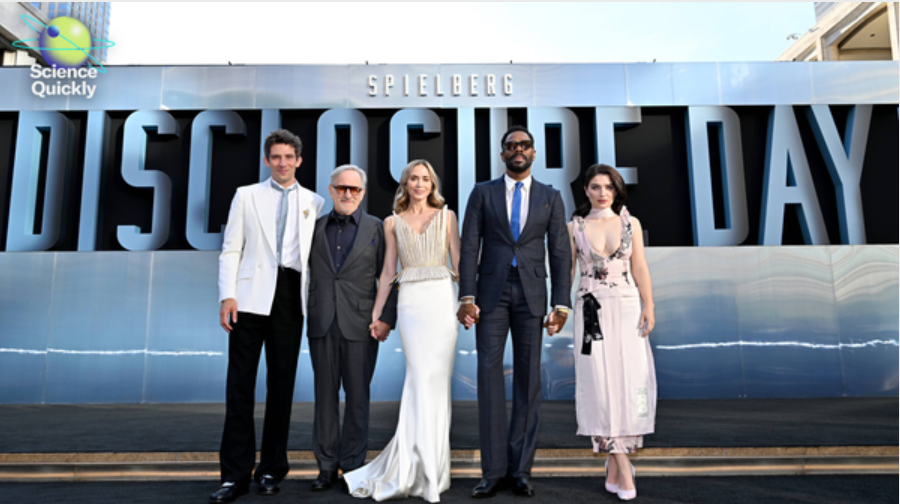
With today's release of the summer blockbuster Disclosure Day, here’s what Spielberg had to say about his movie and alien communication, in an interview with Scientific American. | 16 min listen
Can black holes send information back in time? Theoretically, yes! Extremely curved spacetime can warp cause and effect, creating channels for backward communication. | 3 min read
SpaceX’s targeted $1.75-trillion valuation rests on engineering that hasn’t happened yet. The company’s record valuation leans on making Starship flights routine and orbital AI data centers real. | 4 min read
Going beyond current CDC recommendations, the American College of Obstetricians & Gynecologists now recommends COVID, flu and two other shots for pregnant people. | 2 min read
Meet LEV-2, a baseball-sized and absurdly cute moon robot. This tiny robot might look like a high-tech hamster ball, but it could hasten lunar exploration. | 2 min read
Crowdsourced “meteor camera networks,” which connect devices that image shooting stars and other lights in the sky, are revealing more of the solar system's history. You could assist from your backyard. | 5 min read
From The Hitchhiker’s Guide to the Galaxy to Contact and beyond, here are the alien stories Scientific American editors keep coming back to. | 9 min read
|
|
Your group chat has enough opinions. Add some evidence. Subscribe to Scientific American and support this newsletter with 90 days for $1.
|
|
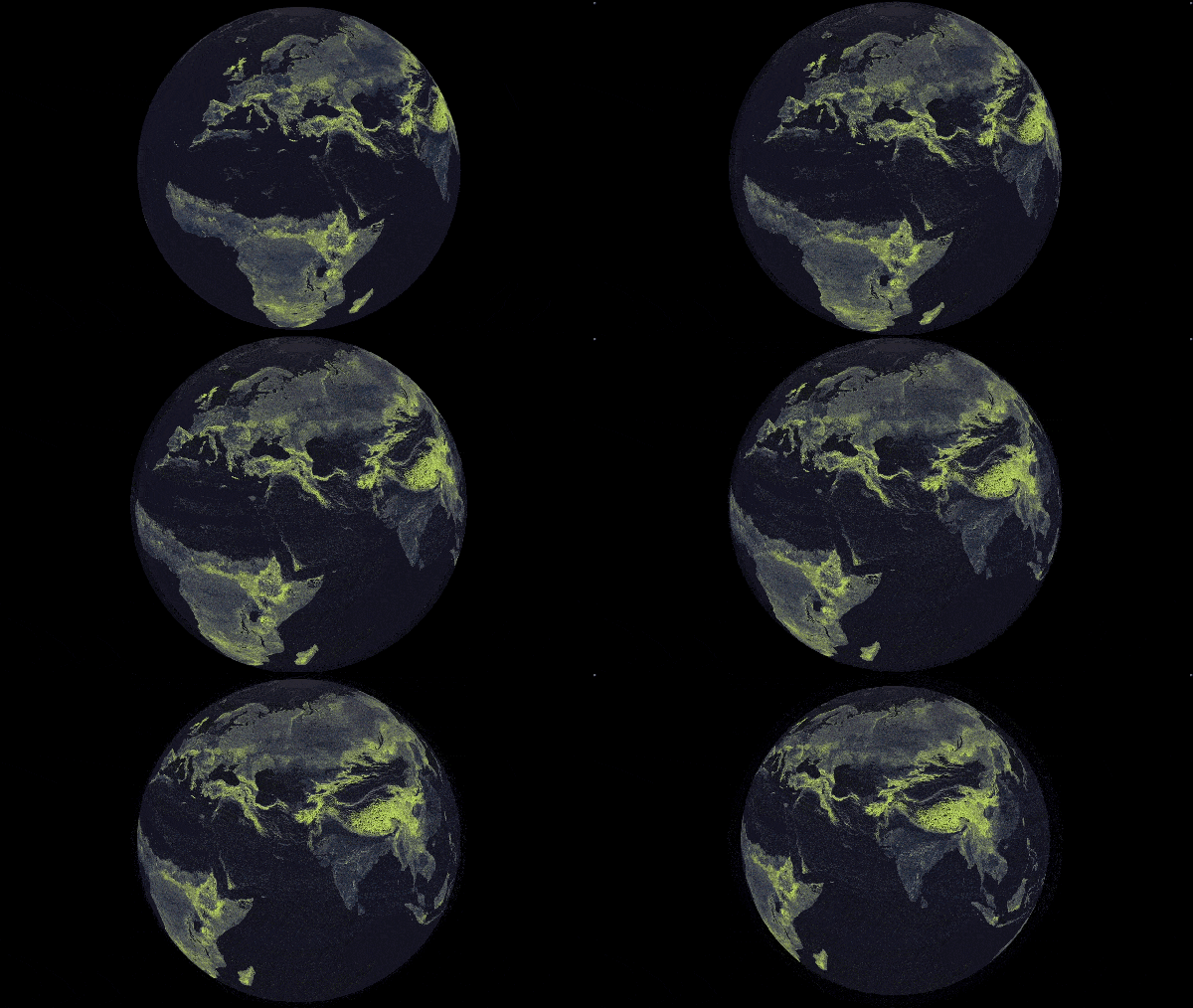
Researchers and data visualization experts plotted the dense map of arbuscular mycorrhizal fungi around the world, down to each square kilometer. Visit the interactive map here. Moritz Stefaner - Truth & Beauty/Society for the Protection of Underground Networks
|
|
Earth’s Massive Fungal Network
The total global biomass, or weight, of a type of underground fungi that help plant roots pull nutrients from soil is the equivalent of about five times the mass of all Earth’s humans combined, according to a newly published study. But it’s the estimated total length of these arbuscular mycorrhizal (AM) fungi that is most astonishing, reports Sam Macdonald, an AAAS Mass Media Fellow at Scientific American. Laid end to end, AM fungi in Earth’s topsoil would stretch from Earth to our neighboring star Proxima Centauri and back.
How they did it: A custom-built robot took more than 300,000 measurements of fungal networks. Mathematical modeling and published data helped the research team use the measurements to estimate the global fungal biomass. Data visualization yielded “an interactive mycorrhizal infrastructure map covering Earth’s landmasses down to each square kilometer,” Macdonald writes.
What the experts say: “I was kind of surprised that the numbers weren’t higher,” says Kara Skye Gibson, a postdoctoral researcher at Northern Arizona University, who was not involved in the study.
|
|
Prussian Bridge-Crossing Puzzle
A classic bridge-crossing puzzle, called the seven bridges of Königsberg, inspired new math, writes math writer and puzzle creator Jack Murtagh. During the 18th century, Prussian thinkers stymied by the puzzle wrote to the well-known Swiss mathematician Leonhard Euler for help. He initially demurred but ultimately solved the puzzle, “unaware that in the process he had birthed two new branches of math,” Murtagh writes—graph theory and topology.
The Puzzle: Find a walking path through Königsberg that crossed each of its seven bridges exactly once (the story includes images that clearly illustrate this). Euler tackled the problem by applying the process of abstraction. He reduced the problem to a bare-bones graphic by stripping it of geometric and other features that in this case were unnecessary to finding a solution.
What the experts say: “By abstracting away the quantitative particulars in the map of Königsberg, Euler opened the door to a new kind of geometric thinking unmoored from the quantitative particulars of distance and angle that had dominated the subject for millennia,” Murtagh writes.
|
|
|
|
|
|
MOST POPULAR STORIES OF THE WEEK
|
|
-
NASA’s X-59 plane goes supersonic for the first time | 2 min read
-
The Philippines earthquake is massive, but it could’ve been bigger—here’s why | 2 min read
-
Science confirms: Cats help you only when there’s something in it for them | 2 min read
|
|
Every Friday in summer we're recommending a great, freshly-published science read. Tell us what you're reading, or if you try any of our recommendations!
|
|
How Flowers Made Our World: The Story of Nature's Revolutionaries
By David George Haskell. Penguin Random House, March 24, 2026.
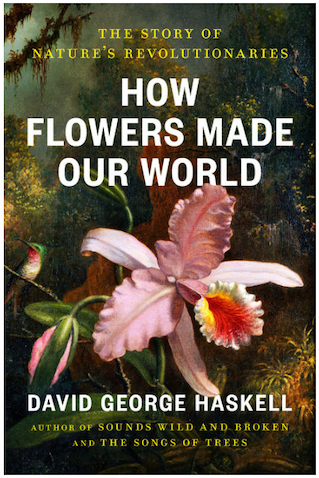 In his latest book, biologist Davide George Haskell makes a simple case: flowers are a big deal, but somehow their monumental role in our ecology is often overlooked or relegated to garden hobby. From the book’s start, where Haskell orders a drink and insists on a floral garnish, his personality blooms on every page. The writing is zippy and, with the help of snarky jokes and even some titillating history lessons, the true gravitas of the flower is revealed. Some of my favorite chapters: how the aromas of magnolias co-evolved with beetles and bees; the grasses that helped us domesticate fire; and even some speculation on how flowers, and the species that depend on them, will continue to evolve for the next thousand years. Turns out nature’s revolutionaries were right under our nose, in our gardens and vases, this whole time. —Brianne Kane, books editor In his latest book, biologist Davide George Haskell makes a simple case: flowers are a big deal, but somehow their monumental role in our ecology is often overlooked or relegated to garden hobby. From the book’s start, where Haskell orders a drink and insists on a floral garnish, his personality blooms on every page. The writing is zippy and, with the help of snarky jokes and even some titillating history lessons, the true gravitas of the flower is revealed. Some of my favorite chapters: how the aromas of magnolias co-evolved with beetles and bees; the grasses that helped us domesticate fire; and even some speculation on how flowers, and the species that depend on them, will continue to evolve for the next thousand years. Turns out nature’s revolutionaries were right under our nose, in our gardens and vases, this whole time. —Brianne Kane, books editor
|
|
|
|
Thoughts of Earth’s hidden, underground treasures reminded me of my attempt last week to descend into one of the former Capelton Mines in Québec. It turned out to be too early in the season for underground visits (I think the air would have been quite cold, for starters), but I enjoyed a quick tour of the site’s museum. From 1863 to 1907, hard-hatted workers extracted the mines’ pyrite and chalcopyrite — sources of copper, iron and sulfur. I hope your weekend affords opportunities to gain more insights into mysterious, hidden worlds.
Thanks for reading Today in Science! If you have any thoughts, questions, or ideas, please reply to this email or send them to newsletters@sciam.com.
—Robin Lloyd, Contributing Editor
|
|
P.S. If you enjoyed today’s newsletter, send it to a friend who loves science, weird facts or asking “wait…how does that work?”
|
|
|
|
|
Subscribe to this and all of our newsletters here.
|
|
|
|
|