Meet our inaugural class of Young American Scientists ͏ ͏ ͏ ͏ ͏ ͏ ͏ ͏ ͏ ͏ ͏ ͏ ͏ ͏ ͏ ͏ ͏ ͏ ͏ ͏ ͏ ͏ ͏ ͏ ͏ ͏ ͏ ͏ ͏ ͏ ͏ ͏ ͏ ͏ ͏ ͏ ͏ ͏ ͏ ͏ ͏ ͏ ͏ ͏ ͏ ͏ ͏ ͏ ͏ ͏ ͏ ͏ ͏ ͏ ͏ ͏ ͏ ͏ ͏ ͏ ͏ ͏ ͏ ͏ ͏ ͏ ͏ ͏ ͏ ͏ ͏ ͏ ͏ ͏ ͏ ͏ ͏ ͏ ͏ ͏ ͏ ͏ ͏ ͏ ͏ ͏ ͏ ͏ ͏ ͏ ͏ ͏ ͏ ͏ ͏ ͏ ͏ ͏ ͏ ͏ ͏ ͏ ͏ ͏ ͏ ͏ ͏ ͏ ͏ ͏ ͏ ͏ ͏ ͏ ͏ ͏ ͏ ͏ ͏ ͏ ͏ ͏ ͏ ͏ ͏ ͏ ͏ ͏ ͏ ͏ ͏ ͏ ͏ ͏ ͏ ͏ ͏ ͏ ͏ ͏ ͏ ͏ ͏ ͏ ͏ ͏ ͏ ͏ ͏ ͏
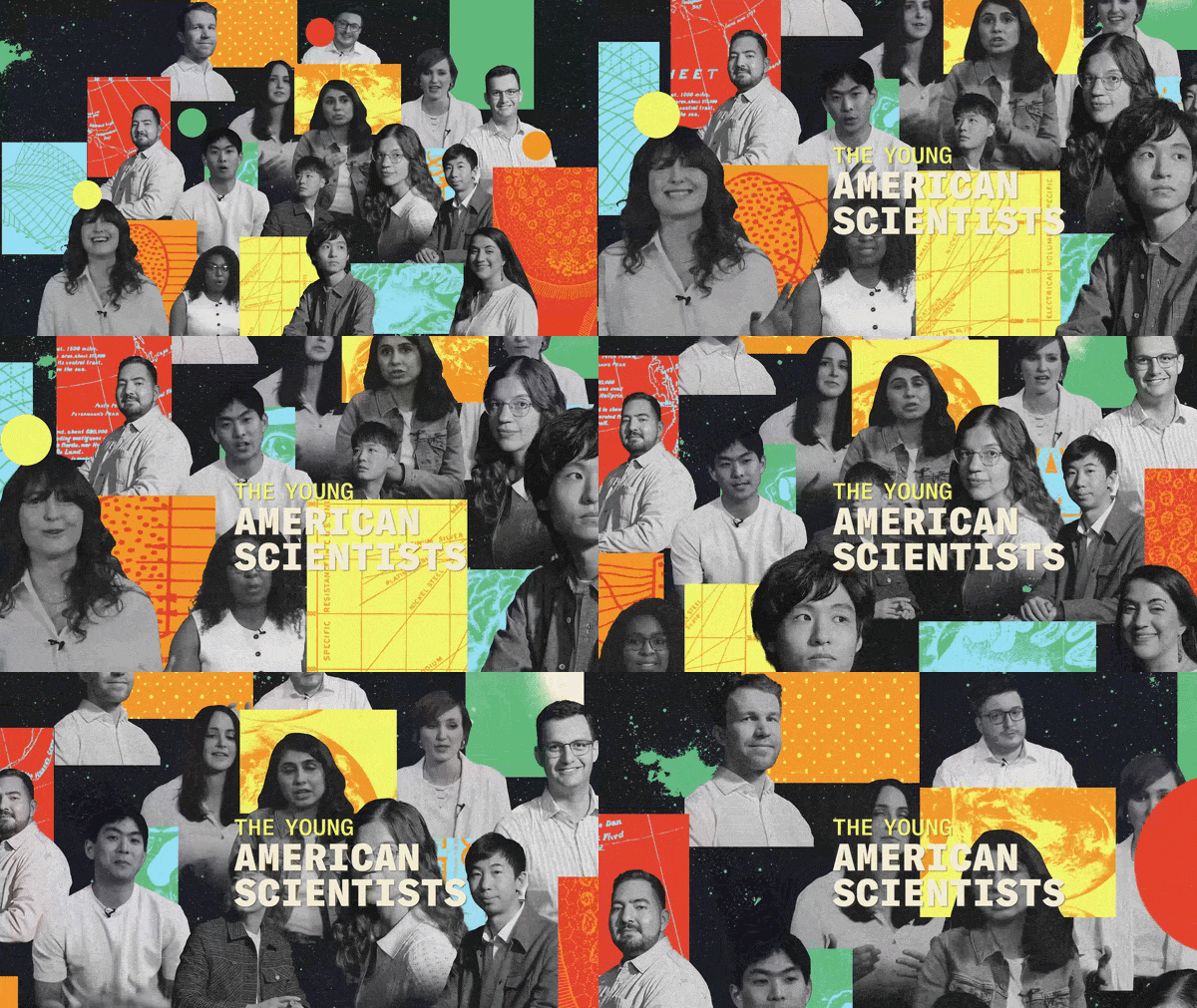
June 16, 2026—Today, we announce our inaugural class of Young American Scientists. Plus, ways you can boost your mental stamina, and math predicts humans' extinction.
—Andrea Gawrylewski
Chief Newsletter Editor
|
|
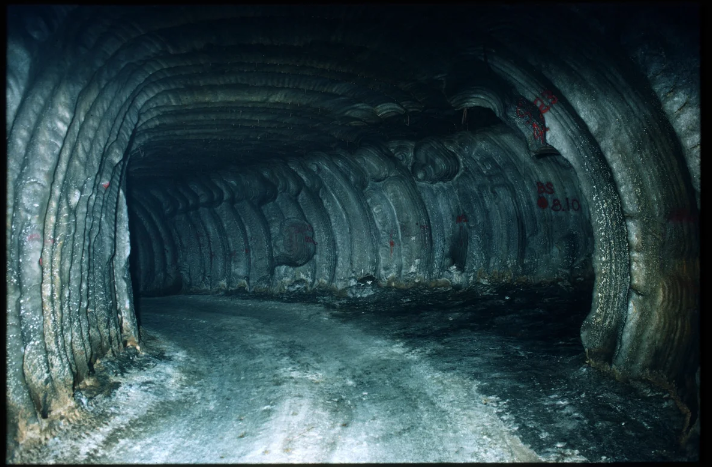
In this June 1, 1980, photo, tunnels wind through subterranean salt caverns created to house the Strategic Petroleum Reserve in West Hackberry, La. Robert Nickelsberg/Liaison/Getty Images
|
|
-
To keep exports flowing and reduce domestic gas prices while a fifth of the world’s oil supply remains trapped behind the Strait of Hormuz, the Trump administration has pulled out 66 million barrels and counting from the Strategic Petroleum Reserve, a set of colossal underground salt caverns in Texas and Louisiana. | 3 min read
-
More on Iran: Tungsten is a coveted metal for military uses. Restoring domestic supply could help with ongoing munitions shortages. | 4 min read
-
Glaciers are teeming with life—new research has found more than 150 different species that live in and on the ice. | 5 min read
-
How many cameras are needed, at minimum, to cover a soccer field as accurately as possible, and where is the best place to position them to guarantee that every action of a World Cup match is recorded? As it turns out, the answer is a mathematical puzzle. | 4 min read
-
-
The U.S. restricted Anthropic’s powerful Fable 5 AI model, which was built to help with advanced cybersecurity work, soon after it was released. This is the dilemma at the heart of AI security: the same tools can aid both defenders and attackers. | 4 min read
-
-
|
|
This newsletter is powered by caffeine, existential curiosity and subscribers to Scientific American. Join us: 90 days for just $1
|
|
The Future of U.S. Science
It’s a tumultuous time for science. Last year the NIH unexpectedly terminated nearly 5,900 grants. Other research grants at the NSF have been withheld from major universities. And all 22 members of the advisory board that advises and oversees NSF were suddenly fired in April with no warning. Such drastic changes have rocked scientists. David Ewalt, the editor in chief of Scientific American, wanted to devote an issue of the magazine to the individuals who will face some of the most challenging career prospects in the current climate: young scientists. To that end, he devised the Young American Scientists project. We asked hundreds of the world’s top scientists whom they viewed as the future of their field and crunched our own numbers to find candidates. In the end, we whittled our selection down to 28 groundbreaking researchers who are all starting out in their careers, and they’re all doing research right here in the U.S.
How we picked: We started by asking a seemingly simple question: Who are the best, most intriguing early-career scientists working in the U.S. today? To find potential candidates, we used the scholarly works database OpenAlex to help identify the top cited academic papers published since 2015, and then filtered the list down to only include novel works of science performed by researchers whose estimated career length was 13 years or less. At the same time, we reached out to some of the world's top researchers and asked them for recommendations of bright young scientists in their field. SciAm editors considered dozens of candidates and also used an LLM (Qwen 3.5) to evaluate how well the nominees' published works stood up to specific criteria (for instance, whether their work had broad impact or was totally new in their field).
Meet the honorees: You can explore the work of all members of our inaugural class of Young American Scientists here. They work in some fascinating fields, including cancer biology, deep space, artificial intelligence, human behavior, and more. In the coming days, I’ll introduce you to many of these impressive people. And you can learn about how we selected our honorees in a webinar on Thursday with David Ewalt and other editors who worked on the project.
|
|
Keep Sharp
Cognitive endurance (focusing for long stretches) generally improves with deliberate, focused and progressively more challenging training—which kids in wealthy nations usually get in school. But can cognitive performance be boosted in kids from disadvantaged backgrounds? Behavioral scientists tested a group of more than 1,000 elementary school students in India. They found that 20 minutes of continuous cognitive practice of math problems or mazes and puzzles sharply improved the students’ ability to maintain performance.
Why this matters: Members of disadvantaged groups, who are likely to have received less practice in sustaining focus, show more rapid declines in performance over time in other contexts. For example, data entry workers make more errors as their shifts progress and less educated workers show much steeper declines. Even voting behavior reflects these patterns: studies have found that, when a given proposition appears later in the ballot in California, voters are more likely to choose the default option.
What the experts say: “Activities as diverse as doing challenging puzzles, learning a musical instrument or even playing certain video games might help build cognitive endurance, as long as they require sustained, deliberate and proactive mental effort,” write Heather Schofield and Supreet Kaur, the researchers who conducted the above study. “This training could benefit anyone who may be exposed to fewer periods of sustained focus as the world shifts toward greater engagement with endless scrolls of bite-size social media.”
|
|
|
|
|
|
A SPECIAL EVENT WITH SCIENTIFIC AMERICAN
|
|
|
|
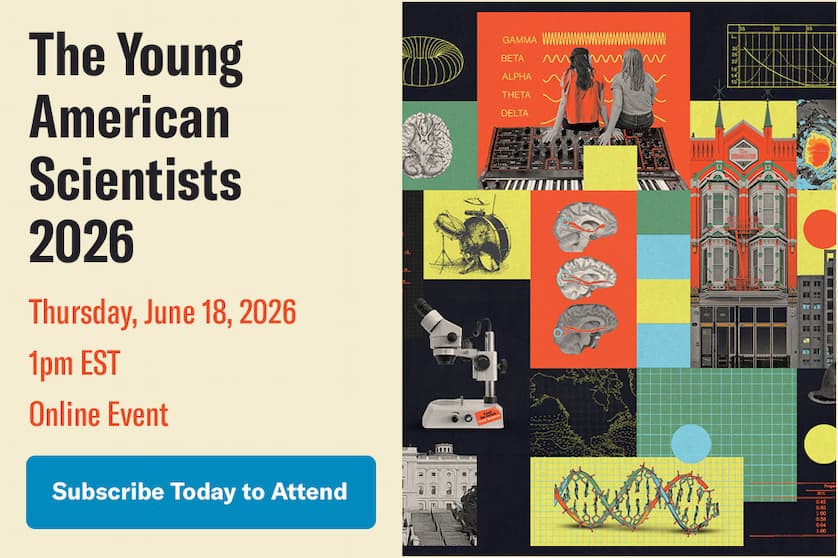
The Young American Scientists 2026
|
|
Scientific American’s first-ever Young American Scientists issue takes an unflinching look at the threats facing science today and offers a hopeful look at what comes next. Join Scientific American editors David Ewalt, Megha Satyanarayana, Dan Vergano and Ari Sen for an engaging discussion on the state of American science and how they found the 28 promising young researchers whose work may one day change the world. Learn more and register here.
|
|
|
|
|
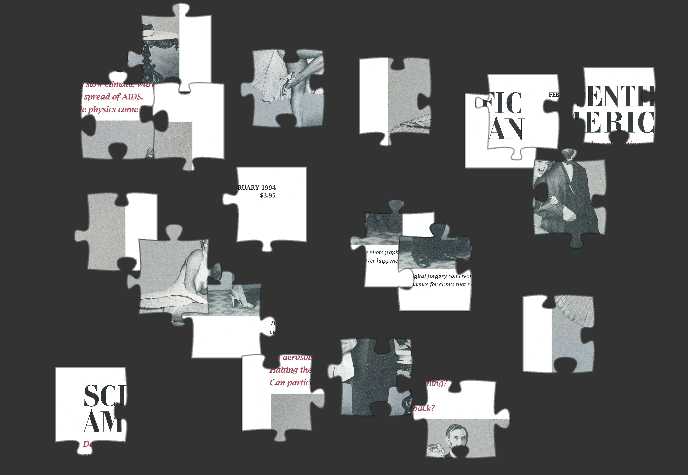
Unscramble this image of our cover from the February 1994 issue. The reassembled image shows the historic meeting of Abraham Lincoln and Marilyn Monroe—which, of course, never happened, exemplifying the rise in digital forgeries.
|
|
I am really excited to introduce you to our inaugural Young American Scientist honorees this week. They are a creative and driven bunch, and I know you'll be super impressed getting to know their work. Read through their profiles and send any questions you might have for them (one, or all!) to the address below. Long live the enterprise of science!
|
|
—Andrea Gawrylewski, Chief Newsletter Editor
|
|
|
|
|
Subscribe to this and all of our newsletters here.
|
|
|
|
|