How well do prediction markets stack against expert insight? ͏ ͏ ͏ ͏ ͏ ͏ ͏ ͏ ͏ ͏ ͏ ͏ ͏ ͏ ͏ ͏ ͏ ͏ ͏ ͏ ͏ ͏ ͏ ͏ ͏ ͏ ͏ ͏ ͏ ͏ ͏ ͏ ͏ ͏ ͏ ͏ ͏ ͏ ͏ ͏ ͏ ͏ ͏ ͏ ͏ ͏ ͏ ͏ ͏ ͏ ͏ ͏ ͏ ͏ ͏ ͏ ͏ ͏ ͏ ͏ ͏ ͏ ͏ ͏ ͏ ͏ ͏ ͏ ͏ ͏ ͏ ͏ ͏ ͏ ͏ ͏ ͏ ͏ ͏ ͏ ͏ ͏ ͏ ͏ ͏ ͏ ͏ ͏ ͏ ͏ ͏ ͏ ͏ ͏ ͏ ͏ ͏ ͏ ͏ ͏ ͏ ͏ ͏ ͏ ͏ ͏ ͏ ͏ ͏ ͏ ͏ ͏ ͏ ͏ ͏ ͏ ͏ ͏ ͏ ͏ ͏ ͏ ͏ ͏ ͏ ͏ ͏ ͏ ͏ ͏ ͏ ͏ ͏ ͏ ͏ ͏ ͏ ͏ ͏ ͏ ͏ ͏ ͏ ͏ ͏ ͏ ͏ ͏ ͏ ͏
June 8, 2026—Prediction markets are gambling on global science issues. Plus, microbe "cities" fuel carbon in the oceans, and high fashion is going to the moon. Welcome to a new week of discovery!
—Andrea Gawrylewski
Chief Newsletter Editor
|
|
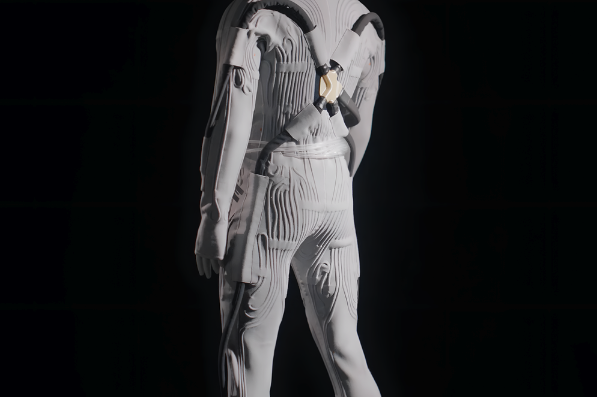
Axiom Space and Prada partnered on the Liquid Cooling and Ventilation Garment (LCVG). Axiom Space and Prada
|
|
Prada helped design this onesie to keep NASA’s Artemis astronauts cool on the moon. Called the Liquid Cooling and Ventilation Garment, the suit is lined with tubing that can circulate cold water around the astronauts’ bodies. | 2 min read
New research suggests that GLP-1 drugs may lower the chance of being diagnosed with cancer, perhaps linked to the drug's effect on inflammation. | 5 min read
NASA’s experimental X-59 plane flew supersonic for the first time on June 5, reaching a peak speed of 713 miles per hour at an altitude of 43,400 feet—equivalent to Mach 1.1. | 2 min
Anthropic, the maker of the Claude chatbot, has claimed AI systems may be on the cusp of what the company calls recursive self-improvement—the point at which they can design and build their own successors with little human input. | 3 min read
A magnitude-7.8 earthquake that struck offshore of the Philippines island of Mindanao at 7:37 A.M. local time is the largest earthquake to hit anywhere in the world so far this year. | 3 min read
Smog linked to wildfires is getting worse across much of the U.S., playing a role in more than 300 additional premature deaths every year since 2013, researchers say. | 2 min read
An experiment with 2,520 participants confirms physicist Richard Feynman’s answer to every diner’s dilemma: do I want to try something new? | 4 min read
Last week, President Trump invoked a national defense law to steer nearly $700 million to support coal power plants and exports. | 2 min read
|
|
This newsletter is made possible by subscribers to Scientific American. Join today to support independent science journalism and get full access to every story: 90 days for just $1.
|
|
Betting on Science
Prediction markets like Polymarket and Kalshi are booming. In these public betting spaces, anyone can place a bet on nearly any event in life—of course sports outcomes, but also things like the price of a dozen eggs, the highest grossing movie of the summer, or how many posts Elon Musk will publish on X today. Prediction markets sometimes outperform polling when it comes to political elections. But what about matters of science?
Place your bets: Some science-oriented prediction markets at the moment:
-
The next global pandemic. At the start of the hantavirus outbreak in early May, a Polymarket market put the odds of a global hantavirus pandemic this year at 19 percent. That has now sunk to 5 percent. Users in these markets do seem to reference WHO updates and case numbers. But researchers usually forecast disease spread using mathematical models and a variety of data, including hospital surveillance, genomic data and even school absences.
-
Extreme weather. Some betters are “reasonably in line” with climate experts in these markets, one researcher said. One Polymarket market predicts a 34 percent chance of 2026 being the hottest year on record, and a 60 percent chance of it being the second. Data-based estimations show similar certainties.
-
Quantum computing. Some Polymarket users are betting on when a quantum computer will be able to break the Bitcoin market by calculating a private key to one of its online wallet addresses. Though users only give it a 3 percent chance by the end of this year, experts say that may be optimistic.
|
|
Microbe Cities
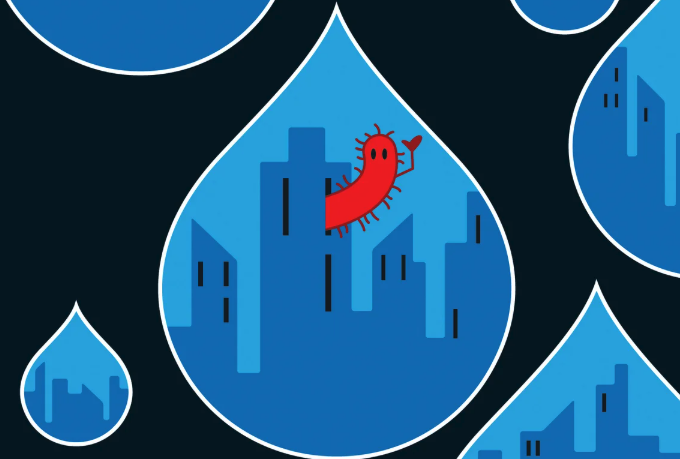
As the shells of dead plankton, fish poop, dust particles, and other debris fall through ocean water and descend to the sea floor, it all carries with it the atmospheric carbon the plankton used to make their calcite shells. This “marine snow” is one of the ways the ocean stores carbon. But microscopic “cities” of microbes inhabit this snow and feed on the plankton shells, releasing that carbon into the ocean water. Scientists recreated marine snow on a chip in the lab to measure how the microenvironments surrounding the organisms determined how much plankton shells they dissolve.
Why this matters: The ocean is home to an incomprehensible number of microorganisms. One shot-glass full of seawater can contain millions of bacterial cells. So these organisms can have an impact on global levels of carbon. Many oxygen-breathing microbes feed on carbon, then release carbon dioxide, which turns into carbonic acid in seawater. Carbonic acid is the main driver of ocean acidification which leads to coral bleaching.
What the experts say: “Large-scale biogeochemical processes often depend on very small-scale interactions,” says Hongjie Wang, an oceanographer at the University of Rhode Island, who was not involved in the study.
|
|
|
|
|
-
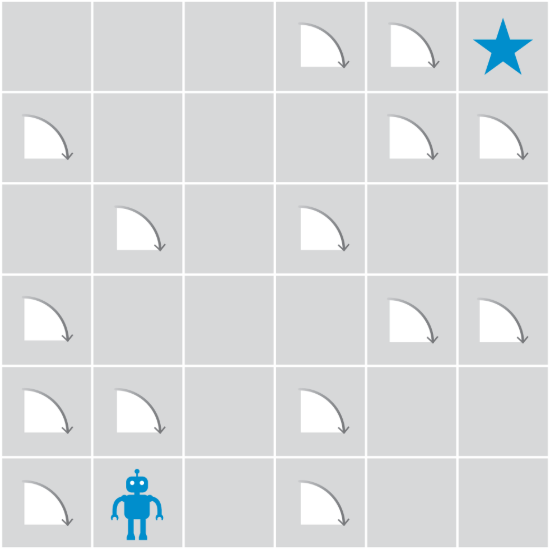
Guide the robot to the star. The robot may move either one or two cells at a time in whichever direction it is currently facing. It begins facing upward. If it ever stops on a cell containing an arrow, it automatically turns 90 degrees clockwise (staying in the arrow cell), and the next moves will be in its new direction until it lands on another arrow. If the robot passes over an arrow cell without stopping on it, then the arrow has no effect.
Click here for the solution.
|
|
The war in Iran is prompting airlines to consider alternative sources of aviation fuel. | WIRED
Restaurants in New England are prioritizing invasive green crabs on their menus. | Boston Globe
Climate change is changing Earth's rotation and threatening the accuracy of GPS. | Tech Times
|
|
I know I'll be thinking about that liquid-cooled onesie this summer while I'm commuting on the sticky New York City subway. How long it takes Prada to release self-cooling garments to us non-astronauts is one prediction market I would watch closely.
Thanks for joining me again this week. I love hearing from you, so feel free to reach out with any thoughts, ideas or feedback on this newsletter at newsletters@sciam.com. Be back tomorrow.
|
|
—Andrea Gawrylewski
Chief Newsletter Editor
|
|
|
|
|
Subscribe to this and all of our newsletters here.
|
|
|
|
|