They're going to more favorable social climates and better work-life balance ͏ ͏ ͏ ͏ ͏ ͏ ͏ ͏ ͏ ͏ ͏ ͏ ͏ ͏ ͏ ͏ ͏ ͏ ͏ ͏ ͏ ͏ ͏ ͏ ͏ ͏ ͏ ͏ ͏ ͏ ͏ ͏ ͏ ͏ ͏ ͏ ͏ ͏ ͏ ͏ ͏ ͏ ͏ ͏ ͏ ͏ ͏ ͏ ͏ ͏ ͏ ͏ ͏ ͏ ͏ ͏ ͏ ͏ ͏ ͏ ͏ ͏ ͏ ͏ ͏ ͏ ͏ ͏ ͏ ͏ ͏ ͏ ͏ ͏ ͏ ͏ ͏ ͏ ͏ ͏ ͏ ͏ ͏ ͏ ͏ ͏ ͏ ͏ ͏ ͏ ͏ ͏ ͏ ͏ ͏ ͏ ͏ ͏ ͏ ͏ ͏ ͏ ͏ ͏ ͏ ͏ ͏ ͏ ͏ ͏ ͏ ͏ ͏ ͏ ͏ ͏ ͏ ͏ ͏ ͏ ͏ ͏ ͏ ͏ ͏ ͏ ͏ ͏ ͏ ͏ ͏ ͏ ͏ ͏ ͏ ͏ ͏ ͏ ͏ ͏ ͏ ͏ ͏ ͏ ͏ ͏ ͏ ͏ ͏ ͏
June 22, 2026—U.S. scientists are being lured abroad, plants can "hear" the rain coming, and what to do if you get bit by a tick. Welcome to another week of discovery!
—Andrea Gawrylewski
Chief Newsletter Editor
|
|
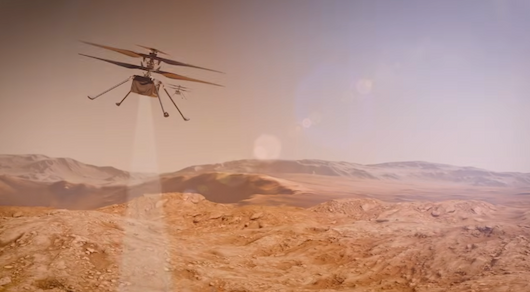
A still taken from a NASA video about the SkyFall Mars helicopter mission. NASA/JPL-Caltech
|
|
Tiny investment, enormous universe: subscribe to Scientific American for 90 days for just $1 and help keep this newsletter going.
|
|
Plants "Hear" Rain
How much can plants sense the world around them? According to a recent study, the sound of rain causes rice seeds to sprout faster than they would otherwise— a plant version of “hearing.”
How it works: Cellular structures called statoliths help plants sense their surroundings. They’re envelopes of starch that shift and settle at the bottom of plant cells, which help plants detect changes in their position and stability—and tell germinating seeds in which direction to grow their roots. The study co-authors theorized that rain sounds underwater might produce large enough vibrations to jostle the statoliths and possibly prompt germination in rice seeds. So, they played rain sounds for about 8,000 rice seeds and indeed found they germinated between 30 and 40 percent faster than seeds that were sitting in silence.
What the experts say: “I think this paper is a really significant advance in our understanding of how plants respond to the acoustic energy in their environment,” says Heidi Appel, a biologist at the University of Houston, who was not involved in the new work. “This is the first study of its kind to measure the vibrational impact of raindrops carefully and realistically.”—Emma Gometz, newsletter editor
|
|
Brain Drain
For the last few newsletters, I've been writing about the turmoil facing American science since the start of President Trump’s second term. In response to funding cuts and new grant restrictions, many scientists are considering moving abroad to more research-friendly climates. Three quarters of more than 1,600 U.S. researchers who responded to a Nature poll conducted last March were thinking about moving overseas. The trend was especially apparent among early-career scientists: of the 690 postdocs and 340 Ph.D. students who responded, 803 said they were considering it. And many countries are working hard to recruit STEM researchers in the U.S.
The offers: Canada is investing more than $1 billion to get foreign scientists to come onboard and Canadians to come home. The European Union has devoted hundreds of millions to programs designed to attract scientists from other lands. The most geographically expansive is Choose Europe for Science, which was launched last May and includes incentives for younger researchers. The continent-scale initiative is complemented by 100 more from individual countries and regions, and Europe has expedited visa and residency processes so that scientists can capitalize on the opportunities with less bureaucracy.
Why this matters: The flow of smart, motivated people from outside America into the country has made the U.S. a global leader in science and innovation, says Mushfiq Mobarak, an economics professor at Yale University. Since World War II, the States have been the premier destination for the world’s STEM talent. “And then for the past couple of years I think the U.S. has made itself feel very unwelcoming to that science [and] engineering talent,” he says. Losing bright minds to other countries comes with a steep cost. “What is the discovery that we’ve left on the table, whether it’s cutting the budget or losing the talent of an individual?” asks Joanne Padrón Carney, chief government relations officer at the American Association for the Advancement of Science. “What have we lost?”
|
|
|
|
|
|
YOUNG AMERICAN SCIENTISTS
|
|
At his laboratory at the Salk Institute for Biological Studies in La Jolla, Calif., biophysicist Adam Bowman studies the activity of brain neurons at the scale of nanoseconds in a live organism (fruit flies so far). During his PhD work Bowman designed a method called electro-optic fluorescence lifetime imaging microscopy, which captures images through an electro-optic crystal—basically a chunk of transparent glass shot through with electric current. "Biology is a really exciting playground to think about what can we measure that hasn't been possible before," Bowman says. Click here to read more about his work and watch a short interview.
And read the rest of the Young American Scientist profiles here.
|
|
-
In a single round-robin tournament, every player faces every other player exactly once. Call a player a “boss” if every other player in the tournament either lost to the boss or lost to someone who lost to the boss (or both). Curiously, every round-robin tournament has at least one boss. Why? (Assume games cannot end in a tie.)
Click here for the solution.
|
|
The U.S. Drug Enforcement Administration permitted hundreds of thousands of fentanyl pills to hit the streets of New Mexico between 2023 and 2025, according to an investigation. | The Associated Press
The Major Oak tree that grew in England's Sherwood Forest for some 800 to 1,200 years has died. | The New York Times
One neighborhood in Washington D.C., dubbed the Itty Bitty Mosquito Population Committee, is trying to get rid of all mosquitos. | CNN
|
|
It's no small thing to uproot your life and move to another country. I'll be curious to see in the coming years how many scientists decide to brave the transition in search of a more pro-science climate and better work-life balance.
We always love to hear from you. Please reach out with any thoughts, ideas or feedback related to this newsletter at newsletters@sciam.com.
|
|
—Andrea Gawrylewski, Chief Newsletter Editor
|
|
P.S. If this newsletter made you think, laugh or spiral into an existential Google search, consider forwarding it to a friend. We’d love to have them here.
|
|
|
|
|
Subscribe to this and all of our newsletters here.
|
|
|
|
|