Friday, March 1, 2024

SpaceX Starship docking system readies for moon missions in tests with NASA

NASA's Jeanette Epps waited 6 years for her space mission | NASA tests Starship docking system for moon missions | SpaceX to launch Crew-8 to the ISS March 2: Watch live
Created for ceo.studentlike.spuniv@blogger.com |  Web Version
February 29, 2024
CONNECT WITH SPACE.COM FacebookXInstagramYoutube
Space.com
Something amazing every day.SIGN UP ⋅   WEBSITE
 
The Launchpad
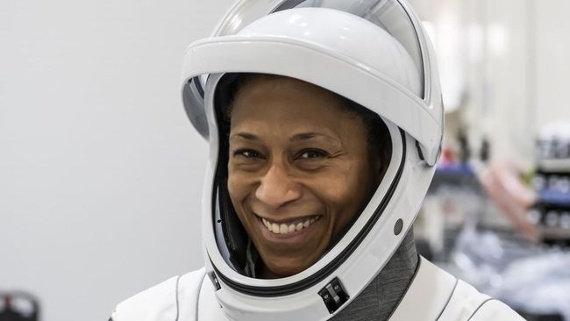
NASA's Jeanette Epps waited 6 years for her space mission
(SpaceX)
NASA astronaut Jeanette Epps had an unusual path to space: She waited an extra six years to fly. Epps will finally fly to the International Space Station (ISS) no earlier than Saturday night (March 2) on the SpaceX Crew-8 mission for NASA, performing the second long-duration mission by a Black woman on the orbiting complex. But Epps was supposed to get there as soon as June 2018; that timeline was delayed twice, following reassignments from Russia's Soyuz and Boeing's Starliner spacecraft.
Full Story: Space (2/29) 
Email
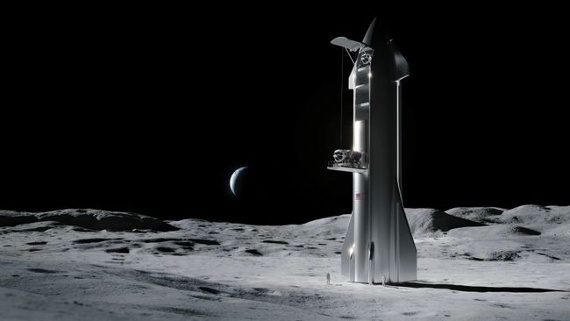
NASA tests Starship docking system for moon missions
(SpaceX)
Engineers at NASA's Johnson Space Center spent 10 days using hardware from the Starship lander and NASA's Orion orbiter (designed by Lockheed Martin) at "various approach angles and speeds," NASA officials said in a release. "These real-world results, using full-scale hardware, will validate computer models of the moon lander's docking system," agency officials wrote.
Full Story: Space (2/28) 
Spaceflight
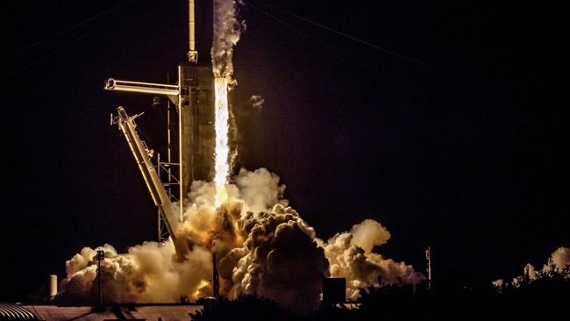
SpaceX to launch Crew-8 to the ISS March 2: Watch live
(Space.com / Josh Dinner)
The crew members' spacecraft, SpaceX's Crew Dragon Endeavor, will ride atop a Falcon 9 rocket from the historic Launch Complex-39A at NASA's Kennedy Space Center in Florida. Liftoff is currently scheduled for no earlier than Saturday, March 2 at 11:19 p.m. EST (0419 GMT on March 3). Liftoff had been scheduled for early Friday morning (March 1), but bad weather forced a delay.
Full Story: Space (2/28) 
Email
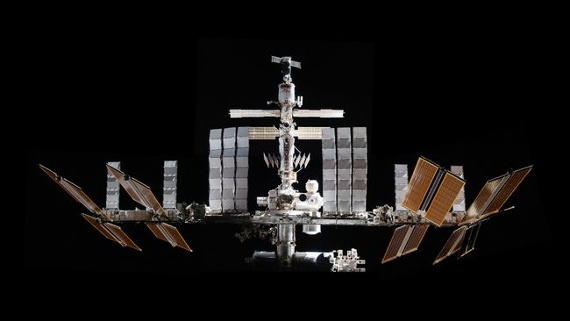
Air is leaking from a Russian ISS module
(NASA Johnson)
The space station has a leak at the aft end of the Russian module where the nation's Progress spacecraft dock to the orbital lab, but there is "no impact to crew."
Full Story: Space (2/29) 
Email
Science & Astronomy
Star's planet-forming disk has 3x more water than Earth
(ALMA (ESO/NAOJ/NRAO)/S. Facchini et al.)
Astronomers have discovered that a planet-birthing disk of gas and dust that surrounds an infant star is drenched with enough water to fill Earth's oceans three times over.
Full Story: Space (2/29) 
Email
SpaceX
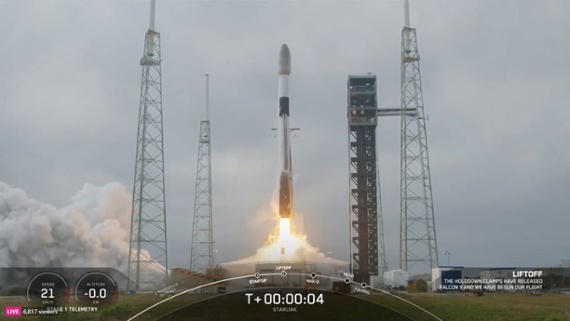
SpaceX launches Leap Day Starlink satellites into orbit
(SpaceX)
SpaceX lofted a new batch of Starlink internet satellites into orbit from Florida's Space Coast today (Feb. 29) in a Leap Day launch that came after the company delayed its first astronaut launch of the year.
Full Story: Space (2/29) 
Email
Entertainment
Magic on the moon: Q&A with David Copperfield (exclusive)
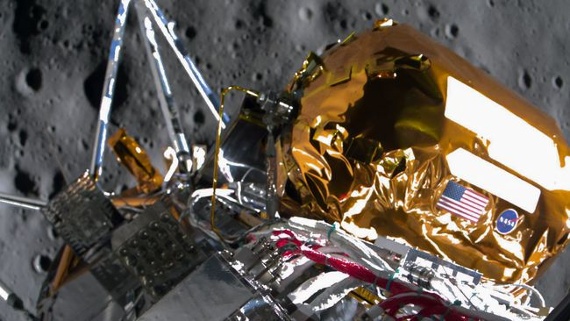
(Intuitive Machines)
A little bit of magic landed on the moon last week - or actually, quite a lot of it. Aboard Intuitive Machines' robotic Odysseus lunar lander, which last Thursday (Feb. 22) became the first American spacecraft since 1972 to touch down on the moon, are the archives of magician David Copperfield.
Full Story: Space (2/29) 
Email
Star Trek
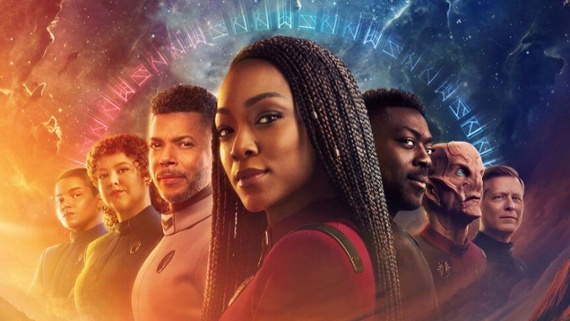
Watch trailer for 'Star Trek: Discovery's final season
(Paramount+)
It's been a long and somewhat bumpy road for Paramount Plus' "Star Trek: Discovery" since it first touched down on the streaming platform back in 2017 as the first "Star Trek" small screen enterprise in 12 years. It's taken a couple of seasons to moderate its tone and style but it seems on track to bring it all home safely starting on April 4, to stick the landing and satiate most temperamental fans.
Full Story: Space (2/28) 
Email
 
Sign Up  |    Update Profile  |    Unsubscribe
Privacy Policy  |    Cookies Policy  |    Terms and Conditions
CONTACT US: FEEDBACK  |    ADVERTISE
Future
Future US LLC ©
Full 7th Floor, 130 West 42nd Street, New York, NY, 10036

Today in Science: An Iconic Album Cover's Pulsar Image Sparks a Journey

Today In Science

February 29, 2024: Rethinking car culture, our senior graphics editor's journey to discover the origin of a pulsar image on an iconic album cover, and giant crabs.
Robin Lloyd, Contributing Editor
TOP STORIES
Big, Old Crab
More than a decade ago on New Zealand's North Island, an amateur fossil collector found the remnants of a male crab, whole and perfectly preserved, with a massive pincer that could have taken your finger off. The specimen's carapace measured 20 centimeters (eight inches) and it sported a claw of the same length, making it the largest fossil claw of any crab ever recorded, reports science writer Kate Evans. The specimen, recently dubbed Pseudocarcinus karlraubenheimeri after the teen who discovered it, turned out to be a brand-new species of giant crab that sidled around in the Miocene epoch, about nine million years ago. The only living descendants of the newly described species are even more spectacular. Called southern giant crabs (Pseudoocarcinus gigas), the males are endowed with one oversized pincer that can approach half a meter (20 inches) long. And they can weigh as much as a small child—12 kilograms, or 25 pounds.

Why this matters: The marine fossil record primarily contains information about the shallows, but the giant crab Pseudocarcinus karlraubenheimeri lived several hundred meters below the surface, where it might have been prey for early whales, dolphins and seals. And it was an important predator in its own right. 

What the experts say: "Gigantic or not, crabs are a spectacular example of the complexities of evolution," says crustacean expert Javier Luque, who was not involved in new research describing the fossil crab species. "They have an astonishing diversity of form and function…It is really exciting to see more fossils of this group coming to light."
Top Story Image
Illustration of a modern-day southern giant crab, Pseudocarcinus gigas, which can reach the weight of a small child. Credit: The Picture Art Collection/Alamy Stock Photo

Who Gets an Abortion?

Commonly held assumptions about who gets an abortion in the U.S. do not align with reality, according to new research reported by Scientific American's Meghan Bartels. In-depth, freeform interviews analyzed by sociologist Tricia Bruce and colleagues show that the imagined person getting an abortion is often a young white woman who wants to establish financial stability before having a child. But most people getting an abortion are in their 20s, and they're disproportionately likely to be Black or Hispanic or Latinx. More than half have already given birth at least once. Older data suggest that more than half of abortion seekers identify as religious. Financial concerns may drive their decisions, but these tend to be concerns about making ends meet rather than long-term earning potential. 

Why the disconnect?: Public narratives about abortion have been shaped by the stigmatization and silencing of people who have one, says sociologist Rachel Jones, who was not involved in Bruce's study. 

Why it matters: Study participants who either had an abortion or knew someone who had were more likely to oppose abortion restrictions and to instead favor letting individuals choose for themselves. So, connecting people with the true narrative of abortion in the U.S. may result in policy changes, Bruce says.
MULTIMEDIA
Science, Quickly
Album art history

Learn about a journey made by Scientific American senior graphics editor Jen Christiansen to uncover the origin of the pulsar image on the Joy Division's iconic "Unknown Pleasures" album cover.
TODAY'S NEWS
• How humans lost their tails. | 4 min read
• Is it safe to ramp up ocean ecosystems' absorption of climate pollution from the sky? | 2 min read
• "Consent" searches of motorists sidestep privacy rights and don't stop drug trafficking. | 4 min read
More News
EXPERT PERSPECTIVES
• Coast-to-coast, the cars and trucks we drive cause about 16 percent of greenhouse gas emissions. Motor vehicles cause significant air pollution, worsening asthma and heart disease rates, write the editors of Scientific American in a recent essay. And motor vehicle collisions are a leading cause of death in people ages one to 44. After a century of America's car culture claiming a central place in our lives, we need to rethink our world into one not hitched to the automobile. Recommendations for this rethink include the following: giving sidewalks and bike trails the same priority as roads in our cities and suburbs; incentives for e-bikes and other financial breaks to eschew second cars and the congestion they cause; on-street parking pricing to incentivize public transit; and public service announcements that extol biking short distances and note the time saved on public transport spent reading or answering e-mails. | 5 min read
More Opinion
Happy Leap Day! Why do we do this, again? We add an extra day to February every four years to keep our calendar in sync with the cosmos. Mostly. To learn about the exceptions, check out this recent essay by astronomer and science communicator Phil Plait.
If you have any feedback, suggestions, or spot any errors while reading these newsletters, please reach out to us.
—Robin Lloyd, Contributing Editor
Scientific American
Subscribe to this and all of our newsletters here.

Scientific American
One New York Plaza, New York, NY, 10004
Support our mission, subscribe to Scientific American here

Scientist Pankaj

Day in Review: NASA Selects Far-Infrared Telescope as First in New Mission Class

By studying radiant energy that only emerges in the far-infrared, PRIMA will address a wide range of questions about the universe.  ...