Humanmade mirror microbes could bring us all down ͏ ͏ ͏ ͏ ͏ ͏ ͏ ͏ ͏ ͏ ͏ ͏ ͏ ͏ ͏ ͏ ͏ ͏ ͏ ͏ ͏ ͏ ͏ ͏ ͏ ͏ ͏ ͏ ͏ ͏ ͏ ͏ ͏ ͏ ͏ ͏ ͏ ͏ ͏ ͏ ͏ ͏ ͏ ͏ ͏ ͏ ͏ ͏ ͏ ͏ ͏ ͏ ͏ ͏ ͏ ͏ ͏ ͏ ͏ ͏ ͏ ͏ ͏ ͏ ͏ ͏ ͏ ͏ ͏ ͏ ͏ ͏ ͏ ͏ ͏ ͏ ͏ ͏ ͏ ͏ ͏ ͏ ͏ ͏ ͏ ͏ ͏ ͏ ͏ ͏ ͏ ͏ ͏ ͏ ͏ ͏ ͏ ͏ ͏ ͏ ͏ ͏ ͏ ͏ ͏ ͏ ͏ ͏ ͏ ͏ ͏ ͏ ͏ ͏ ͏ ͏ ͏ ͏ ͏ ͏ ͏ ͏ ͏ ͏ ͏ ͏ ͏ ͏ ͏ ͏ ͏ ͏ ͏ ͏ ͏ ͏ ͏ ͏ ͏ ͏ ͏ ͏ ͏ ͏ ͏ ͏ ͏ ͏ ͏ ͏
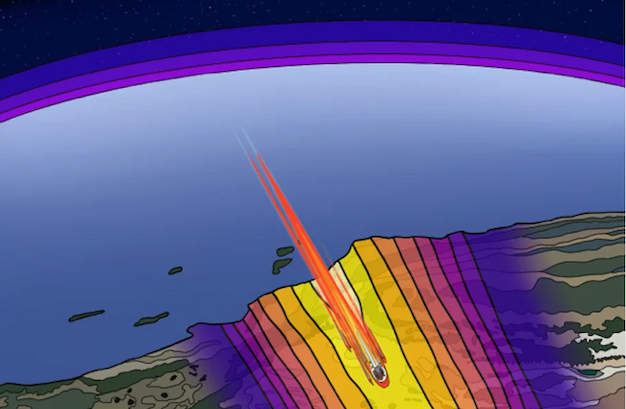
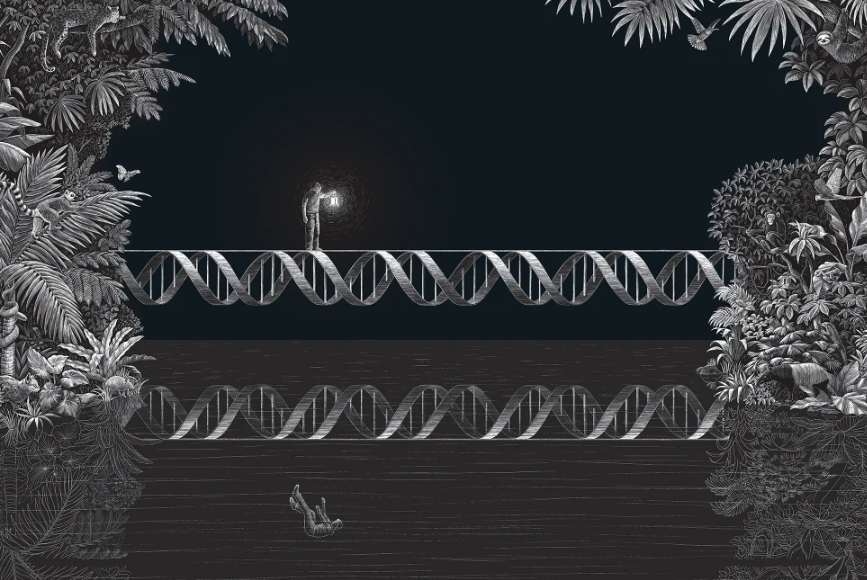
January 22, 2026—Mirror microbes could spell catastrophe for life on Earth. Plus, the evacuated ISS astronauts stay mum, and sonic booms could protect Earth from space junk. Let's get to it. —Andrea Gawrylewski, Chief Newsletter Editor | | By mapping areas where seismometers in southern California detected sonic booms, researchers at Johns Hopkins University and Imperial College London were able to track the path of the Shenzhou-15 orbital module after it reentered the Earth's atmosphere on April 2, 2024. Benjamin Fernando, Johns Hopkins University | | Scientists are rapidly making progress on being able to construct "mirror" organisms. All the molecules in every cell of these organisms would have a reversed orientation compared with their naturally occurring counterparts. If scientists used this technology to construct mirror bacteria, those could become biological killers, spurring incurable pandemics and potentially leading to mass extinctions.
How it works: Mirror molecules are made of the same chemical building blocks and bonds as typical molecules—but they have opposite configurations. Hold your two hands in front of you, palms up. Their components are equivalent (four fingers, a thumb, a palm, etc.), but they point in two different directions. This property is called chirality. No matter how you turn and twist molecules that are chiral opposites, you cannot make them overlap completely. Researchers can work in the lab to create mirror opposites of many molecules, eventually someday creating entire organisms built of mirror cells.
Why this matters: If a mirror microbe were ever released into the environment, the results could be catastrophic. The human gut's microbiome probably wouldn't be able to recognize mirror bacteria's reversed molecules, so it wouldn't trigger the production of antibacterial compounds or an immune response, since many immune defenses also rely on chiral interactions. Mirror microbes in the wild could evolve and outcompete traditionally structured microbes, collapsing food chains and leading to mass species extinction.
What can be done: A group of several hundred scientists and biosecurity experts gathered in Paris last summer and put out a set of guidelines for those working on chirality. They called for a moratorium on mirror-cell work, other than perhaps very small-scale research applications for drug manufacturing. "We must draw red lines around the most dangerous technologies that could enable their synthesis," writes Vaughn S. Cooper, an evolutionary biologist and microbiology professor at the University of Pittsburgh School of Medicine. "In the meantime, research funders can help by confirming they won't support work aimed at building mirror cells—much as they have already committed to not funding research into human cloning."
| | | | |
TRAVEL WITH SCIENTIFIC AMERICAN | | Limited Space Available for 2026 Mediterranean Eclipse Cruise Join us! We secured additional cabins for our 2026 solar eclipse cruise. Reserve yours now for the experience of a lifetime: watching totality approach while surrounded by the sea, fellow science lovers and your trip leader, Senior Editor Clara Moskowitz. | | | | |
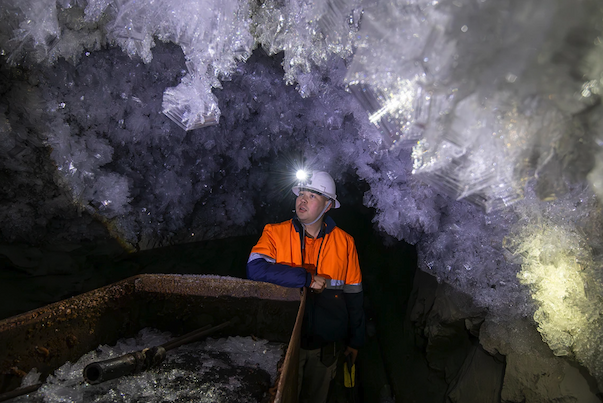
Enkhbayar Erdenetulkhuur is one of eight geologists employed by Mongolia's state-owned mining company, and often travels from its headquarters in Ulaanbaatar to the remote Asgat silver mine in the Altai Mountains. "We're still at the exploratory stage, but we think that the ore body for this site contains around 2,200 tons of silver, which would make it one of the world's richest deposits," he says. That makes trips like the one pictured above—inspecting a planned drilling site in the silver-copper mineralization zone—worth it, he says, despite a five-hour drive over dirt roads from the nearest airport. Just make sure you don't visit in winter. "We stop visiting the mine in November because the conditions there become unsurvivable," says Erdenetulkhuur. "Temperatures can drop below –45 °C." Nature | 3 min read
Content courtesy of Nature Briefing. | | I'm fascinated by the idea that life on Earth depends not just on what molecules do, but on how they're oriented and shaped. Chirality is something most people would never think about, but it underscores nearly everything, dictating the interaction of viruses and microbes, microbes and immune systems. Reverse that geometry, and biological rules risk unravelling—reminding us that form doesn't merely support life; it governs it. | | Thank you for reading Today in Science. Let me know what you think of this newsletter by emailing newsletters@sciam.com. And we'll return tomorrow. —Andrea Gawrylewski, Chief Newsletter Editor
| | | | |
Subscribe to this and all of our newsletters here. | | | | |