The fateful failed mission is still informing NASA engineers ͏ ͏ ͏ ͏ ͏ ͏ ͏ ͏ ͏ ͏ ͏ ͏ ͏ ͏ ͏ ͏ ͏ ͏ ͏ ͏ ͏ ͏ ͏ ͏ ͏ ͏ ͏ ͏ ͏ ͏ ͏ ͏ ͏ ͏ ͏ ͏ ͏ ͏ ͏ ͏ ͏ ͏ ͏ ͏ ͏ ͏ ͏ ͏ ͏ ͏ ͏ ͏ ͏ ͏ ͏ ͏ ͏ ͏ ͏ ͏ ͏ ͏ ͏ ͏ ͏ ͏ ͏ ͏ ͏ ͏ ͏ ͏ ͏ ͏ ͏ ͏ ͏ ͏ ͏ ͏ ͏ ͏ ͏ ͏ ͏ ͏ ͏ ͏ ͏ ͏ ͏ ͏ ͏ ͏ ͏ ͏ ͏ ͏ ͏ ͏ ͏ ͏ ͏ ͏ ͏ ͏ ͏ ͏ ͏ ͏ ͏ ͏ ͏ ͏ ͏ ͏ ͏ ͏ ͏ ͏ ͏ ͏ ͏ ͏ ͏ ͏ ͏ ͏ ͏ ͏ ͏ ͏ ͏ ͏ ͏ ͏ ͏ ͏ ͏ ͏ ͏ ͏ ͏ ͏ ͏ ͏ ͏ ͏ ͏ ͏
January 28, 2026—A milestone in NASA space missions, how woodpeckers work, and Schrödinger's equation turns 100. —Andrea Gawrylewski, Chief Newsletter Editor | | People dig out their cars parked along Lancaster Street during a winter storm on January 26, 2026, in Albany, N.Y. Lori Van Buren/Albany Times Union via Getty Images | | - A century ago, physicist Erwin Schrödinger came up with an equation that describes how the quantum world behaves. Now scientists are souping up the equation in order to account for the observer, which famously affects quantum mechanical outcomes. Schrödinger's equation remains physicists' foremost tool for investigating the behavior of quantum objects, and yet it's a limiting view. What do you think? How well does this quantum equation truly describe reality? Read through the article, scroll down to the tan box and click "Join the discussion."
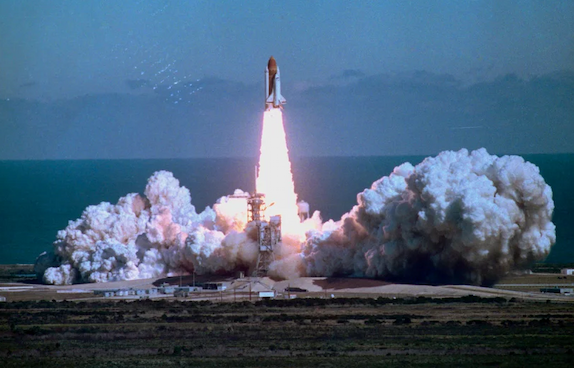
| | The space shuttle Challenger launched on January 28, 1986. Bettmann/Getty Images | | Forty years ago today, millions of people watched on live TV as the space shuttle Challenger exploded 73 seconds after blastoff, killing all seven astronauts on board. NASA paused flights for nearly three years as it investigated and rehashed what had happened. In the end they discovered that the "O-rings" that joined the cylindrical segments of one of the shuttle's solid rocket boosters failed under launch conditions far colder than they'd been designed for. Just over a minute after ignition, the ruptured booster caused the shuttle's giant external fuel tank to explode, tearing the vehicle to pieces over the ocean.
Why this matters: Though there have been hundreds of successfully launched crewed missions since January 1986, NASA is now gearing up for its first crewed journey beyond Earth's orbit since 1972. The four astronauts on the ambitious Artemis II 10-day mission around the moon could launch as early as next week. Many of the NASA team—and all four astronauts—were alive to witness the fateful Challenger disaster (and the 2003 explosion of the Columbia launch). NASA says the lessons learned from previous failures will be contributing to the success of Artemis II.
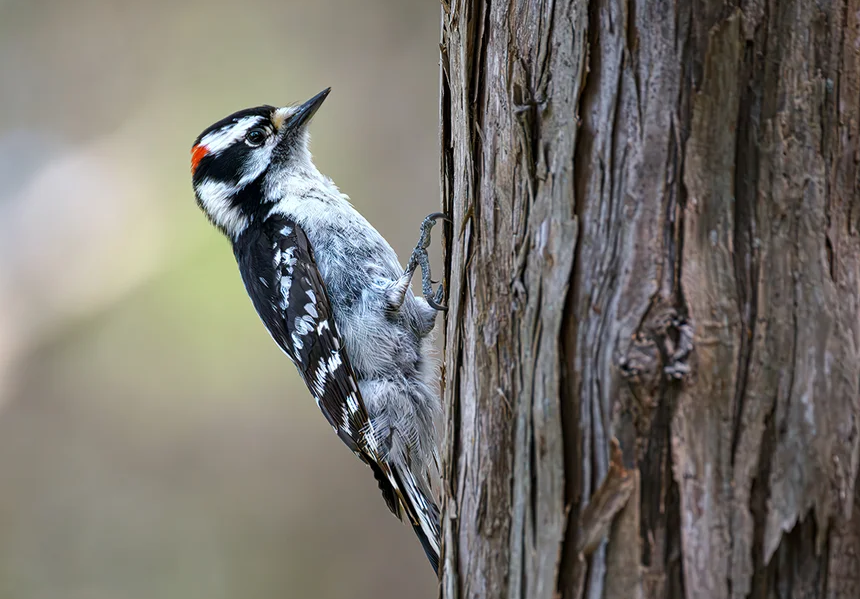
The next mission: In 2022, the Orion capsule on the SLS megarocket carried the uncrewed Artemis I mission, which went around the moon and reentered Earth's atmosphere, splashing down safely in the Pacific Ocean. Examining the Orion capsule after the mission, NASA officials noticed that huge chunks of its heat shield had unexpectedly blown away. Engineers have been investigating the problem since the test flight, and they say that adjusting Orion's path toward Earth—plunging faster through the atmosphere at a steeper incline instead of a shallower, more prolonged descent—should safeguard against heat shield damage. | | Tapping woodpeckers harness their muscles more like tennis players than like weight lifters. Diana Robinson Photography/Getty Images | | A recent study showed exactly how woodpeckers use their tiny bodies to bore holes into wood. Researchers inserted electrodes into the muscles of eight Downy Woodpeckers, monitoring their muscle contractions and breaths. It turns out that the birds tense up their entire body to smash through wood, letting out short, explosive grunts with each rapid strike. How they do it: Instead of using a single muscle to control their pecking, researchers observed that the woodpeckers activated every muscle from head to tailfeather to strike at the wood. The birds used their powerful hip flexors to push forward, clenched their tail and abs to prepare for the strike, and stiffened the back of their head and neck on contact. They also synched their pecks with sharp exhalations, much like how tennis players call out when they hit a tennis ball. What the experts say: Researchers said the birds' bodies behaved in a similar way to your wrist when you hammer a nail. "Woodpeckers really are nature's hammer in a sense," says Nicholas Antonson, a biologist at Brown University. —Emma Gometz, newsletter editor | | | | |
SPONSORED CONTENT BY MIT TECHNOLOGY REVIEW | | 10 Breakthrough Technologies 2026 | | For the 25th year, MIT Technology Review reveals its most anticipated list, the 10 Breakthrough Technologies 2026. From AI and energy to biotech and beyond, find out which game-changing innovations our expert journalists believe are poised to reshape our world and learn how they could redefine the future. | | | | |
- YouTuber and science communicator Hank Green on what science really is. | YouTube
- Science's peer review process is getting jammed up by AI slop. | The Atlantic
- The...fun of getting a colonoscopy. | The New York Times
| | I do remember the Challenger disaster. Not the images on the screen, or the aftermath, or talking about it in school the next day. But the terrifying quiet that filled the living room when the explosion happened. What's that idiom? Great risk, great reward. The Challenger crew had embarked on one of the boldest acts of human ambition, and the mission's abrupt collapse revealed just how much humanity was risking to get there. | | Thank you for being on this journey of discovery with me. Send any thoughts or feedback to: newsletters@sciam.com. Until tomorrow. —Andrea Gawrylewski, Chief Newsletter Editor | | | | |
Subscribe to this and all of our newsletters here. | | | | |