Friday, April 29, 2022

Here's Who Should Get a Second COVID Booster

Sponsored by Worcester Polytechnic Institute
    
April 29, 2022

Vaccines

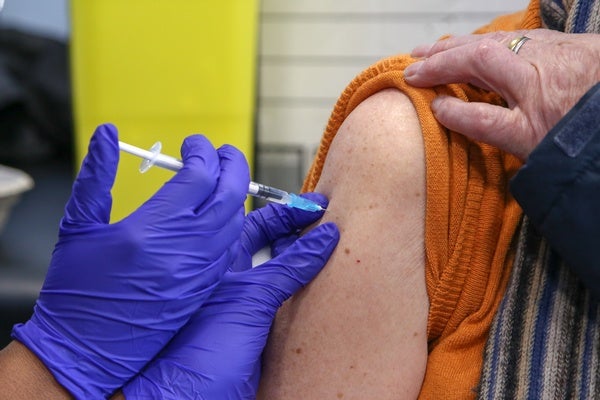
Here's Who Should Get a Second COVID Booster

An individual’s health risks, treatment access and local case levels come into play for those who are eligible

By Esther Landhuis

Oceans

A Major Ocean Current Is at Its Weakest Point in 1,000 Years

Natural variations are currently the main cause, but climate change should continue to cause it to slow down

By Chelsea Harvey,E&E News

Engineering

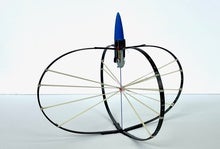
Record-Breaking Jumping Robot Can Leap a 10-Story Building

To propel itself higher than any known engineered jumper or animal can, it had to ignore the limits of biology

By Sophie Bushwick

Neuroscience

Brain-Reading Devices Help Paralyzed People Move, Talk and Touch

Implants are becoming more sophisticated—and are attracting commercial interest

By Liam Drew,Nature magazine

Psychology

Darwin Was Wrong: Your Facial Expressions Do Not Reveal Your Emotions

The emotion AI industry, courts and child educators are unknowingly relying on a misunderstanding of Darwin’s ideas

By Lisa Feldman Barrett

Particle Physics

Large Hadron Collider Seeks New Particles after Major Upgrade

Long-awaited boosts to the world’s most powerful collider could spur breakthroughs in the hunt for physics beyond the Standard Model

By Daniel Garisto

Genetics

Dogs' Personalities Aren't Determined by Their Breed

A new genetic study shows generalizing breeds as affectionate or aggressive doesn’t hold up

By Jack Tamisiea

Cancer

How to Tell whether a Cancer Is Caused by Plain Bad Luck

A new study offers a possible answer to the question “Why me?”

By Viviane Callier

Climate Change

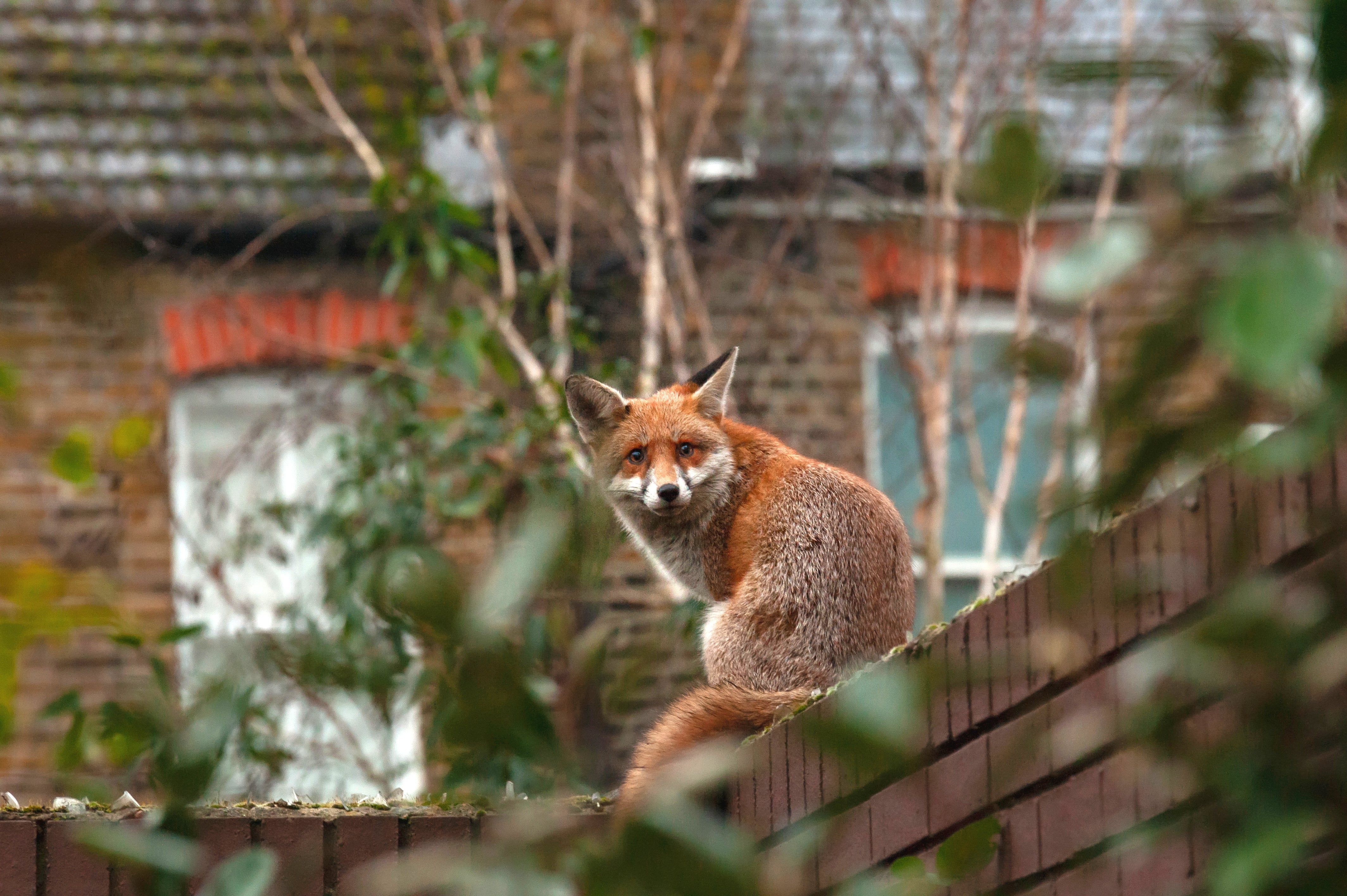
Climate Change Is Shrinking Animals, Especially Bird-Brained Birds

As the world warms, many animals are getting smaller. For birds, new research shows what they have upstairs may just make a different in how much smaller they get.

By Shahla Farzan | 04:00

Space Exploration

Europe Cancels Joint Moon Missions with Russia

Russia will move forward with lunar exploration without its European partners

By Leonard David

History

Offensive Names Should Be Removed from Public Lands

Efforts to change problematic names, whether on federal, state or local lands, are steps toward justice and reconciliation

By Bonnie McGill

Ecology

Cities Build Better Biologists

Urban environments naturally train critical thinkers and observational experts who are the future of ecology

By Nyeema C. Harris
FROM THE STORE

Scientific American Print & Digital Subscription


For $34.99 a year, your Print & Digital Subscription includes monthly delivery of print issues and is accessible on all of your devices via the web and Android and iOS apps.


Buy Now

ADVERTISEMENT

BRING SCIENCE HOME
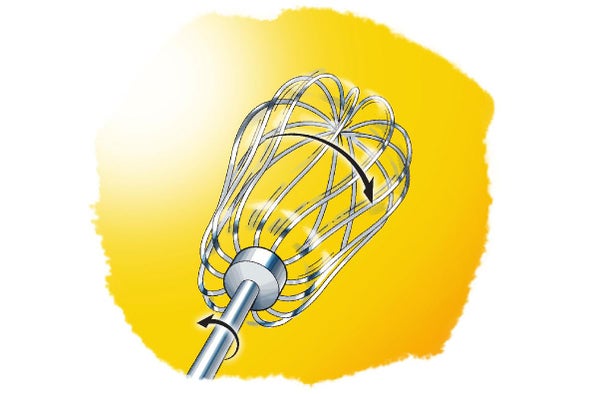
When a Flashing Light Shows More

Believe what you see? It might depend on your light source. Not all light sources provide our brains with the same information. Whip up this fascinating optical illusion to see for yourself! Credit: George Retseck

Do you have to see it to believe it? You might want to rethink your strategy. Scientists now know that what we perceive can be very different from what is really there. Our brains are quite clever in helping us interact with the world, but they can be fooled. Try this activity, and you will find out how!

Try This Experiment
LATEST ISSUES

Questions?   Comments?

Send Us Your Feedback
Download the Scientific American App
Download on the App Store
Download on Google Play

To view this email as a web page, go here.

You received this email because you opted-in to receive email from Scientific American.

To ensure delivery please add news@email.scientificamerican.com to your address book.

Unsubscribe     Manage Email Preferences     Privacy Policy     Contact Us

Secrets of the Moon’s Shadows Are Coming to Light

Math and Science News from Quanta Magazine
View this email in your browser
My Bookmarks

PLANETARY SCIENCE | ALL TOPICS


Secrets of the Moon's Permanent Shadows Are Coming to Light

By JONATHAN O'CALLAGHAN

Robots are about to venture into the sunless depths of lunar craters to investigate ancient water ice trapped there, while remote studies find hints about how water arrives on rocky worlds.

Read the article

GRAPH THEORY


Elegant Six-Page Proof Reveals the Emergence of Random Structure

By JORDANA CEPELEWICZ

Two young mathematicians have astonished their colleagues with a full proof of the Kahn-Kalai conjecture — a sweeping statement about how structure emerges in random sets and graphs.

Read the article


Related: 
How Big Data Carried Graph
Theory Into New Dimensions

by Stephen Ornes (2021)

EVOLUTION


Ancient Genes for Symbiosis Hint at Mitochondria's Origins

By VERONIQUE GREENWOOD

Was the addition of mitochondria a first step in the formation of complex cells or one of the last? A new study of bacteria tries to answer this contentious question in evolutionary biology.

Read the article


Related: 
Cell-Bacteria Mergers Offer
Clues to How Organelles Evolved

by Viviane Callier (2019)

QUANTIZED COLUMNS


What Happens When We Give Animals Our Diseases?

By TARA C. SMITH

While it's understandable to focus on the diseases affecting humans, it's important to study how our illnesses may affect animals.

Read the column


Related: 
The Animal Origins
of Coronavirus and Flu

by Tara C. Smith (2020)

QUANTA SCIENCE PODCAST


Machine Learning Gets
a Quantum Computing Speedup

Podcast hosted by SUSAN VALOT;
Story by MAX G. LEVY

Two teams have shown how quantum approaches can solve problems faster than classical computers, bringing physics and computer science closer together.

Listen to the podcast

Read the article

Around the Web

On Second Thought
Our current standard unit of time, the second, is based on the cesium clock. But scientists are now planning to redefine it with optical atomic clocks, which have achieved far greater precision, as Alanna Mitchell reports for The New York Times. Optical clocks are sensitive to infinitesimal changes in their environment, even gravitational ones. In 2021 Katie McCormick wrote for Quanta about a clock that revealed gravity's changing influence on time across a 1-mm cloud of atoms.

Explaining the Higgs Mechanism
Symmetry dictates that the W-boson and other particles in the Standard Model should be massless. So why aren't they? Matt O'Dowd explains for PBS Space Time how the Higgs mechanism gives things mass. The key to the Higgs mechanism is that an underlying symmetry of the laws of nature can be "spontaneously" broken by the state of a system, as physicist David Kaplan explained in a 2015 video for Quanta.
Follow Quanta
Simons Foundation

160 5th Avenue, 7th Floor
New York, NY 10010

Copyright © 2022 Quanta Magazine, an editorially independent division of the Simons Foundation

Scientist Pankaj

Today in Science: 40 years since Challenger

The fateful failed mission is still informing NASA engineers ͏  ͏  ͏  ͏  ͏  ͏  ͏  ͏  ͏  ͏  ͏  ͏  ͏  ͏  ͏  ͏  ͏  ͏  ͏  ͏  ͏  ͏  ͏  ͏ ...